Mortgage Servicing
Recent Federal Crackdowns on Mortgage Servicing Abuses: What Homeowners Need to Know
Recent federal enforcement actions highlight ongoing mortgage servicing abuses. Learn how to identify illegal foreclosure practices and protect your homeowner rights.
Disclaimer: The following article is for educational purposes only and does not constitute legal advice. Foreclosure laws vary by state. Homeowners should consult with a qualified attorney regarding their specific legal situations.
For homeowners facing the terrifying prospect of losing their homes, the foreclosure process can feel like an unstoppable machine. Banks and mortgage servicers often project an image of absolute authority, leading many borrowers to believe that fighting back is impossible. However, recent federal enforcement actions and ongoing court battles reveal a very different reality: mortgage servicers frequently make catastrophic errors, violate federal laws, and engage in illegal foreclosure practices.
Understanding these recent developments is critical for any homeowner navigating the foreclosure system. By learning how to identify mortgage fraud, servicing abuses, and evidentiary failures, you can level the playing field and assert your homeowner rights.
The Latest Crackdown on Mortgage Servicing Abuses
While the infamous "robo-signing" scandals of the 2010s may seem like ancient history, regulatory agencies are still actively pursuing mortgage servicers for egregious violations of consumer protection laws. Recent reports and enforcement roundups highlight a continued pattern of abuse in the mortgage servicing industry.
For example, federal watchdogs have recently intensified their scrutiny of financial institutions. According to the Enforcement Actions Roundup: April 2026, agencies like the Office of the Comptroller of the Currency (OCC), the Federal Reserve Board (FRB), and the Federal Deposit Insurance Corporation (FDIC) have continued to issue severe enforcement actions against banks for regulatory compliance failures. Furthermore, the Department of Justice continues to monitor housing violations, as noted in the Recent Accomplishments Of The Housing And Civil Enforcement Section.
One of the most glaring examples of ongoing regulatory intervention is the Consumer Financial Protection Bureau's (CFPB) aggressive stance against servicers that violate the law. In a landmark move, the CFPB Takes Action Against Fay Servicing for Illegal Foreclosure Actions and Violating Law Enforcement Order. The CFPB found that the servicer had violated a previous law enforcement order and proceeded with illegal foreclosure actions against homeowners. The agency forced the servicer to pay a $2 million civil penalty and $3 million in consumer redress.
These enforcement actions prove a vital point for homeowners: just because a bank or servicer claims they have the right to foreclose does not mean they are following the law. Servicers are massive bureaucracies prone to systemic errors, lost paperwork, and, in some cases, willful violations of federal regulations.
Understanding Illegal Foreclosure Practices
To effectively defend your home, you must understand the specific types of illegal practices that regulators are targeting. Mortgage servicing abuses generally fall into several distinct categories, many of which can be used as affirmative defenses in a foreclosure lawsuit.
Dual Tracking Dual tracking is one of the most common and devastating servicing abuses. This occurs when a mortgage servicer simultaneously moves forward with the foreclosure process while the homeowner is actively applying for or negotiating a loss mitigation option, such as a loan modification. Federal law strictly prohibits dual tracking. If you have submitted a complete loss mitigation application, the servicer is generally required to halt foreclosure proceedings until your application has been fully evaluated and an appeals process has concluded.
Phantom Fees and Misapplied Payments Servicers frequently misapply borrower payments, placing funds into "suspense accounts" rather than applying them to the principal and interest. This can artificially inflate the amount the homeowner allegedly owes, triggering unwarranted default notices. Additionally, servicers often tack on unauthorized "property inspection fees," "corporate advances," or inflated legal fees that violate the terms of the original promissory note and state law.
Robo-Signing and Fabricated Documents As highlighted in legal analyses like Beyond Robo-Signing: Mortgage Foreclosure Defense Basics, the mass production of false and forged execution of mortgage assignments and affidavits remains a critical issue. While the blatant robo-signing of the past has evolved, servicers still frequently rely on affidavits signed by employees who have zero personal knowledge of the borrower's account. These "affiants" simply look at a computer screen and swear under oath that the bank's records are accurate, a practice that violates the rules of evidence in many jurisdictions.
How Federal Enforcement Actions Impact Homeowners
When the CFPB or the Department of Justice fines a mortgage servicer millions of dollars, it makes headlines. However, it is crucial to understand the gap between federal regulatory actions and your individual foreclosure case.
Federal agencies regulate the banking industry at a macro level. When the CFPB fines a company like Fay Servicing, that penalty goes toward a victim relief fund or the U.S. Treasury. A federal fine against your mortgage servicer does not automatically stop your specific foreclosure in state court.
State court judges preside over individual foreclosure lawsuits. If your servicer is actively foreclosing on you, the judge will only look at the evidence presented in your specific case. You cannot simply walk into court, hand the judge a press release about a CFPB fine, and expect the case to be dismissed.
Instead, you must use the underlying concepts of these federal enforcement actions to build your own legal defense. If regulators found that your servicer has a systemic habit of dual tracking or fabricating assignments, you must demand strict proof that they did not commit those same errors in your specific file. You must force the foreclosing entity to prove their legal standing to sue you.
Spotting Servicing Errors in Your Mortgage Documents
The foundation of any foreclosure defense strategy is a meticulous review of your mortgage documents. Foreclosing entities often lack the proper documentation to prove they actually own your debt.
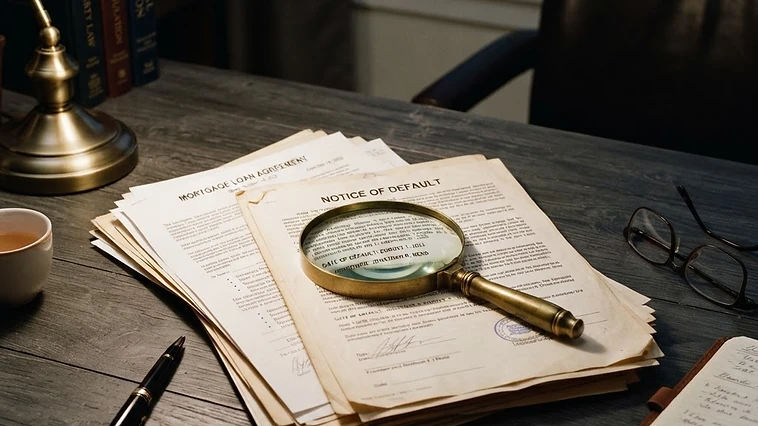
 A meticulously organized binder of legal evidence and mortgage documents on a dark desk.

The Promissory Note and Endorsements When you bought your home, you signed two main documents: the mortgage (or deed of trust) and the promissory note. The promissory note is the actual IOU. To have "standing" to foreclose, the entity suing you generally must prove they are the "holder" of the note. Because mortgages are bought and sold on Wall Street, the note must be properly endorsed (stamped) from one bank to the next, much like a check. If the note attached to your foreclosure complaint lacks the proper chain of endorsements, or if the bank claims the note is "lost," this is a massive red flag.
Assignments of Mortgage and MERS The Mortgage Electronic Registration Systems (MERS) is a private database created by the banking industry to track the buying and selling of mortgages without having to record every transaction in county land records. MERS frequently acts as a "nominee" for the lender. However, when a foreclosure is initiated, MERS often executes an "Assignment of Mortgage" transferring the rights to a specific trust or bank.
Homeowners and their defense teams must strictly scrutinize these assignments. Often, these assignments are executed years after the trust that supposedly bought the loan was legally closed. Furthermore, the individuals signing these assignments on behalf of MERS are often employees of the foreclosing law firm or the servicer itself, raising serious questions about conflicts of interest and the validity of the transfer.
Notices of Default and Acceleration Before a bank can foreclose, the mortgage contract usually requires them to send a specific "Notice of Default" or "Notice of Acceleration." This letter must give the homeowner a specific amount of time (usually 30 days) to cure the default, and it must state the exact amount owed. Servicers frequently fail to send these notices, send them to the wrong address, or fail to include the specific language required by the contract. If the bank fails to strictly comply with these "conditions precedent," the foreclosure lawsuit may be subject to dismissal.
Defending Your Home: The Importance of Evidence and Discovery
Identifying errors in your documents is only the first step. To successfully defend against a foreclosure, you must utilize the rules of civil procedure to force the bank to produce evidence. This process is known as "discovery."
Many homeowners make the mistake of simply arguing with the bank's attorneys in court. But arguments are not evidence. To win, you must use formal legal tools:
- Requests for Production of Documents: You can legally demand that the servicer produce the original, wet-ink promissory note for your inspection. You can also demand the complete payment history, communication logs, and pooling and servicing agreements.
- Interrogatories: These are written questions that the bank must answer under oath. You can ask them to identify exactly who owns the loan, when it was transferred, and how they calculated the alleged default amount.
- Depositions: This is the most powerful tool in foreclosure defense. You have the right to force the bank's "robo-signer" or corporate representative to sit in a room and answer questions under oath before a court reporter. During depositions, it often becomes painfully clear that the bank's witness has no personal knowledge of the records they are testifying about, rendering their affidavits inadmissible as hearsay.
By aggressively utilizing the discovery process, you shift the burden of proof back onto the bank. When forced to produce actual, legally admissible evidence, many foreclosing entities simply cannot comply, leading to favorable settlements, loan modifications, or outright dismissals.
Why the Foreclosure Defense Survival Playbook Helps
Navigating the treacherous waters of mortgage fraud, servicing abuses, and civil litigation is incredibly daunting. The banking industry relies on the fact that most homeowners do not understand the rules of evidence, the mechanics of securitization, or how to draft proper legal discovery.
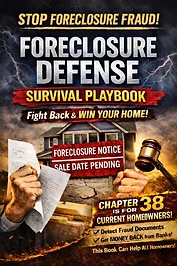
This is exactly why the Foreclosure Defense Survival Playbook is an indispensable resource. This comprehensive, 530-page educational manual is designed specifically to demystify the foreclosure process for homeowners. It breaks down complex legal concepts into plain, actionable language.
Inside the Playbook, you will learn how to forensically audit your own mortgage documents to spot the exact chain-of-title breaks and robo-signing errors that federal regulators are targeting. It provides detailed frameworks for organizing your evidence, understanding court procedures, and conducting the legal research necessary to hold your mortgage servicer accountable.
Don't let a bank intimidate you into walking away from your home based on fabricated documents and illegal servicing practices. Equip yourself with the knowledge to fight back. Order the Foreclosure Defense Survival Playbook today and take the first step toward protecting your greatest asset.

Order The Playbook
Get the Foreclosure Defense Survival Playbook
530 pages of structured, educational guidance covering mortgage documents, foreclosure procedures, evidence organization, and legal research — the same foundation this article draws from.