Foreclosure Defense
Exposing 2025 Mortgage Servicing Fraud: Robo-Signing, Illegal Assignments, and How to Fight Back
Recent 2025 court filings and CFPB enforcement actions reveal that mortgage servicing abuses like robo-signing and illegal assignments are still rampant. Learn how to spot these errors and defend your home.
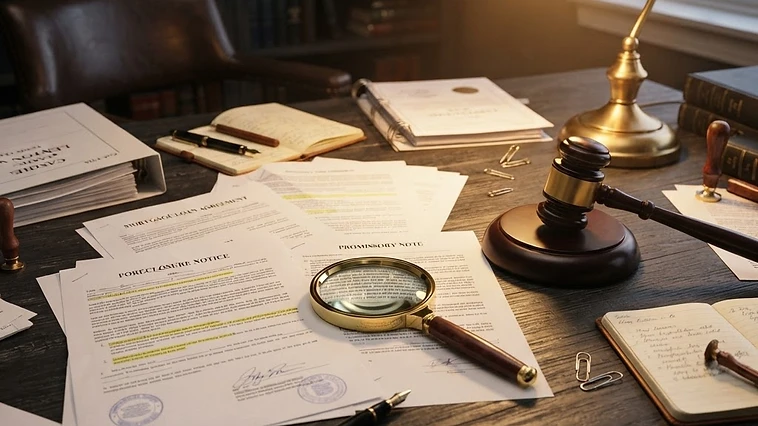
Disclaimer: The following article is for educational purposes only and does not constitute legal advice. If you are facing foreclosure, consult with a qualified attorney in your jurisdiction.
If you are a homeowner who has fallen behind on mortgage payments or is currently facing foreclosure, you might assume that the bank holds all the cards. However, recent developments in 2024 and early 2025 prove that mortgage servicers and massive financial institutions are still making critical, sometimes fraudulent, errors in their rush to take homes. From illegal mortgage assignments to the resurrection of "robo-signing," the landscape of foreclosure defense is shifting. Understanding these recent enforcement actions and court rulings is the first step in fighting back and keeping your home.
The Return of Robo-Signing and Forged Deeds in 2025
Many homeowners believe that the infamous "robo-signing" scandals of the 2008 financial crisis were a thing of the past. Unfortunately, recent court filings suggest otherwise. In a notable March 2025 bankruptcy adversary proceeding (Case 1-24-01097-jmm), a homeowner sued their mortgagee and mortgage servicer, alleging that the bank lacked jurisdiction over the foreclosure action due to an illegal mortgage assignment, a forged deed, and the use of robo-signers.
Robo-signing occurs when bank employees or third-party contractors sign thousands of foreclosure documents, affidavits, and mortgage assignments without verifying the accuracy of the information or having personal knowledge of the facts. When a bank relies on a forged deed or an illegal assignment to prove they have the right to foreclose (known as "standing"), they are violating the law. For homeowners, this means that the documents filed against you in court may be fundamentally flawed. If the entity suing you cannot legally prove they own your loan, they may not have the legal right to foreclose on your property.
CFPB Crackdowns: How Servicers Continue to Break the Rules
The Consumer Financial Protection Bureau (CFPB) has been actively cracking down on mortgage servicers who abuse homeowners. In late 2024, the CFPB issued a massive order against Fay Servicing, LLC, a residential mortgage servicer, for violating the Real Estate Settlement Procedures Act (RESPA) and Regulation X. The CFPB found that the servicer engaged in illegal foreclosure actions, forcing them to pay millions in consumer redress and penalties.
Furthermore, the CFPB's recent Supervisory Highlights revealed numerous ongoing mortgage servicing violations across the industry. Servicers were caught charging homeowners for illegal property inspections, assessing excessive late fees that violated loan agreements, and failing to properly document loss mitigation efforts. These are not isolated incidents; they are systemic issues. When you are behind on payments, your servicer might be padding your account with illegal fees, making it artificially harder for you to catch up or qualify for a loan modification.
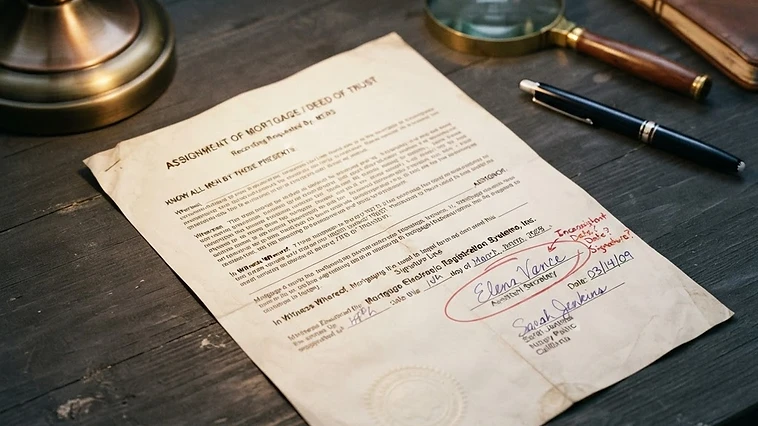 Close-up of a mortgage assignment document being examined under a warm gold light on a dark desk.

Understanding Dual Tracking and Your Rights
One of the most egregious practices in the mortgage servicing industry is "dual tracking." This occurs when a mortgage servicer moves forward with foreclosure proceedings while simultaneously negotiating a loan modification or loss mitigation option with the homeowner. Sections 1024.41(f) and (g) of Regulation X directly prohibit dual tracking. Servicers are legally required to halt foreclosure actions when a complete loss mitigation application is pending.
Recent Supreme Court petitions, such as the late 2024 filing in Jeanie Reese v. Select Portfolio Services (SPS), highlight the ongoing battles homeowners face regarding dual tracking and the Homeowner Bill of Rights. Servicers often claim they lost your paperwork, or they ask for the same documents repeatedly, all while the foreclosure clock keeps ticking. Knowing your rights under Regulation X is crucial. If you can prove that your servicer engaged in dual tracking, you may have strong grounds to halt the foreclosure sale and force the bank to evaluate your application fairly.
How to Spot Illegal Assignments and Servicing Fraud
Defending your home requires a meticulous review of your mortgage documents. The chain of title is the sequence of historical transfers of title to a property. In the context of a mortgage, the promissory note and the mortgage (or deed of trust) must be properly assigned from the original lender to the current trust or bank trying to foreclose.
Here is what you need to look for:
- Missing Endorsements: Is the promissory note properly endorsed to the current plaintiff, or is it endorsed in blank?
- Suspicious Signatures: Look at the signatures on the mortgage assignments. Do they look identical across multiple documents? Are they signed by known robo-signers whose names appear in national fraud databases?
- Post-Dated Assignments: Was the mortgage assigned to a securitized trust years after the trust's closing date? Many Pooling and Servicing Agreements (PSAs) strictly prohibit late transfers.
- Unexplained Fees: Request a complete payment history from your servicer. Look for vague charges like "corporate advances," "property preservation fees," or excessive late fees that do not align with your original contract.
Building Your Foreclosure Defense Strategy
If you are facing foreclosure, you must treat your defense like a full-scale investigation. The banks rely on homeowners being too overwhelmed to fight back. They expect default judgments. By showing up, demanding proof, and organizing your evidence, you disrupt their assembly-line foreclosure process.
Start by sending a Qualified Written Request (QWR) or a Notice of Error (NOE) to your mortgage servicer under RESPA. This legally forces the servicer to provide you with the identity of the owner of your loan, your complete payment history, and copies of all assignments. Use the discovery process in court to demand the original wet-ink promissory note. Challenge the admissibility of their affidavits if the person signing them has no personal knowledge of your account history. Remember, the burden of proof is on the bank to prove they have the right to take your home.
Why the Foreclosure Defense Survival Playbook Helps
Navigating the treacherous waters of mortgage fraud, illegal assignments, and aggressive bank attorneys is nearly impossible without the right map. That is exactly why the Foreclosure Defense Survival Playbook is your ultimate weapon.
This comprehensive 530-page educational guide breaks down complex legal concepts into plain, actionable language. It teaches you exactly how to read your mortgage documents, spot the signs of robo-signing and forged deeds, and organize your evidence like a seasoned investigator. Whether you are dealing with dual tracking, illegal fees, or a bank that cannot prove they own your loan, the Playbook provides the templates, legal research strategies, and procedural knowledge you need to level the playing field. Do not let the banks steal your home through fraud and intimidation. Order the Foreclosure Defense Survival Playbook today and take control of your fight for your home.


Order The Playbook
Get the Foreclosure Defense Survival Playbook
530 pages of structured, educational guidance covering mortgage documents, foreclosure procedures, evidence organization, and legal research — the same foundation this article draws from.