Foreclosure Defense
Recent DOJ Enforcement Exposes Nationwide Foreclosure Defense Scam: What Homeowners Need to Know
A recent $1.1 million DOJ enforcement action highlights the dangers of foreclosure rescue scams. Learn how to spot fraud, understand your mortgage documents, and legitimately protect your home.

Disclaimer: The following article is for educational purposes only and does not constitute legal advice. If you are facing foreclosure, consult with a qualified attorney in your jurisdiction.
Facing foreclosure is one of the most stressful experiences a homeowner can endure. When you are behind on payments and the threat of losing your home looms large, desperation can easily set in. Unfortunately, predatory companies often view this vulnerability as an opportunity for exploitation. Recently, the U.S. Department of Justice (DOJ) and the U.S. Trustee Program (USTP) took decisive action against a nationwide foreclosure defense scheme, securing over $1.1 million in monetary relief against 12 defendants who preyed on struggling homeowners.
This enforcement action serves as a critical wake-up call. Homeowners must educate themselves about their rights, understand the intricacies of their mortgage documents, and learn how to spot fraudulent rescue schemes. In this comprehensive guide, we will break down the recent DOJ enforcement action, explore the mechanics of foreclosure fraud, discuss legitimate ways to defend your home, and explain how proper education is your best defense.
The Rise of Foreclosure Rescue Scams
When homeowners fall behind on their mortgage payments, their names often become public record through Notice of Default filings. This public information is frequently scraped by predatory companies who then bombard the homeowners with letters, emails, and phone calls promising guaranteed loan modifications or immediate foreclosure relief.
In a recent and highly publicized case, the U.S. Trustee Program obtained a judgment against NVA Financial Services LLC, its president Steven Nahas, managing attorney Karen Kisch, and nine associates. According to the Office of Public Affairs | U.S. Trustee Program Obtains More Than $1.1M in Monetary Relief Against 12 Defendants in Nationwide Foreclosure Defense Scheme | United States Department of Justice, the court found "overwhelming evidence" that these defendants orchestrated a scheme to defraud vulnerable homeowners.
The perpetrators charged upfront fees under the guise of providing legal representation and negotiating loan modifications. However, instead of providing genuine legal help, they shunted homeowners into frivolous pro se (do-it-yourself) bankruptcy cases. This tactic was designed solely to trigger an automatic stay—temporarily halting the foreclosure process—so the company could continue siphoning monthly fees from the homeowners' bank accounts.
How the Fraudulent Scheme Worked
Understanding the mechanics of this scam is crucial for protecting yourself. The DOJ's complaint highlighted a specific case involving a homeowner from Louisiana who sought mortgage assistance to avoid a foreclosure sale.
The homeowner paid a $1,100 retainer, believing he had hired a legitimate attorney. This was followed by multiple $500 monthly payments automatically debited from his account. The local counsel he thought was representing him never communicated with him. As the foreclosure sale date approached, an associate of the fraudulent company sent the homeowner a bare-bones bankruptcy petition and instructed him to file it himself.
Because the petition was incomplete and the homeowner was not advised to complete mandatory pre-bankruptcy credit counseling or pay the filing fee, the bankruptcy court quickly dismissed the case. Despite this, the company continued to debit the homeowner's account for "loan modification services" and pressured him to file yet another bankruptcy case. When the homeowner finally hired a legitimate local bankruptcy attorney, the scammers repeatedly urged him to fire the real attorney so they could continue "working his file."
This case perfectly illustrates the danger of relying on out-of-state "rescue" companies that promise the moon but deliver nothing but financial ruin and wasted time.
Recognizing the Red Flags of Mortgage Fraud
To protect your home and your finances, you must be able to identify the red flags of foreclosure rescue scams and mortgage fraud. Here are the most common warning signs:
- Demands for Upfront Fees: In many jurisdictions, it is illegal for a company to charge an upfront fee for foreclosure rescue or loan modification services before any actual services are rendered or a modification is officially agreed upon by the lender.
- Guarantees to Stop Foreclosure: No attorney or company can guarantee that they will stop a foreclosure or secure a loan modification. Legitimate legal professionals will explain the risks and the potential outcomes based on the law and your specific financial situation.
- Instructions to Stop Communicating with Your Lender: Scammers often tell homeowners to stop talking to their mortgage servicer and to send payments directly to the rescue company instead. You should never cut off communication with your lender or send your mortgage payments to a third party without verified legal justification.
- Filing Pro Se Documents on Your Behalf: If a company claims to represent you but asks you to sign and file legal documents or bankruptcy petitions as a "pro se" (self-represented) litigant, they are likely trying to avoid legal accountability for their fraudulent actions.
- Pressure to Sign Over Your Deed: Never sign the deed to your property over to a rescue company or an investor under the promise that you can rent it back and eventually repurchase it. This is a classic equity-skimming scam.
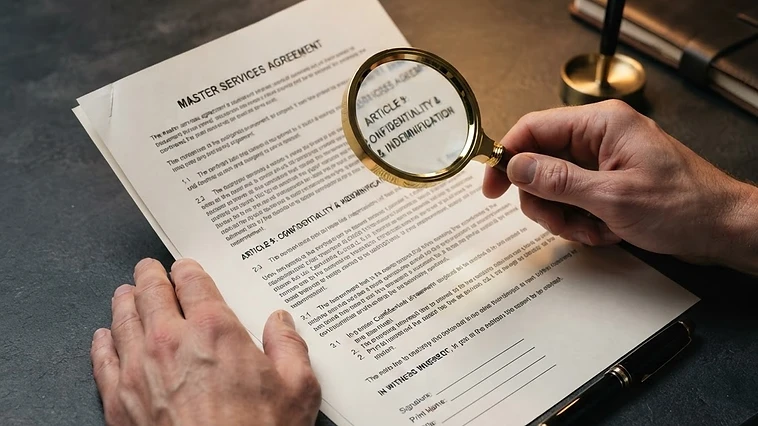 Homeowner reviewing mortgage documents and legal contracts on a dark desk

The Importance of Understanding Your Mortgage Documents
One of the primary reasons homeowners fall victim to these scams is a lack of understanding regarding their own mortgage documents and the foreclosure process. When you don't know your rights, you are easily manipulated by those who claim to have all the answers.
Your mortgage (or deed of trust) and your promissory note are the foundational documents of your home loan. They dictate the rules your lender must follow before they can take your home. For example, most standard mortgages require the lender to send a specific "Notice of Default" or "Breach Letter" giving you at least 30 days to cure the default before they can accelerate the loan and initiate foreclosure. If the lender fails to strictly comply with these contractual requirements, it can serve as a powerful defense against the foreclosure action.
Furthermore, mortgage servicers are notorious for making errors. They may misapply payments, charge unauthorized fees, or fail to properly record loan modifications. By thoroughly reviewing your payment history and servicing file, you can often uncover servicing abuses that can be used to challenge the foreclosure.
Taking Legitimate Steps in Foreclosure Defense
Instead of falling for scams, homeowners should focus on legitimate, legally grounded strategies for foreclosure defense. The first step is to understand whether your state uses a judicial or non-judicial foreclosure process.
In a judicial foreclosure, the lender must file a lawsuit against you in court. You have the right to file an answer, raise affirmative defenses, and demand that the lender prove they have the legal standing to foreclose. This often involves scrutinizing the chain of assignments to ensure the entity suing you actually owns your loan.
In a non-judicial foreclosure, the process happens outside of court, but you still have rights. You can file a lawsuit to enjoin (stop) the foreclosure sale if you have valid grounds, such as a violation of the Real Estate Settlement Procedures Act (RESPA) or dual-tracking (where the servicer proceeds with foreclosure while a complete loss mitigation application is pending).
Legitimate defenses often revolve around:
- Lack of Standing: The foreclosing party cannot prove they hold the original promissory note or have a valid assignment of the mortgage.
- Procedural Errors: The lender failed to send the required pre-foreclosure notices as stipulated in the mortgage contract or state law.
- Servicing Abuses: The servicer engaged in robo-signing, misapplied payments, or violated federal servicing guidelines.
- Statute of Limitations: In some cases, if the lender accelerated the loan many years ago and failed to complete the foreclosure, the statute of limitations to collect the debt may have expired.
To effectively utilize these defenses, you need knowledge, organization, and a clear understanding of court procedures and evidence gathering.
Why the Foreclosure Defense Survival Playbook Helps
The recent DOJ enforcement action proves that you cannot blindly trust third-party companies to save your home. The only person who truly has your best interests at heart is you. To fight back against aggressive lenders and avoid falling into the trap of predatory scammers, you must arm yourself with knowledge.
This is exactly why the Foreclosure Defense Survival Playbook is an indispensable resource for any homeowner facing financial distress. This comprehensive, 530-page educational book is designed specifically for homeowners who are behind on payments or already in the crosshairs of foreclosure.
The Playbook demystifies the complex world of foreclosure defense. It teaches you how to:
- Deconstruct Your Mortgage Documents: Learn how to read your note, mortgage, and assignments to spot fatal flaws and lack of standing.
- Identify Servicing Abuses: Discover how to audit your payment history and uncover illegal fees, misapplied payments, and RESPA violations.
- Organize Your Evidence: Master the art of gathering, organizing, and presenting evidence to build a compelling defense.
- Understand Court Procedure: Gain a clear understanding of how the legal system works, from filing an answer to navigating the discovery process.
- Conduct Legal Research: Learn how to find and apply relevant case law and statutes to support your arguments, empowering you to fight back effectively.
Don't wait until it's too late, and don't fall victim to scammers who see your distress as a payday. Take control of your situation, educate yourself on your legal rights, and build a solid foundation for your defense. Order the Foreclosure Defense Survival Playbook today and get the knowledge you need to fight for your home.


Order The Playbook
Get the Foreclosure Defense Survival Playbook
530 pages of structured, educational guidance covering mortgage documents, foreclosure procedures, evidence organization, and legal research — the same foundation this article draws from.