Foreclosure Defense
The 2026 Foreclosure Surge: Defending Against Mortgage Servicing Abuses
With foreclosures spiking nationwide, homeowners must understand their rights and how to spot illegal mortgage servicing abuses before it is too late.

Disclaimer: The following article is for educational purposes only and does not constitute legal advice. If you are facing foreclosure, it is strongly recommended that you consult with a qualified attorney to discuss your specific situation.
Falling behind on your mortgage payments is one of the most stressful experiences a homeowner can face. The constant phone calls, the threatening letters, and the looming fear of losing your home can make you feel entirely powerless. However, the worst thing you can do is ignore the problem. The banking and mortgage servicing industry relies on homeowners feeling overwhelmed and giving up by default.
Recent news reports and regulatory actions reveal a troubling trend: foreclosures are spiking, and mortgage servicers are once again making critical errors that harm homeowners. By understanding the foreclosure process, recognizing mortgage servicing abuses, and learning how to demand proof of your loan's chain of title, you can level the playing field.
The Recent Surge in Foreclosures: What the Data Means for You
After years of pandemic-era forbearance programs and emergency moratoriums, the housing market is undergoing a harsh correction. Recent reports indicate a massive wave of defaults is hitting the market. In fact, ABC News warns of MASS foreclosure spike (prices already down 50%), highlighting that foreclosures are surging across the United States as economic pressures mount on everyday families.
Legal and financial analysts are calling this era "foreclosure normalization." According to recent industry analysis on Consumer Financial Protection Bureau (CFPB) › Mortgage Servicers › Enforcement Actions, foreclosure activity is rising steadily, bringing with it a significant increase in litigation and compliance risks for mortgage servicers.
For the homeowner, this "normalization" means that banks and servicers are returning to aggressive, fast-paced foreclosure tactics. When the volume of foreclosures increases, the likelihood of banks cutting corners, losing paperwork, and violating homeowner rights skyrockets. If you are currently behind on payments, you are not alone, and more importantly, you have legal rights that dictate exactly how the bank must handle your case.
The Return of Sloppy Paperwork: Robo-Signing and Servicing Abuses
During the 2008 financial crisis, the term "robo-signing" became infamous. It referred to bank employees automatically signing thousands of foreclosure affidavits without ever verifying the accuracy of the documents or the amounts owed. While massive settlements were supposed to end this practice, the echoes of these abuses remain today.
When a mortgage servicer manages your loan, they are responsible for processing your monthly payments, managing your escrow account, and handling loss mitigation (such as loan modifications). Unfortunately, mistakes made by these entities can have a devastating impact. As noted in Errors and Abuses by Mortgage Servicers & Your Legal Rights, a servicer might fail to properly process monthly payments, misapply funds, or charge you for overpriced, force-placed insurance.
These are not just minor clerical errors; they are mortgage servicing abuses that can artificially push a homeowner into default or make it impossible to catch up on arrears. Common abuses include:
- Misapplication of Payments: The servicer places your payment into a "suspense account" instead of applying it to your principal and interest, triggering late fees.
- Phantom Fees: Unexplained property inspection fees, corporate advance fees, or late charges that violate the terms of your original promissory note.
- Dual Tracking: This is a strictly prohibited practice where a servicer moves forward with foreclosure proceedings while simultaneously reviewing your application for a loan modification.
If you suspect your servicer is making these errors, you have the right under federal law (specifically the Real Estate Settlement Procedures Act, or RESPA) to send a Notice of Error (NOE) or a Request for Information (RFI). The servicer is legally required to investigate and respond within a specific timeframe.
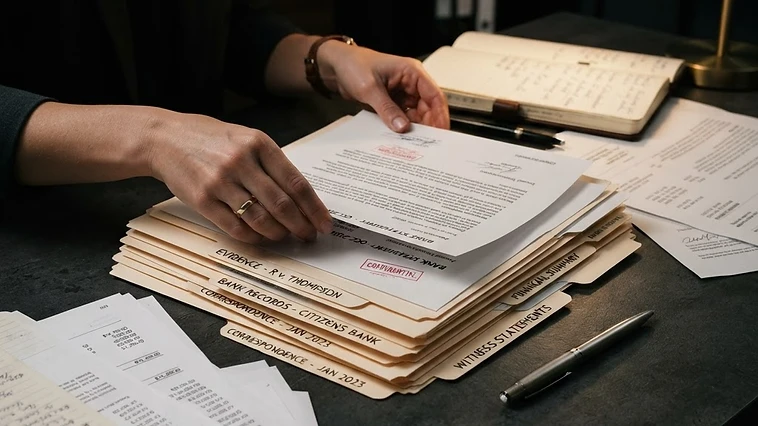 Hands organizing legal evidence and mortgage documents on a dark desk under warm lighting.

CFPB Enforcement Actions: Regulators Are Watching Mortgage Servicers
The Consumer Financial Protection Bureau (CFPB) is the federal watchdog tasked with ensuring that banks and servicers do not exploit consumers. Recently, the CFPB has been cracking down on repeat offenders in the mortgage industry.
By reviewing recent Enforcement Actions - Consumer Financial Protection Bureau, it is clear that regulators are actively penalizing companies for illegal foreclosure practices. Servicers have been fined millions of dollars for violating law enforcement orders, failing to offer required loss mitigation options, and relying on inaccurate housing data to push families out of their homes.
What does this mean for your foreclosure defense? It means that the entity trying to take your home is part of an industry with a documented history of regulatory violations. You cannot take their word as absolute truth. Every number on your mortgage statement, every fee added to your payoff quote, and every document filed in court must be scrutinized. If a servicer has been subject to a CFPB consent order for improper foreclosure practices, that information can be a critical piece of context when you are fighting to prove they have mishandled your specific account.
Chain of Title and Assignments: Does the Bank Actually Own Your Loan?
One of the most powerful concepts in foreclosure defense is "standing." In simple terms, standing means that the party suing you actually has the legal right to do so. Because mortgages are frequently bought, sold, and securitized into complex Wall Street trusts, the original lender you signed with is rarely the entity foreclosing on you.
For a new trust or bank to foreclose, they must prove they own your promissory note and hold a valid mortgage assignment. According to “Robo-Signing” and Other Alleged Documentation Problems in Judicial and Nonjudicial Foreclosure Processes, a homeowner has the right to contest a foreclosure by producing evidence that the plaintiff lacks legal standing. If the assignment of the mortgage interest was improperly executed, forged, or never completed, the foreclosing party may not have the right to take your property.
Investigating your chain of title involves:
- Reviewing the Promissory Note: Does the foreclosing party have the original note? Is it properly endorsed (signed over) to them, or is it endorsed "in blank"?
- Checking County Land Records: Are the mortgage assignments recorded in your local county clerk's office? Do the dates make sense? Often, assignments are fabricated years after the fact just to facilitate a foreclosure.
- Analyzing the Securitization Trust: If your loan was placed into a mortgage-backed security, the trust has strict rules (a Pooling and Servicing Agreement) about when and how loans must be transferred. If the bank missed the deadline, their claim to your home might be invalid.
Without properly transferred notes and valid assignments, servicers lack the standing to foreclose. Forcing the bank to prove their standing is a fundamental right of every homeowner.
Protecting Your Homeowner Rights During Loss Mitigation
Before a bank can sell your home at a foreclosure auction, they are generally required to explore alternatives with you. This process is known as loss mitigation. Options can include a loan modification (which changes the terms of your loan to make payments affordable), a forbearance agreement, or a repayment plan.
Unfortunately, the loss mitigation process is often where homeowners experience the most frustration. Servicers are notorious for repeatedly asking for the same documents, claiming they never received your tax returns, or denying modifications based on incorrect income calculations.
To protect yourself, you must treat the loss mitigation process like a legal battle:
- Keep Meticulous Records: Never send original documents. Keep copies of everything you send to the servicer.
- Use Certified Mail: Always send your applications and letters via certified mail with a return receipt requested. This provides undeniable proof that the servicer received your documents.
- Log Every Phone Call: Keep a notebook dedicated to your mortgage. Write down the date, time, name of the representative, and a summary of what was discussed during every single phone call.
If the servicer violates federal rules—such as proceeding with a foreclosure sale while you have a complete modification application pending—you may have grounds to file a lawsuit or seek an injunction to stop the sale.
Why the Foreclosure Defense Survival Playbook Helps
Facing a multi-billion dollar bank in a foreclosure proceeding can feel like an impossible David vs. Goliath battle. The banks have teams of lawyers, endless resources, and a system that often feels rigged in their favor. But their biggest weakness is their own paperwork, and your biggest advantage is education.
This is exactly why the Foreclosure Defense Survival Playbook is an absolute must-have resource for any homeowner behind on payments. This comprehensive, 530-page educational guide demystifies the complex world of mortgage documents, court procedures, and legal research.
Instead of feeling overwhelmed by legal jargon, the Playbook teaches you how to:
- Audit your mortgage statements to uncover hidden fees and servicer abuses.
- Trace your loan's chain of title to determine if the bank actually has standing to foreclose.
- Organize your evidence and draft powerful Requests for Information to hold your servicer accountable.
- Understand the procedural rules of your local courts so you can confidently navigate the system.
Knowledge is your best defense against mortgage fraud and servicing abuses. Don't let the bank take your home without forcing them to prove their case every step of the way. Order the Foreclosure Defense Survival Playbook today, take control of your financial future, and learn how to fight back.

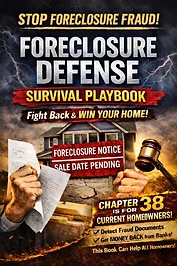
Order The Playbook
Get the Foreclosure Defense Survival Playbook
530 pages of structured, educational guidance covering mortgage documents, foreclosure procedures, evidence organization, and legal research — the same foundation this article draws from.