Foreclosure Defense
The 2026 Foreclosure Surge: Defending Against Mortgage Servicing Abuses
With foreclosures climbing 21% in the first half of 2026, homeowners face a renewed wave of aggressive mortgage servicing tactics. Learn how to identify improper foreclosure practices, challenge void assignments, and assert your legal rights.

Disclaimer: The information provided in this article is strictly for educational purposes and does not constitute legal advice. Every foreclosure case is unique, and homeowners should consult with a qualified attorney licensed in their jurisdiction before making legal decisions or filing documents in court.
Foreclosure rates in the United States are climbing at an alarming pace, signaling a massive shift in the housing market. According to recent data, foreclosures have surged by 21% in the first half of 2026 alone. As economic pressures mount, homeowners are increasingly finding themselves in the crosshairs of aggressive mortgage servicers. Unfortunately, this surge in foreclosure activity has brought with it a resurgence of mortgage servicing abuses, questionable assignments, and procedural errors that threaten the fundamental rights of homeowners.
For homeowners facing the terrifying prospect of losing their property, understanding the mechanics of foreclosure, the history of bank fraud, and the legal standards required to execute a foreclosure is the first line of defense. By educating yourself on how mortgage documents work and how to spot servicing errors, you can level the playing field against massive financial institutions.
The 2026 Foreclosure Landscape: Why Filings Are Climbing
The recent spike in foreclosure filings is not happening in a vacuum. Following the expiration of pandemic-era foreclosure moratoriums and mortgage forbearance programs, a perfect storm of economic factors has put immense pressure on everyday Americans. High interest rates, persistent inflation, and skyrocketing homeowners insurance costs have stretched household budgets to the breaking point.
Recent reporting from HousingWire highlights that foreclosures climbed 21% in the first half of 2026 as timelines accelerate and lenders aggressively clear their backlogs. Similarly, legal resources like Nolo note that this steady increase in filings across multiple states requires homeowners and buyers to be more vigilant than ever.
When the volume of foreclosures increases rapidly, the likelihood of institutional errors, corner-cutting, and outright mortgage fraud increases alongside it. Banks and mortgage servicers are processing thousands of files simultaneously, often relying on automated systems and third-party vendors who may not have personal knowledge of the underlying debt. This environment is ripe for the same types of servicing abuses that plagued the housing market during the 2008 financial crisis.
Recent Enforcement Actions Highlight Mortgage Servicing Abuses
Regulatory bodies are taking notice of the aggressive tactics employed by mortgage servicers. The Consumer Financial Protection Bureau (CFPB) has recently prioritized enforcement resources to target actual consumer harm and pressing threats to homeowners.
Recent enforcement actions underscore the severity of these issues. For example, the CFPB recently entered into a consent order with a major mortgage servicer to resolve allegations of improper foreclosure practices that violated the Consumer Financial Protection Act. These types of enforcement actions often reveal systemic issues within the servicing industry, such as:
- Dual Tracking: This illegal practice occurs when a mortgage servicer continues to move forward with foreclosure proceedings while simultaneously negotiating a loan modification or loss mitigation option with the homeowner.
- Misapplied Payments: Servicers frequently fail to properly credit borrower payments, applying them to arbitrary fees or corporate advances instead of the principal and interest, thereby manufacturing a default.
- Phantom Fees: Homeowners are often hit with unexplained property inspection fees, late charges, and attorney fees that are not authorized by the underlying mortgage documents.
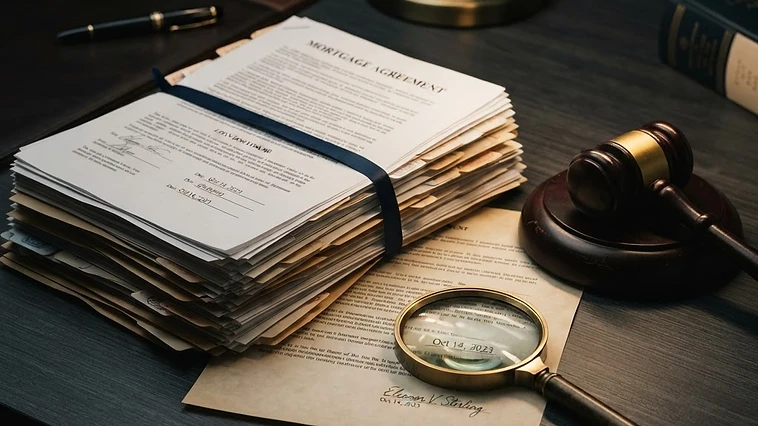
 Close-up of a homeowner organizing legal evidence and mortgage documents on a dark desk under warm lighting.

When federal and state agencies crack down on these practices, it provides a vital roadmap for homeowners. By understanding the specific abuses that regulators are targeting, homeowners can audit their own mortgage statements and communication logs to identify similar violations in their own cases.
Understanding Your Rights: The Two-Step Foreclosure Process
To effectively defend against an improper foreclosure, homeowners must understand the procedural rules that govern the process. Foreclosure laws vary significantly by state, primarily falling into two categories: judicial foreclosures (which require the lender to file a lawsuit in court) and non-judicial foreclosures (which proceed outside of court based on a power of sale clause in the deed of trust).
Regardless of the specific venue, the fundamental legal principles remain consistent. A recent 2026 ruling by the Ohio Supreme Court in Lakeview Loan Servicing, L.L.C. v. Kilpatrick provides excellent educational context on the mechanics of foreclosure. The court explained the two-step foreclosure process: first, the legal determination of the existence of a mortgage lien and the ascertainment of its extent; and second, the subjection of the pledged property to sale for its satisfaction.
This two-step framework is critical for homeowners to understand. The first step—proving the existence and extent of the lien—is where the battle is often fought. The foreclosing party must prove that they have the legal right to enforce the debt. They must produce the original promissory note, demonstrate a clear chain of title, and prove that the homeowner is actually in default for the specific amount claimed. If the servicer cannot definitively prove these elements, they may lack the legal standing to foreclose.
Common Defenses: Assignments, Standing, and Robo-Signing
One of the most powerful concepts in foreclosure defense is "standing." Simply put, standing means that the party filing the foreclosure action has suffered a legal injury and has the right to seek a remedy. In the context of a mortgage, the foreclosing entity must prove it is the valid holder of the promissory note and the assignee of the mortgage or deed of trust.
During the securitization boom, mortgages were bundled, sold, and transferred multiple times, often without the proper legal paperwork being executed or recorded. To cover up these missing links in the chain of title, the industry engaged in "robo-signing"—the mass fabrication and signing of legal documents by employees who had no personal knowledge of the facts they were swearing to.
While the massive robo-signing scandals of the early 2010s resulted in billions of dollars in settlements, the echoes of these practices remain. Homeowners today are still uncovering fabricated assignments of mortgage that were created years after the fact to facilitate a foreclosure.
Courts have increasingly recognized the rights of homeowners to challenge these fraudulent documents. For instance, the landmark California Supreme Court decision in Yvanova v. New Century Mortgage Corp. held that a borrower has standing to sue for wrongful foreclosure based on an allegedly void assignment, even if the borrower is in default. If an assignment is legally void—meaning it has no legal force or effect from its inception—the foreclosing entity has no legal authority to take the home.
Homeowners should meticulously review every assignment recorded against their property. Look for discrepancies in dates, signatures from known robo-signers, and assignments made by entities that had already filed for bankruptcy or ceased to exist at the time the document was executed.
Organizing Your Evidence and Discovery
Successfully navigating a foreclosure case requires impeccable organization and a proactive approach to gathering evidence. Homeowners cannot simply rely on the bank's word; they must demand proof.
One of the most effective tools available to homeowners is the Qualified Written Request (QWR) or Notice of Error (NOE) under the Real Estate Settlement Procedures Act (RESPA). By sending a formal, legally compliant letter to the mortgage servicer, a homeowner can demand a complete payment history, a breakdown of all assessed fees, the identity of the current master servicer, and copies of all original loan documents.
Federal law requires servicers to acknowledge and respond to these requests within specific timeframes. If the servicer fails to comply, or if they provide incomplete or contradictory information, this can serve as powerful evidence of servicing abuses.
Furthermore, homeowners should build a comprehensive forensic timeline of their loan. This includes:
- The Origination File: The original note, mortgage, and closing disclosures.
- The Chain of Title: Every recorded assignment, transfer, and allonge attached to the note.
- The Servicing History: Every monthly statement, notice of default, and correspondence with the servicer.
- The Securitization Data: If the loan was securitized, identifying the specific trust (e.g., a REMIC) and reviewing the Pooling and Servicing Agreement (PSA) to see if the trust's closing dates align with the dates on the assignments.
By treating their foreclosure defense as a forensic investigation, homeowners can uncover the discrepancies, missing documents, and outright bank fraud that often derail a lender's case.
Why the Foreclosure Defense Survival Playbook Helps
Facing a foreclosure is one of the most stressful experiences a homeowner can endure, but you do not have to fight this battle in the dark. The surge in 2026 foreclosures proves that banks and servicers are relying on volume and speed, hoping that homeowners will simply walk away without challenging the evidence.
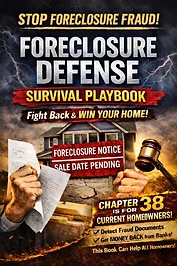
This is exactly Why the Foreclosure Defense Survival Playbook Helps. As a comprehensive, 530-page educational resource, the Playbook is designed to demystify the complex world of mortgage documents, court procedure, and legal research. It breaks down the exact strategies used to analyze a chain of title, spot void assignments, and identify the hallmarks of robo-signing and servicing abuses.
Whether you are working alongside an attorney or navigating the early stages of pro se litigation, the Playbook provides the foundational knowledge you need to organize your evidence, draft effective discovery requests, and hold massive financial institutions accountable to the letter of the law. Don't let a mortgage servicer take your home based on flawed paperwork or manufactured defaults. Equip yourself with the knowledge to fight back—order the Foreclosure Defense Survival Playbook today and take control of your financial future.

Order The Playbook
Get the Foreclosure Defense Survival Playbook
530 pages of structured, educational guidance covering mortgage documents, foreclosure procedures, evidence organization, and legal research — the same foundation this article draws from.