Foreclosure Defense
Rising Foreclosures and Mortgage Fraud: How to Defend Your Home in 2026
With foreclosures on the rise and federal agencies exposing widespread mortgage fraud, homeowners must learn to spot fake documents and servicing abuses.

Disclaimer: The information provided in this article is strictly for educational purposes and does not constitute legal advice. Homeowners facing foreclosure should consult with a qualified, licensed attorney to understand their specific legal rights and options in their jurisdiction.
For homeowners falling behind on their mortgage payments, the threat of losing a home can feel insurmountable. Lenders and mortgage servicers often project an aura of absolute authority, presenting a mountain of paperwork that seems impossible to challenge. However, recent headlines prove that the banking and mortgage industries are still plagued by systemic errors, fake documentation, and outright fraud.
If you are currently navigating late payments or staring down an active foreclosure lawsuit, understanding the current landscape of mortgage fraud, servicing abuses, and homeowner rights is your first line of defense. By learning how to scrutinize your loan file, you can level the playing field and fight back.
The Rising Foreclosure Threat in Q3 2026
According to the Mortgage Bankers Association's (MBA) National Delinquency Survey released in mid-August 2026, the American housing market is experiencing a notable shift. While overall early-stage delinquencies saw a slight seasonal decrease in the second quarter, the percentage of loans in the active process of foreclosure has steadily increased over the past year. Seriously delinquent loans—those 90 days or more past due or in the process of foreclosure—have seen concerning spikes, particularly in government-backed loan sectors.
For the everyday homeowner, these statistics represent a harsh reality: mortgage servicers are aggressively moving to clear their delinquent portfolios by filing foreclosure lawsuits. When economic pressures mount, servicers pivot rapidly from offering customer assistance to initiating hostile legal action.
Unfortunately, in their rush to push properties into foreclosure, lenders frequently cut corners. They rely on automated systems, outsourced legal mills, and poorly trained staff to process thousands of foreclosures simultaneously. This high-volume, low-accuracy approach inevitably leads to catastrophic mistakes—mistakes that violate homeowner rights and provide fertile ground for a robust foreclosure defense.
Federal Crackdowns Reveal Ongoing Mortgage Fraud
Many homeowners mistakenly believe that the rampant mortgage fraud and bank fraud that caused the 2008 financial crisis were eradicated by subsequent financial reforms. The reality is far more concerning. Fabricated documents, falsified financial records, and unauthorized property transfers remain a systemic threat in the lending industry today.
On August 20, 2026, the U.S. Department of Justice announced a major guilty plea in a multi-million-dollar bank and wire fraud conspiracy based in New Jersey. The perpetrators orchestrated a massive scheme by creating fake documentation to make it appear as though properties were owned by the conspirators. They fabricated escrow letters, manufactured fake deeds to transfer control of properties, and made false statements to mortgage lenders to secure massive, illicit loan payouts.
In the same week, financial intelligence agencies issued a public "wake-up call" to the lending sector, confirming that coordinated mortgage fraud operations were successfully exploiting systemic weaknesses across multiple major banks. Investigators uncovered a staggering volume of falsified income documents, misrepresented employment records, and fabricated business activities slipping past institutional safeguards.
Why does this matter to a homeowner in foreclosure? If sophisticated financial institutions and government agencies are actively being deceived by fake deeds, fabricated escrow records, and forged ownership transfers, it is entirely possible that the foreclosure documents filed against you are also compromised. You cannot simply take the bank's word that their paperwork is accurate. You must independently verify every claim they make against your property.
The Shadow of Robo-Signing: How Fraudulent Assignments Hurt Homeowners
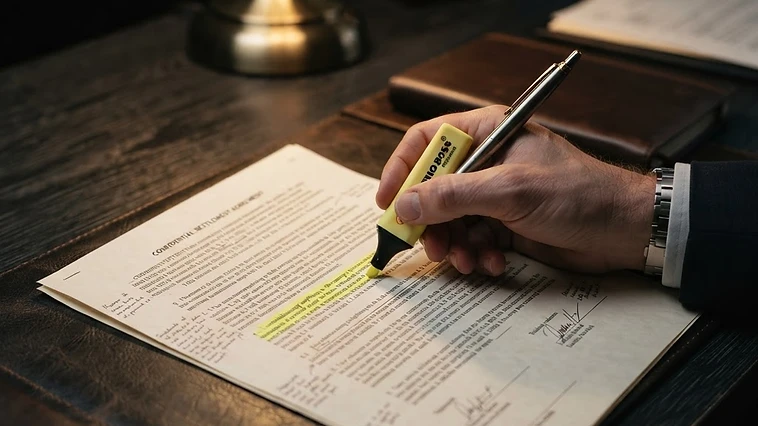 A homeowner carefully reviewing mortgage documents and foreclosure paperwork with a pen on a dark desk.

One of the most powerful concepts in foreclosure defense is "standing"—the legal requirement that the party suing you actually owns your debt and possesses the legal right to foreclose. In many cases, the bank that originated your loan is not the bank trying to foreclose on you. Mortgages are frequently sold, securitized into complex trusts, and transferred between multiple financial institutions.
To legally transfer the right to foreclose, lenders must execute and record an "Assignment of Mortgage" (or Assignment of Deed of Trust). This document establishes the chain of title. However, the mortgage industry has a dark history of "robo-signing"—the practice of having low-level employees rapidly sign thousands of assignments and affidavits without ever verifying the information within them, and often without possessing the legal authority to sign on behalf of the lender.
While regulators cracked down on the most blatant robo-signing abuses a decade ago, the legacy of these fraudulent assignments continues to haunt the chain of title for millions of homes. Furthermore, modern variations of robo-signing still occur. Homeowners actively fighting foreclosure routinely discover assignments that were backdated, signed by individuals who were not actually corporate officers, or notarized improperly.
If the Assignment of Mortgage in your collateral file is invalid, forged, or improperly executed, the plaintiff may lack the legal standing to foreclose on your home. Challenging a questionable assignment is a cornerstone of effective foreclosure defense. It forces the bank to prove their chain of title with admissible evidence, rather than relying on assumed authority.
Recognizing Servicing Abuses and Unfair Practices
Your mortgage servicer is the company that collects your monthly payments, manages your escrow account, and handles customer service. Servicers do not usually own your loan; they merely administer it. Unfortunately, because servicers are compensated based on fee collection and volume, they are heavily incentivized to charge default-related fees.
Servicing abuses are widespread and can artificially inflate your payoff balance, making it mathematically impossible to catch up on your loan. Common servicing abuses include:
- Misapplied Payments: Servicers may hold your payments in a "suspense account" rather than applying them to your principal and interest, artificially triggering a default.
- Phantom Fees: Unjustified charges for property inspections, broker price opinions (BPOs), and vague "corporate advances" frequently appear on delinquent accounts.
- Force-Placed Insurance: Servicers sometimes falsely claim your homeowner's insurance has lapsed and purchase outrageously expensive policy replacements on your behalf, adding the premium to your loan balance.
- Dual Tracking: This illegal practice occurs when a servicer negotiates a loan modification or loss mitigation option with you while simultaneously advancing the foreclosure process in court.
Regulatory guidelines are constantly shifting to address these issues. For example, on August 12, 2026, Fannie Mae issued comprehensive updates to its Servicing Guide, dictating strict new protocols for how servicers must handle property insurance, project standards, and loan modifications. However, history shows that servicers routinely fail to implement these complex regulatory changes. It is entirely up to the homeowner to audit their own payment history, identify servicing abuses, and hold the servicer legally accountable.
Building Your Foreclosure Defense: Evidence and Discovery
If you want to protect your home, you must transition from being a passive borrower to an active defender of your legal rights. You cannot win a foreclosure defense case on emotion; you win on evidence, procedure, and the law.
Your first step is to demand your complete collateral file and payment history. Under the Real Estate Settlement Procedures Act (RESPA), homeowners have the right to send a Qualified Written Request (QWR), a Notice of Error (NOE), or a Request for Information (RFI) to their servicer. The servicer is legally obligated to respond within a specific timeframe, provide the requested documents, and investigate any errors you have identified.
Through the formal legal process of "discovery," you or your attorney can compel the foreclosing trust to produce the original, wet-ink promissory note. You can demand to see the pooling and servicing agreement (PSA) to ensure your loan was actually transferred into the trust before the trust's closing date. You can request the employment records of the person who signed your Assignment of Mortgage to verify if they were a known robo-signer.
By organizing this evidence systematically, you can build affirmative defenses and counterclaims based on mortgage fraud, breach of contract, lack of standing, and violations of consumer protection laws. Banks rely on homeowners giving up by default. When a homeowner actively engages in legal research, demands discovery, and points out specific servicing abuses, the dynamic of the lawsuit changes entirely.
Why the Foreclosure Defense Survival Playbook Helps
Understanding the complexities of mortgage documents, chain of title, and court procedure can feel overwhelming, especially when you are under the immense stress of a pending foreclosure. That is exactly why the Foreclosure Defense Survival Playbook was created.
This comprehensive, 530-page educational book is the ultimate resource for homeowners who refuse to walk away without a fight. The Playbook demystifies the legal jargon and breaks down the exact strategies used by foreclosure defense attorneys. You will learn how to dissect your mortgage documents, identify fraudulent assignments and robo-signing, organize your evidence for maximum impact, and master the fundamentals of legal research and pro se litigation.
Whether you are trying to hold your servicer accountable for missing payments or preparing to challenge a massive Wall Street trust in court, education is your most powerful weapon. Don't let bank fraud or servicing abuses cost you your home. Order your copy of the Foreclosure Defense Survival Playbook today and take the first critical step toward securing your family's future.

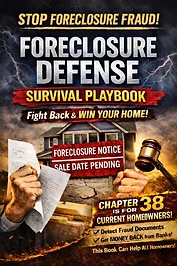
Order The Playbook
Get the Foreclosure Defense Survival Playbook
530 pages of structured, educational guidance covering mortgage documents, foreclosure procedures, evidence organization, and legal research — the same foundation this article draws from.