Foreclosure Defense
New CFPB Rulings and 2025 Foreclosure Data: How to Defend Your Home Against Servicing Abuses
Recent 2025 data shows hundreds of thousands of homes face foreclosure, while the CFPB cracks down on abusive mortgage servicing. Learn how to spot lender errors and defend your rights.

Disclaimer: The following article is for educational purposes only and does not constitute legal advice. If you are facing foreclosure, consult with a qualified attorney in your jurisdiction to understand your specific legal rights and options.
Facing foreclosure is one of the most stressful and overwhelming experiences a homeowner can endure. If you have fallen behind on your mortgage payments or have already received a notice of default, you might feel like the entire legal and financial system is stacked against you. However, recent developments in federal enforcement and the latest housing market data reveal that homeowners have more tools and protections than they might realize.
In recent days, the release of the Year-End 2024 U.S. Foreclosure Market Report by ATTOM, alongside aggressive new stances by the Consumer Financial Protection Bureau (CFPB) regarding mortgage servicing abuses, has shifted the landscape of foreclosure defense. Understanding these recent shifts, recognizing the signs of mortgage fraud or servicing errors, and knowing how to organize your evidence are critical steps in fighting back.
The Latest Foreclosure Data: What the 2025 Numbers Mean for You
On January 15, 2025, ATTOM released its comprehensive Year-End 2024 U.S. Foreclosure Market Report. The data shows that while overall foreclosure activity has seen a slight decline compared to the previous year, a staggering 322,103 U.S. properties still faced foreclosure filings—including default notices, scheduled auctions, and bank repossessions—in 2024.
What does this mean for the average homeowner? First, it means you are not alone. Hundreds of thousands of families are navigating this exact same crisis. Second, it highlights that banks and mortgage servicers are processing a massive volume of distressed loans. When financial institutions process hundreds of thousands of foreclosures, they rely heavily on automated systems, third-party vendors, and rapid document processing. This high-volume environment is exactly where critical errors, robo-signing, and procedural violations occur.
Foreclosure defense is often built on uncovering these exact errors. When a bank is rushing to foreclose on thousands of properties, they frequently fail to follow the strict notice, timing, and documentation rules required by state and federal law. Recognizing that the system is prone to high-volume mistakes is the first step in realizing that you have a fighting chance to save your home.
CFPB Crackdowns: When Ineffective Servicing Becomes Illegal
The Consumer Financial Protection Bureau (CFPB) has recently taken a much harder line against mortgage servicers who fail to properly manage homeowner accounts. In a landmark shift, the CFPB has explicitly stated that "ineffective loan servicing is an abusive act or practice." This was highlighted in a recent consent order with a major reverse mortgage servicer, signaling a broader federal crackdown on how servicers handle distressed borrowers.
For years, homeowners have complained about lost paperwork, misapplied payments, and contradictory information from their mortgage servicers. The CFPB's recent actions validate these complaints, elevating them from mere "customer service issues" to actionable legal violations. Under federal laws like the Real Estate Settlement Procedures Act (RESPA), servicers are required to meet strict deadlines for responding to homeowner inquiries, crediting payments, and processing loss mitigation applications.
If your mortgage servicer has failed to properly process your monthly payments, inaccurately reported your account as delinquent during a grace period, or piled on excessive and unexplained fees, they may be in violation of federal law. These abuses are not just frustrating; they can form the foundation of a powerful substantive defense against a foreclosure action.
Common Mortgage Servicing Abuses to Watch For
To effectively defend your home, you must know what to look for. Mortgage servicing abuses often hide in plain sight within your monthly statements and correspondence. Here are some of the most common abuses and errors that homeowners should scrutinize:
1. Dual Tracking Dual tracking is one of the most egregious and common abuses in the mortgage industry. This occurs when a mortgage servicer ostensibly works with a homeowner to negotiate a loan modification or loss mitigation plan, while simultaneously moving forward with the foreclosure process. Federal rules strictly prohibit dual tracking. If you submitted a complete loss mitigation application, the servicer generally cannot initiate or proceed with a foreclosure sale until that application has been fully evaluated and the appeals process exhausted.
2. Failure to Promptly Credit Payments Under the prompt crediting rule, a mortgage servicer must credit your payment on the day it receives the funds, with very few exceptions. If a servicer holds your payment in a "suspense account" or delays crediting it, it can trigger unwarranted late fees and falsely push your account into default.
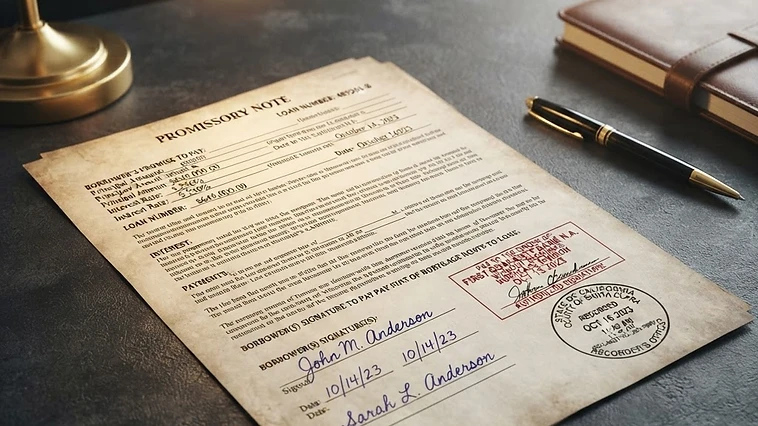 Close-up of a mortgage promissory note and legal documents on a dark charcoal desk under warm gold lighting.

3. Excessive or Unauthorized Fees Servicers sometimes engage in outright deception by tacking on inappropriate foreclosure costs, property inspection fees, or other invalid charges. Even if a fee category is legitimate under your mortgage contract, the amount charged must be reasonable and actually incurred. Piling up excessive fees can artificially inflate the amount you need to reinstate your mortgage, wrongfully pushing you out of your home.
4. Misapplication of Funds When you make a payment, it should be applied to principal, interest, taxes, and insurance in the order specified by your promissory note. Servicers often misapply funds to late fees first, which leaves your principal and interest short, triggering further late fees in a cascading cycle of debt.
Procedural and Substantive Defenses Against Foreclosure
When fighting a foreclosure, defenses generally fall into two categories: procedural and substantive. Understanding the difference is vital for organizing your legal strategy and evidence.
Procedural Defenses Procedural defenses focus on the rules and laws the bank must follow to legally foreclose. For example, in non-judicial foreclosure states like California, lenders must follow strict notice and timing rules before a trustee's sale can occur. If the lender fails to send a proper Notice of Default, misses a statutory deadline, or fails to publish the notice of sale correctly, the foreclosure can be delayed or dismissed.
Another powerful procedural defense involves "standing." Does the foreclosing party actually have the legal right to foreclose? During the housing boom, mortgages were frequently securitized—bundled together and sold to undisclosed entities. This process often involved the Mortgage Electronic Registration Systems (MERS). If the foreclosing party cannot produce the original promissory note, or if there is a break in the chain of assignments, they may lack the standing to foreclose. The separation of the mortgage deed and the promissory note, known as bifurcation, can create a defective legal relationship that weakens the bank's ability to enforce the foreclosure.
Substantive Defenses Substantive defenses focus on the actual facts of your specific case. If the mortgage servicer made mathematical errors, misapplied your payments, or breached the terms of a loan modification agreement, these are substantive defenses. If you can prove through your bank records and correspondence that you are not actually in default, or that the default was manufactured by the servicer's illegal fee-stacking, the court may rule in your favor.
How to Organize Your Evidence and Fight Back
The key to a successful foreclosure defense is meticulous record-keeping and evidence organization. Banks rely on the assumption that homeowners will be too overwhelmed to challenge their accounting. You must prove them wrong.
Start by gathering every single document related to your mortgage. This includes the original promissory note, the deed of trust or mortgage, every monthly statement, every letter sent to or received from the servicer, and proof of all payments made (such as canceled checks or bank statements).
If you suspect an error, you have the right to send a Qualified Written Request (QWR) or a Notice of Error (NOE) to your servicer under RESPA. The servicer is legally required to acknowledge receipt of your letter and conduct an investigation within specific federal timeframes. The responses you receive (or the servicer's failure to respond) can become critical evidence in your defense.
Create a timeline of events. Document every phone call with the servicer, noting the date, time, the name of the representative you spoke with, and exactly what was said. In the complex world of foreclosure litigation, the party with the best-organized evidence often has the upper hand.
Why the Foreclosure Defense Survival Playbook Helps
Navigating the treacherous waters of foreclosure defense, mortgage fraud, and servicing abuses requires more than just a basic understanding of the law; it requires a comprehensive, step-by-step strategy. This is exactly where the Foreclosure Defense Survival Playbook becomes your most valuable asset.
This 530-page educational manual is specifically designed for homeowners who are behind on payments or actively fighting foreclosure. It breaks down complex legal jargon into plain, actionable language. The Playbook teaches you exactly how to read and dissect your mortgage documents to find the hidden errors and chain-of-title breaks that banks pray you never discover.
Furthermore, the Playbook provides detailed guidance on how to organize your evidence, draft effective Qualified Written Requests, and understand the intricate court procedures involved in pro se litigation. It empowers you to spot the exact servicing abuses the CFPB is currently cracking down on, from dual tracking to illegal fee stacking.
Don't let the banks use their high-volume, automated systems to steamroll over your rights and take your home. Equip yourself with the knowledge to hold them accountable. Order the Foreclosure Defense Survival Playbook today, and take the first crucial step toward leveling the playing field and saving your home.


Order The Playbook
Get the Foreclosure Defense Survival Playbook
530 pages of structured, educational guidance covering mortgage documents, foreclosure procedures, evidence organization, and legal research — the same foundation this article draws from.