Foreclosure Defense
2025 Foreclosure Trends and How to Defend Against Mortgage Servicer Abuses
With over 322,000 foreclosure filings recently reported, understanding your rights against mortgage servicer abuses is more critical than ever.

Disclaimer: The following article is for educational purposes only and does not constitute legal advice. If you are facing foreclosure, consult with a qualified attorney in your jurisdiction.\n\nFacing foreclosure is one of the most stressful experiences a homeowner can endure. If you have fallen behind on your mortgage payments or are already in the foreclosure process, you might feel overwhelmed by the legal jargon, the aggressive tactics of mortgage servicers, and the sheer volume of paperwork. However, recent data and federal enforcement actions reveal that homeowners have more rights and defenses than they might realize. \n\nIn January 2025, ATTOM released its Year-End U.S. Foreclosure Market Report, revealing that while overall foreclosure activity has seen a slight decline, a staggering 322,103 U.S. properties still faced foreclosure filings in the past year. Concurrently, federal watchdogs like the Consumer Financial Protection Bureau (CFPB) have been actively cracking down on mortgage servicers for unlawful foreclosure practices and order violations. This means that the bank or servicer trying to take your home might be making critical, legally actionable mistakes.\n\nThis article will break down the recent news surrounding foreclosure enforcement, explain the common abuses committed by mortgage servicers, and outline the procedural and substantive defenses you can use to fight back.\n\n## The Current State of Foreclosures and Servicing Abuses\n\nDespite the economic recovery following the pandemic, hundreds of thousands of homeowners are still receiving default notices, facing scheduled auctions, or dealing with bank repossessions. The recent ATTOM report highlights that while the peak of the 2010 foreclosure crisis is behind us, the threat remains very real for over 300,000 families annually.\n\nMore importantly, recent enforcement actions by the CFPB highlight a persistent problem in the industry: ineffective and abusive loan servicing. In recent months, the CFPB has settled charges with major mortgage loan servicers for unlawful foreclosure practices. These abuses often include failing to properly process loss mitigation applications, charging unauthorized fees, and engaging in 'dual tracking'—a strictly prohibited practice where a servicer moves forward with foreclosure while simultaneously negotiating a loan modification with the homeowner.\n\nFor a homeowner in distress, this news is a double-edged sword. On one hand, it confirms that the system is often rigged and prone to errors. On the other hand, it provides a clear roadmap for defense. If federal regulators are finding widespread fraud and procedural violations, there is a significant chance that your specific foreclosure case contains similar errors.\n\n## Understanding Procedural Defenses in Foreclosure\n\nWhen a lender or servicer initiates a foreclosure, they must follow strict legal procedures dictated by state and federal law. A procedural defense attacks the way the foreclosure is being handled, rather than the underlying fact of whether you missed payments. \n\nOne of the most common procedural defenses revolves around 'standing.' In legal terms, standing means that the party suing you actually has the legal right to do so. During the securitization boom, mortgages were sliced, diced, and sold multiple times. As a result, the paperwork transferring the mortgage (the assignment) and the promissory note were often lost, forged, or improperly endorsed. If the foreclosing party cannot produce the original promissory note or prove a clear chain of title, the court may dismiss the case. While the 'produce the note' defense is harder to win today than it was a decade ago, it remains a vital tool if the servicer's record-keeping is sloppy.\n\nAnother critical procedural defense involves notice requirements. Your mortgage contract and state laws require the lender to provide specific notices before accelerating the loan and filing for foreclosure. If you never received a formal notice of default, or if the notice did not contain the exact language required by your mortgage contract (often found in Paragraph 22 of standard Fannie Mae/Freddie Mac mortgages), the foreclosure may be deemed invalid. Courts require strict compliance with these procedural prerequisites.\n\n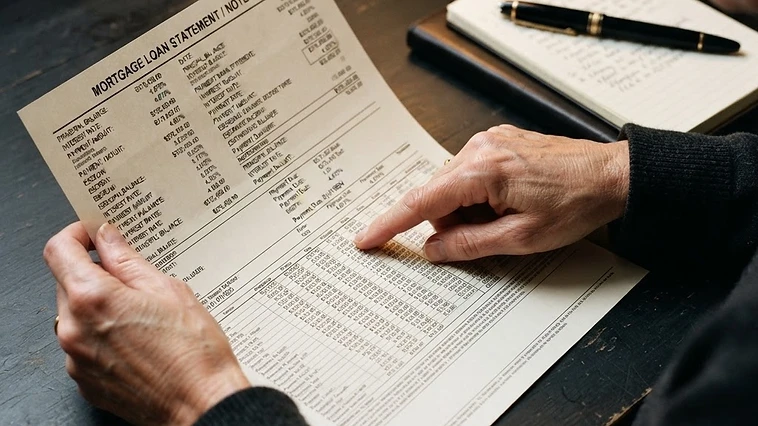 Homeowner reviewing mortgage loan documents for servicer errors\n\n## Substantive Defenses: Catching Mortgage Servicer Errors\n\nWhile procedural defenses focus on the rules of the lawsuit, substantive defenses focus on the facts of your specific account. Mortgage servicers handle millions of accounts, and their automated systems are notorious for making devastating errors.\n\nOne major substantive defense is the misapplication of payments. Servicers frequently fail to promptly credit payments, or they apply payments to arbitrary fee accounts rather than the principal and interest. This can artificially inflate your past-due balance, pushing you into default even if you were making payments. If you can prove through your own bank records that payments were made but not properly credited, you can defeat the foreclosure.\n\nAnother widespread abuse is the imposition of excessive or unauthorized fees. Servicers often pile on property inspection fees, late fees, and corporate advance fees that are either not permitted by the mortgage contract or are entirely fabricated. These junk fees can make it impossible for a homeowner to reinstate their loan. A forensic review of your mortgage payment history can uncover these hidden charges.\n\nFinally, as highlighted by recent CFPB actions, dual tracking remains a potent substantive defense. If you submitted a complete loss mitigation application (such as a request for a loan modification), federal law generally prohibits the servicer from initiating or advancing the foreclosure process until they have evaluated your application and provided a written decision. If they proceed with a foreclosure sale while your application is pending, they are violating federal law.\n\n## Federal Protections: TILA, RESPA, and the CFPB\n\nHomeowners have powerful federal statutes on their side, primarily the Truth in Lending Act (TILA) and the Real Estate Settlement Procedures Act (RESPA). These laws were designed to ensure transparency and protect consumers from predatory lending and servicing practices.\n\nUnder RESPA, borrowers have the right to send a Notice of Error (NOE) or a Request for Information (RFI) to their servicer. The servicer is legally required to acknowledge receipt within five days and conduct a reasonable investigation within 30 days. If you suspect your servicer has misapplied payments or charged illegal fees, sending a well-drafted NOE is a critical first step in building your defense. If the servicer fails to comply, you may have grounds for a counter-suit.\n\nAdditionally, TILA requires that borrowers receive notice when their mortgage is sold or transferred to a new owner within 30 days. RESPA requires a 15-day notice before a servicing transfer takes effect. Failure to provide these notices can create confusion about where to send payments and can serve as another layer of defense if the new servicer attempts to foreclose based on payments that were sent to the old servicer during the transition period.\n\n## How to Organize Your Evidence Like a Pro\n\nWinning a foreclosure defense case requires more than just knowing the law; it requires impeccable organization and evidence. The banks have teams of lawyers and automated systems generating reams of documents. To fight back, you must become your own best advocate and investigator.\n\nStart by creating a comprehensive timeline of every interaction you have had with your lender or servicer. Save every letter, notice, and monthly statement. Do not rely on the servicer's online portal, as they can lock you out of your account once foreclosure begins. Download and print all your records immediately.\n\nNext, request your complete payment history and the collateral file (which includes the note, mortgage, and all assignments) from the servicer. Compare the servicer's payment history against your own bank statements to identify discrepancies. Look for unexplained fees, sudden jumps in the principal balance, or payments that were held in 'suspense' accounts rather than applied to your loan.\n\nBy organizing your evidence forensically, you shift the balance of power. When you can present a judge with clear, documented proof of servicer errors or fraud, you dismantle the bank's presumption of accuracy.\n\n## Why the Foreclosure Defense Survival Playbook Helps\n\nNavigating the treacherous waters of foreclosure defense, mortgage fraud, and servicer abuses is incredibly daunting. The laws are complex, the paperwork is overwhelming, and the stakes—your family's home—could not be higher. You cannot rely on the bank to tell you the truth, and you cannot afford to go into this battle unprepared.\n\nThis is exactly why the Foreclosure Defense Survival Playbook is an absolute necessity for any homeowner facing late payments or foreclosure. This comprehensive 530-page educational guide is designed specifically for homeowners who need to understand the system and fight back. \n\nThe Playbook walks you step-by-step through the process of analyzing your mortgage documents, identifying robo-signing and fraudulent assignments, and spotting the exact servicing abuses that the CFPB is currently prosecuting. It teaches you how to organize your evidence forensically, draft effective Requests for Information, and understand the complex court procedures that banks use to intimidate unrepresented homeowners. \n\nDon't let a mortgage servicer's automated errors or illegal tactics cost you your home. Arm yourself with the knowledge, strategies, and confidence needed to hold the banks accountable. Order the Foreclosure Defense Survival Playbook today and take the first crucial step toward saving your home and securing your financial future.



Order The Playbook
Get the Foreclosure Defense Survival Playbook
530 pages of structured, educational guidance covering mortgage documents, foreclosure procedures, evidence organization, and legal research — the same foundation this article draws from.