Foreclosure Defense
New York Court Blocks CitiMortgage Foreclosure Over Flawed Payoff Records: What It Means for Homeowners
A recent appellate court ruling against CitiMortgage proves that banks must provide strict documentary evidence of what you owe, offering a powerful strategy for homeowners fighting foreclosure.
Disclaimer: The following article is for educational purposes only and does not constitute legal advice. If you are facing foreclosure, please consult with a qualified attorney in your jurisdiction to discuss your specific legal situation.
When a homeowner falls behind on mortgage payments and faces the threat of foreclosure, it often feels like the bank holds all the cards. Lenders and their massive legal teams project an image of invincibility, leading many homeowners to believe that fighting back is a lost cause. However, a recent and highly significant court ruling out of New York proves that even the largest financial institutions can be stopped in their tracks if they fail to follow the strict rules of evidence.
On July 16, 2025, the Appellate Division, Second Department in New York handed down a ruling in the case of Citimortgage, Inc. v Erickson. The court blocked CitiMortgage from finalizing a foreclosure—not because the homeowner didn't owe money, but because the bank failed to produce the proper business records to prove the exact payoff amount.
This ruling is a massive educational moment for homeowners nationwide. It highlights a critical vulnerability in the foreclosure machine: the paperwork. In this article, we will break down the details of this recent ruling, explain why bank payoff records are so frequently flawed, and explore how homeowners can use the rules of evidence to defend their homes.
The Recent Court Ruling: Citimortgage v. Erickson
To understand the power of this recent ruling, we must look at the specific details of the Citimortgage, Inc. v Erickson case. In this judicial foreclosure proceeding, CitiMortgage was attempting to finalize the foreclosure process by asking the court to confirm a "referee's report" and grant a final judgment of foreclosure and sale.
In judicial foreclosure states like New York and Florida, the lender cannot simply take your house. They must file a lawsuit, prove they have the right to foreclose (known as "standing"), and then prove exactly how much money is owed. Typically, the court appoints a referee to calculate the total debt, including the principal balance, interest, late fees, and corporate advances (like property taxes and insurance paid by the lender).
In the Erickson case, the homeowner had previously filed for bankruptcy and surrendered the property, which legally blocked him from contesting the foreclosure itself under a doctrine called "judicial estoppel." He even tried to use New York's recently enacted Foreclosure Abuse Prevention Act (FAPA) to challenge the case, but the court ruled that his prior bankruptcy actions prevented him from doing so.
By all accounts, CitiMortgage had won the legal argument regarding their right to foreclose. But then, the bank hit a wall.
When CitiMortgage moved to confirm the referee's report to establish the final payoff amount, the appellate court refused to grant the judgment. Why? Because the numbers in the referee's report were based on business records that the bank never actually included in the court record. The court ruled that without the underlying documentary evidence—the actual accounting ledgers and payment histories—it could not accept the payoff amount as valid. The foreclosure was blocked, and the case was sent back to the trial court.
Why Bank Paperwork and Payoff Records Matter
This ruling strikes at the heart of a widespread issue in the mortgage servicing industry: sloppy record-keeping. When a mortgage is originated, it is often sold, transferred, and securitized multiple times. The company servicing your loan today is rarely the company that lent you the money in the first place.
Every time a mortgage is transferred, the accounting data is migrated from one computer system to another. During these transfers, errors are incredibly common. Payments made to the old servicer might not be credited by the new servicer. Unauthorized fees, inflated property inspection charges, and incorrect interest calculations are frequently baked into the total balance.
When a bank files for foreclosure, they rely on these computer systems to generate a final payoff number. However, the law requires more than just a summary number printed on a piece of paper. Under the rules of evidence, a bank must prove its financial claims using the "Business Records Exception" to the hearsay rule.
This means the bank must produce the actual, contemporaneous accounting records that show every charge, every payment, and every fee applied to the account over the life of the loan. If the bank simply provides an affidavit from a bank employee stating, "The borrower owes $300,000," without attaching the detailed payment history to prove it, that testimony is legally insufficient. The Erickson ruling reinforces the fact that courts cannot just take the bank's word for it; the math must be proven on paper.
Procedural vs. Substantive Foreclosure Defenses
When defending against a foreclosure, homeowners and their legal teams generally rely on two categories of defenses: procedural and substantive. Understanding the difference is key to organizing your evidence.
Procedural Defenses focus on the rules of the legal process. For example, did the bank send the required 120-day Notice of Default under federal law? Did they comply with the Real Estate Settlement Procedures Act (RESPA) when transferring the servicing rights? Do they have the original promissory note to prove they have legal "standing" to sue you? If the bank violates these procedures, the court can dismiss the case, forcing the lender to start over.
Substantive Defenses focus on the actual facts of the case, particularly the accounting. Even if the bank has perfect standing and followed all the procedural rules, they still must prove the substance of their claim: the exact amount of money you owe.
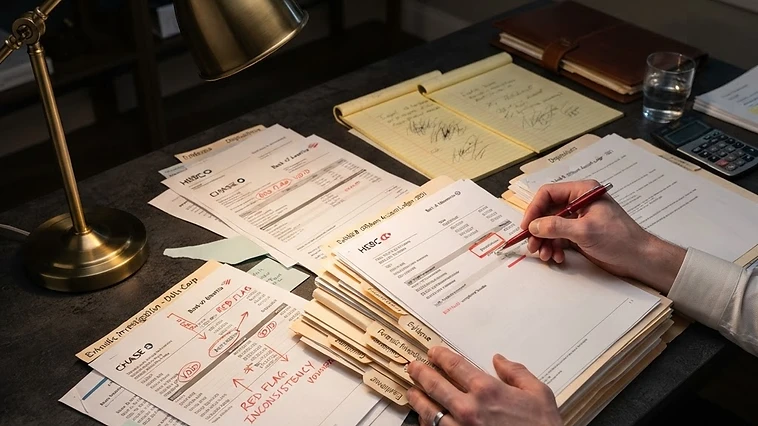 Homeowner organizing mortgage statements and legal evidence on a desk to challenge bank payoff records.

As the Citimortgage v. Erickson case demonstrates, a substantive defense regarding the accuracy of the payoff records can be just as powerful as a procedural defense. If the bank claims you owe $15,000 in missed payments and $5,000 in corporate advances, but they cannot produce the receipts, invoices, and ledgers to justify those corporate advances, the court cannot legally grant them a judgment for that amount.
How Missing Business Records Stall Foreclosures
When a homeowner actively challenges the bank's accounting, it forces the lender to do something they hate doing: produce actual evidence.
Mortgage servicers handle millions of accounts. Their business model relies on foreclosures moving quickly and smoothly through the court system, often via default judgments when homeowners fail to respond to the lawsuit. When a homeowner files an answer to the lawsuit and demands strict proof of the accounting, the servicer's automated machine grinds to a halt.
To overcome a challenge to their payoff records, the bank must locate the original payment histories, which may be archived with a previous servicer. They must find a "records custodian"—a bank employee who can testify under oath about how the records were created, how they are stored, and why they are accurate. If the records are missing, incomplete, or clearly contain errors (such as uncredited payments), the bank cannot legally prove its case.
This delay provides financially distressed homeowners with crucial time. Time can be used to negotiate a loan modification, apply for forbearance, arrange a short sale, or restructure debt through a Chapter 13 bankruptcy. In some cases, if the bank's records are so hopelessly flawed that they cannot prove the debt, they may be forced to offer a highly favorable settlement to the homeowner.
Steps Homeowners Can Take to Scrutinize Mortgage Documents
If you are facing foreclosure or are behind on your mortgage payments, you must become an active participant in your defense. You cannot assume that the bank's numbers are correct. Here are educational steps homeowners can take to scrutinize their mortgage documents and hold their servicers accountable:
1. Keep Your Own Detailed Records: Never rely solely on the bank's online portal. Keep copies of every canceled check, bank statement, and confirmation number proving you made your payments. If you are granted a forbearance or a loan modification, keep the physical letters outlining the terms.
2. Send a Notice of Error (NOE) or Request for Information (RFI): Under federal RESPA laws, homeowners have the right to request detailed information about their loan from their servicer. By sending a formal Request for Information (formerly known as a Qualified Written Request or QWR), you can legally demand a complete payment history ledger, a breakdown of all fees assessed to the account, and the identity of the loan's current owner. The servicer is legally required to respond within a specific timeframe.
3. Scrutinize the Payment Ledger for Red Flags: Once you obtain your payment history, review it line by line. Look for "suspense account" abuses, where the bank takes your payment but holds it in a separate account instead of applying it to your principal and interest. Look for duplicate property inspection fees, unexplained legal fees, or forced-place insurance charges that were added to your balance without proper notice.
4. Demand Proof in Court (Discovery): If you are in an active foreclosure lawsuit, the discovery phase is your opportunity to demand the bank's evidence. Through Requests for Production of Documents and Interrogatories, you can force the bank to hand over the exact business records they intend to use at trial. If they fail to produce them, you can file motions to prevent them from using summary numbers, just as the court did in the Erickson case.
Why the Foreclosure Defense Survival Playbook Helps
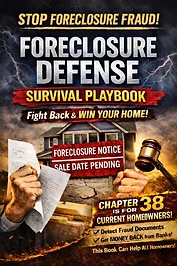
Navigating the complexities of mortgage documents, rules of evidence, and court procedures can feel overwhelming for any homeowner. The banks rely on this confusion to push foreclosures through the system unchallenged. That is exactly why the Foreclosure Defense Survival Playbook was created.
This comprehensive, 530-page educational resource is designed specifically for homeowners who want to understand their rights and fight back against servicing abuses. The Playbook breaks down complex legal concepts—like the Business Records Exception and judicial estoppel—into plain, easy-to-understand language.
By reading the Playbook, you will learn how to audit your own mortgage ledger, spot the hidden fees that servicers use to inflate your debt, and draft the exact letters needed to demand proof of your account balance. It provides step-by-step guidance on how to organize your evidence, understand the discovery process, and hold the bank to the strict standard of the law.
Cases like Citimortgage v. Erickson prove that banks do not have absolute power; they are bound by the rules of evidence just like anyone else. If you are ready to level the playing field, uncover the flaws in your lender's paperwork, and take control of your financial future, order your copy of the Foreclosure Defense Survival Playbook today. Knowledge is your best defense—don't face the bank without it.

Order The Playbook
Get the Foreclosure Defense Survival Playbook
530 pages of structured, educational guidance covering mortgage documents, foreclosure procedures, evidence organization, and legal research — the same foundation this article draws from.