Foreclosure Cases
Recent Court Rulings: Challenging Exorbitant Bank Fees and Foreclosure Fraud
Recent October 2026 court decisions highlight the importance of challenging exorbitant servicer fees and organizing solid evidence to fight foreclosure.
Disclaimer: The following article is for educational purposes only and does not constitute legal advice. If you are facing foreclosure, consult with a qualified attorney in your jurisdiction.
The Shifting Landscape of Foreclosure Defense
For homeowners facing the terrifying prospect of losing their homes, the legal system can feel like an insurmountable machine designed to protect banks and mortgage servicers. However, recent court rulings from October 2026 reveal that homeowners who understand their rights, scrutinize their mortgage documents, and challenge the status quo can expose significant flaws in how banks operate. From exorbitant attorney fees to questionable foreclosure judgments, the courts are increasingly scrutinizing the practices of mortgage servicers and their legal representatives.
Understanding these recent developments is crucial for anyone currently behind on payments or actively fighting a foreclosure case. The banking industry relies on the assumption that homeowners will not fight back, or if they do, that they will not know how to properly audit their loan files or present evidence. By examining recent enforcement actions and court rulings, homeowners can learn valuable lessons about evidence organization, legal research, and the importance of holding servicers accountable for every dollar they claim is owed.
Challenging Exorbitant Servicer and Attorney Fees
One of the most significant recent rulings occurred in October 2026 in the case of Wilmington Trust, N.A. v. Stradtman Park, LLC. In this case, a commercial mortgage-backed security (CMBS) trustee won a foreclosure judgment, but the court drastically gutted the trustee's demand for attorney fees. The servicer had requested approximately $588,000 in legal fees, but the Appellate Division unanimously slashed that amount to $250,000.
The court's reasoning is a powerful lesson for foreclosure defense: even when a mortgage contract permits the bank to recover attorney fees, those fees must be reasonable, warranted, and reflective of actual local market rates. The court ruled that it is not bound by whatever inflated fee schedule a servicer agrees to pay its lawyers.
For residential homeowners, this ruling underscores a critical strategy: you must audit your payoff statements and fee demands. Mortgage servicers frequently tack on thousands of dollars in questionable fees, including property inspection fees, corporate advance fees, and inflated legal costs. Homeowners often assume that the numbers presented by the bank are accurate and legally binding. However, as this recent ruling demonstrates, courts are willing to strike down exorbitant fees if they are properly challenged. Homeowners should demand a detailed, itemized accounting of every fee added to their loan balance and be prepared to challenge charges that seem duplicative, unnecessary, or wildly above market rates.
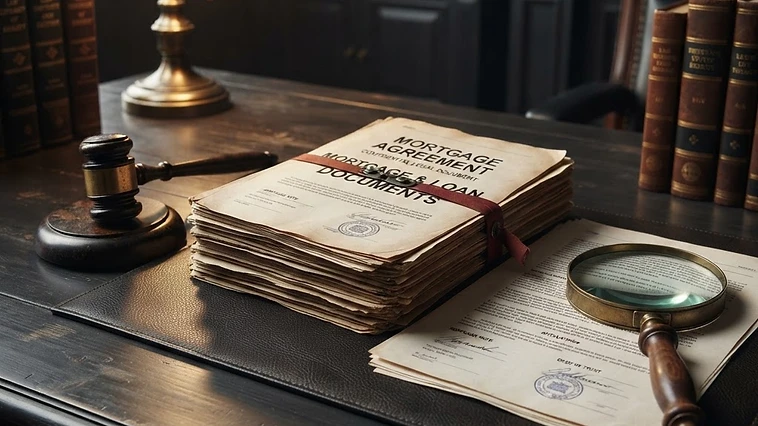
 Homeowner reviewing mortgage servicer fee statements and foreclosure legal documents on a dark desk.

The High Bar for Proving Mortgage Fraud in Court
While challenging fees can yield positive results, proving outright mortgage fraud or vacating an existing foreclosure judgment remains a steep uphill battle. This was highlighted in another October 2026 ruling, U.S. Bank N.A. v. Vetri. In this case, a New York appellate court denied a homeowner's attempt to vacate a prior judgment of foreclosure and sale. The homeowner had alleged fraud and presented what he claimed was newly discovered evidence.
The court affirmed the lower court's decision, stating that to relieve a party from a judgment based on newly discovered evidence, the evidence must be such that, if introduced at trial, it would probably have produced a different result. Furthermore, the court ruled that the homeowner did not provide sufficient evidence to support claims of fraud or misconduct by U.S. Bank in obtaining the foreclosure judgment.
The educational takeaway here is profound: allegations of robo-signing, fraudulent assignments, or servicing abuses must be backed by meticulously organized, admissible evidence presented at the correct procedural stage. Simply claiming that a bank committed fraud is never enough. Homeowners must understand the rules of discovery, how to authenticate documents, and how to build a forensic timeline of their loan's history. Waiting until after a judgment has been entered to raise these defenses is incredibly risky and often fatal to the case. This highlights the absolute necessity of early, aggressive evidence gathering and a deep understanding of court procedure.
Deeds in Lieu and the Push for Judicial Foreclosure
Another fascinating development from October 2026 involves how courts are treating shortcuts that banks use to bypass the formal foreclosure process. In Shanghai Commercial Bank Ltd. v. New Tent, LLC, a New York court invalidated a consensual deed in lieu of foreclosure (DIL) that the lender had held in escrow as part of a forbearance agreement. The lender attempted to record the deed after a default to take title without going through the courts.
The court ruled that this bargained-for deed in lieu functioned as a security instrument (a mortgage) and could not simply be recorded to convey title. Instead, the court forced the lender to commence a formal judicial foreclosure. This ruling is a significant victory for borrower rights, as it prevents lenders from circumventing the judicial process and the protections it affords homeowners.
For homeowners, this emphasizes the importance of understanding the documents you sign during loss mitigation or forbearance negotiations. Banks often try to insert clauses or require documents that waive your rights to a fair hearing. Knowing that courts are willing to invalidate these shortcuts if they violate property laws gives homeowners leverage when negotiating loan modifications or fighting aggressive servicing tactics.
How to Audit Your Mortgage Documents and Servicing File
Given these recent rulings, how can a homeowner actively defend themselves? The first step is conducting a comprehensive audit of your mortgage documents and servicing file. This involves requesting your complete collateral file and payment history from your servicer through a Qualified Written Request (QWR) or Request for Information (RFI) under the Real Estate Settlement Procedures Act (RESPA).
When reviewing your file, look for breaks in the chain of title. Did the entity foreclosing on you actually receive a valid assignment of the mortgage before they filed the lawsuit? Are the signatures on the assignments legitimate, or do they show signs of robo-signing?
Next, scrutinize the payment history. Look for instances of dual tracking—where a servicer proceeds with foreclosure while simultaneously reviewing you for a loan modification. Dual tracking is a violation of Consumer Financial Protection Bureau (CFPB) rules and can be a strong defense in a foreclosure proceeding. Finally, as learned from the Wilmington Trust case, meticulously review every fee assessed to your account. If the bank cannot justify a fee with an invoice or proof of service, it must be challenged.
Why the Foreclosure Defense Survival Playbook Helps
Navigating the complexities of mortgage documents, court procedures, and legal research is overwhelming for anyone, especially when facing the stress of losing a home. The recent court rulings from October 2026 prove that while the system is tough, homeowners can win victories by challenging exorbitant fees and demanding that banks follow the letter of the law. However, doing so requires knowledge, organization, and a strategic approach.
This is exactly why the Foreclosure Defense Survival Playbook is an indispensable resource. This comprehensive 530-page educational guide is specifically designed to help homeowners understand the intricate details of mortgage documents, foreclosure procedures, and evidence organization. It breaks down complex legal concepts into plain language, teaching you how to audit your loan file, spot servicing abuses, and understand the rules of discovery.
Whether you are trying to negotiate a loan modification, fighting a fraudulent assignment, or preparing to challenge inflated bank attorney fees, the Playbook provides the foundational knowledge you need to stand your ground. Don't face the foreclosure machine unprepared. Order the Foreclosure Defense Survival Playbook today and empower yourself with the education needed to fight for your home.


Order The Playbook
Get the Foreclosure Defense Survival Playbook
530 pages of structured, educational guidance covering mortgage documents, foreclosure procedures, evidence organization, and legal research — the same foundation this article draws from.