Mortgage Servicing
Recent CFPB Rulings and 2025 Foreclosure Trends: How Homeowners Can Fight Servicing Abuses
Recent CFPB enforcement actions have declared ineffective mortgage servicing an abusive practice, giving homeowners new leverage against foreclosure in 2025.

Disclaimer: The information provided in this article is for educational purposes only and does not constitute legal advice. If you are facing foreclosure, consult with a qualified attorney in your jurisdiction.
As we move into 2025, the landscape of foreclosure defense and mortgage servicing is shifting rapidly. For homeowners who are behind on payments or actively fighting a foreclosure action, understanding the latest regulatory crackdowns and market trends is critical. Recent enforcement actions by the Consumer Financial Protection Bureau (CFPB) have established powerful new precedents, explicitly labeling ineffective loan servicing as an "abusive act or practice."
This article explores the most recent data on foreclosure activity, breaks down the CFPB's latest enforcement actions against negligent servicers, and explains how homeowners can use this information to defend their homes.
The Current State of Foreclosures in 2025
According to recent data published in January 2025, U.S. foreclosure activity is showing signs of shifting. While the total number of foreclosure filings saw a slight decline at the end of 2024, the threat remains severe for thousands of families. In December 2024 alone, lenders started the foreclosure process on over 19,300 properties across the United States.
The states currently experiencing the highest foreclosure rates include Nevada, Indiana, Maryland, Utah, and New Jersey. In Nevada, one in every 2,707 housing units had a foreclosure filing. These statistics highlight a crucial reality: despite economic shifts, banks and mortgage servicers are still aggressively pursuing property seizures.
However, the data also points to a landscape where homeowners who understand their rights can push back. Foreclosure is not a foregone conclusion. It is a strict legal process where the burden of proof lies entirely with the lender and their servicing agents. When servicers cut corners, lose documents, or fail to communicate effectively, they violate federal law—and homeowners can use these violations as a shield.
CFPB Crackdown: Ineffective Servicing is "Abusive"
One of the most significant recent developments in foreclosure defense is the CFPB's aggressive stance on mortgage servicing failures. In a landmark consent order, the CFPB took action against a major mortgage servicer, establishing the legal argument that failing to effectively service loans is not just a breach of contract, but an "abusive act or practice" under federal law.
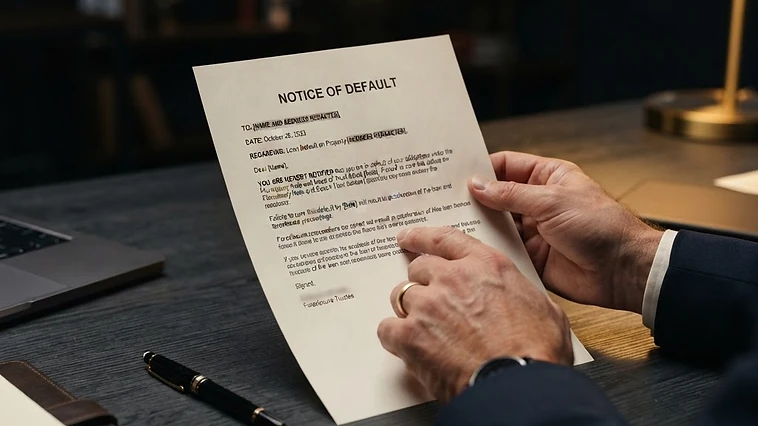 Homeowner reviewing a Notice of Default and mortgage servicing documents on a desk

The CFPB found that the servicer routinely failed to respond to borrowers' time-sensitive information requests and error notices. Under the Real Estate Settlement Procedures Act (RESPA), servicers are legally required to acknowledge and respond to a homeowner's Notice of Error (NOE) or Request for Information (RFI) within strict statutory deadlines.
The CFPB's ruling explained that failing to respond to these inquiries undermines a consumer's ability to protect their interests. Because homeowners do not get to choose their mortgage servicer, they are essentially held captive. When a servicer ignores requests for loss mitigation, misapplies payments, or fails to provide accurate payoff quotes, they are taking unreasonable advantage of the homeowner's inability to choose a different company. This classification of "abusive practices" gives homeowners and their defense teams a powerful new angle to challenge foreclosures based on servicing negligence.
Common Mortgage Servicing Abuses to Watch For
If you are behind on your mortgage, you must be hyper-vigilant about how your servicer handles your account. Servicing abuses are rampant, and they often form the foundation of a strong foreclosure defense. Here are the most common abuses to watch for:
1. Dual Tracking
Dual tracking is a blatant violation of federal law. It occurs when a mortgage servicer continues to push forward with foreclosure proceedings (such as scheduling a sheriff's sale or filing a lawsuit) while simultaneously reviewing the homeowner's application for a loan modification or other loss mitigation option. The CFPB strictly prohibits this practice. If you are actively negotiating a modification, the foreclosure process must be halted.
2. Misapplication of Payments
Mortgage servicers handle millions of accounts, and their automated systems frequently make errors. A common abuse is the failure to promptly and accurately credit a homeowner's payments. Servicers might place your payment into an "unapplied funds" suspense account rather than applying it to your principal and interest. This can artificially trigger a default, leading to unwarranted late fees and, ultimately, foreclosure.
3. Phantom Fees and Inflated Balances
When a homeowner falls behind, servicers often begin stacking fees onto the account. These can include property inspection fees, corporate advance fees, and inflated legal costs. Often, these fees are not authorized by the original promissory note or mortgage document. If a servicer overstates the amount required to reinstate the loan, it can prevent a homeowner from saving their property.
4. Failure to Honor Loan Modifications
In some cases, a homeowner will successfully negotiate a loan modification, only for the servicer to fail to update their internal systems. The servicer's legal department may then proceed with foreclosure based on the old, incorrect data. Documenting every accepted modification and payment is critical to stopping this type of wrongful foreclosure.
How Homeowners Can Fight Back Against Servicing Errors
Defending against foreclosure requires moving from a passive state of anxiety to an active state of evidence gathering and legal strategy. You cannot simply call your servicer and hope they fix their mistakes. You must create a paper trail that holds up in court.
Send a Qualified Written Request (QWR) or Notice of Error (NOE)
Under RESPA, you have the right to demand information and demand the correction of errors on your account. By sending a formal Notice of Error via certified mail to the servicer's designated address, you trigger federal timelines. The servicer must acknowledge your letter within five days and conduct a reasonable investigation within 30 days. If they fail to do so, they have committed a federal violation that can be raised as an affirmative defense in a foreclosure case.
Demand the Chain of Title and Original Note
To foreclose, the entity bringing the lawsuit must prove they have the legal standing to do so. Because mortgages are frequently bought, sold, and securitized into Wall Street trusts, the paperwork is often lost or improperly assigned. Demand to see the original "wet-ink" promissory note and a flawless chain of assignments. If there is a break in the chain of title, the foreclosing party may lack the legal right to take your home.
Document Everything
Keep a meticulous log of every phone call, including the date, time, and the name of the representative you spoke with. Save every letter, statement, and notice you receive. When fighting a foreclosure, your organized evidence is your greatest weapon against a servicer's sloppy record-keeping.
Why the Foreclosure Defense Survival Playbook Helps
Navigating the complexities of RESPA violations, chain of title defects, and CFPB enforcement actions can feel overwhelming for any homeowner facing the threat of losing their property. The legal system is complex, and mortgage servicers rely on the fact that most homeowners do not know their rights or how to enforce them.
This is exactly why the Foreclosure Defense Survival Playbook is an indispensable resource. This comprehensive, 530-page educational guide is designed specifically for homeowners who need to understand the mechanics of foreclosure defense.
The Playbook breaks down complex legal concepts into plain, actionable language. It teaches you how to read and analyze your mortgage documents, how to spot the exact servicing abuses the CFPB is cracking down on, and how to organize your evidence like a seasoned professional. Whether you are looking to hold your servicer accountable for misapplied payments, fight back against dual tracking, or understand the procedural rules of your local court, the Playbook provides the foundational knowledge you need to stand your ground.
Don't let mortgage servicers use abusive practices to take your home without a fight. Educate yourself, understand your rights, and take control of your defense. Order the Foreclosure Defense Survival Playbook today and arm yourself with the knowledge to protect your most valuable asset.


Order The Playbook
Get the Foreclosure Defense Survival Playbook
530 pages of structured, educational guidance covering mortgage documents, foreclosure procedures, evidence organization, and legal research — the same foundation this article draws from.