Foreclosure Defense
Recent CFPB Rulings and Foreclosure Trends: How to Defend Your Home Against Servicing Abuses
Recent federal rulings have classified ineffective mortgage servicing as an abusive practice, giving homeowners new leverage in foreclosure defense.
Disclaimer: This article is for educational purposes only and does not constitute legal advice. If you are facing foreclosure, consult with a qualified attorney in your jurisdiction.
For homeowners who have fallen behind on their mortgage payments, the threat of foreclosure can feel like an unstoppable force. However, the landscape of foreclosure defense is constantly evolving. Recent enforcement actions by the Consumer Financial Protection Bureau (CFPB), landmark federal court rulings, and shifting national foreclosure data have created new avenues for homeowners to fight back against predatory lending and servicing abuses.
Understanding these recent developments is critical for anyone facing the loss of their home. Foreclosure is not a foregone conclusion; it is a strict legal process where the burden of proof lies entirely with the lender. By leveraging recent legal precedents regarding mortgage fraud, robo-signing, and servicing errors, homeowners can hold financial institutions accountable.
Recent Shifts in Foreclosure Activity and What They Mean for You
According to recent data released in early 2025, U.S. foreclosure activity is beginning to stabilize after years of volatility. While the overall numbers may be declining slightly compared to the post-pandemic surge, the reality on the ground for individual homeowners remains perilous. Lenders are aggressively pursuing defaults, particularly in states with streamlined non-judicial foreclosure processes.
However, this stabilization in the market also means that regulatory bodies and courts are paying closer attention to how these foreclosures are being conducted. During the 2008 financial crisis, banks relied heavily on "robo-signing"—the practice of mass-producing fraudulent foreclosure documents without verifying their accuracy. While the industry claims to have cleaned up its act, forensic audits of mortgage documents routinely reveal missing assignments, broken chains of title, and blatant servicing errors.
For the homeowner, this means that scrutinizing every single document filed by the bank is more important than ever. If the bank cannot prove they have the legal standing to foreclose, or if they have violated federal servicing guidelines, their case can be challenged and potentially dismissed.
The CFPB Cracks Down on Ineffective Loan Servicing
One of the most significant recent developments in foreclosure defense is the Consumer Financial Protection Bureau's aggressive stance on mortgage servicing abuses. In a recent landmark consent order, the CFPB formally declared that "ineffective loan servicing" constitutes an abusive act or practice.
This ruling is a game-changer for homeowners. Historically, mortgage servicers have hidden behind the excuse of administrative errors when they fail to process loan modifications, misapply payments, or ignore borrower inquiries. The CFPB's new enforcement action establishes that failing to respond to time-sensitive information requests, ignoring error notices, and generally mismanaging a borrower's account is not just bad customer service—it is a violation of federal law.
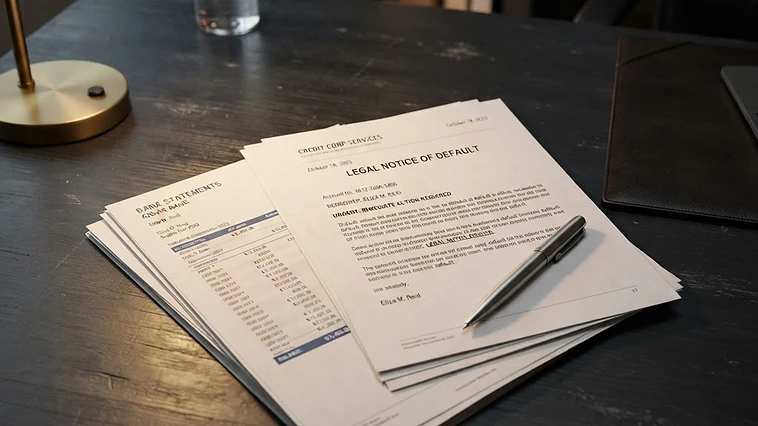 Mortgage documents and a notice of default on a dark desk illuminated by warm light.

The CFPB noted that consumers do not get to choose their mortgage servicer and therefore cannot protect themselves by simply taking their business elsewhere. Because borrowers are trapped with whatever company buys their servicing rights, servicers who take unreasonable advantage of this captive audience are engaging in abusive practices. If your servicer has lost your modification paperwork, miscalculated your escrow, or failed to credit your payments properly, these actions can now form the basis of a powerful substantive defense against foreclosure.
Federal Courts Uphold Homeowner Rights Under RESPA
In addition to regulatory actions, federal courts are increasingly siding with homeowners who bring claims under the Real Estate Settlement Procedures Act (RESPA). A recent ruling out of a Maryland Federal Court denied a major mortgage servicer's motion to dismiss a borrower's RESPA claim regarding the mishandling of escrow accounts.
RESPA is one of the most powerful tools in a homeowner's arsenal. It requires servicers to provide timely notices of servicing transfers, respond to Qualified Written Requests (QWRs), and properly manage escrow accounts for taxes and insurance. When a servicer fails to pay property taxes from an escrow account, it can trigger a default that is entirely the bank's fault.
By upholding the borrower's right to sue for statutory damages under RESPA, the courts are sending a clear message: servicers will be held strictly liable for administrative failures that harm homeowners. If you are in foreclosure due to an escrow shortage that you believe was miscalculated, or if the bank ignored your formal requests for information, you may have grounds to file a counterclaim or initiate offensive litigation to halt the foreclosure process.
Procedural and Substantive Defenses: Challenging the Chain of Title
When defending against a foreclosure, arguments generally fall into two categories: procedural defenses and substantive defenses. Recent legal trends emphasize the importance of both.
Procedural defenses focus on the rules of the court and the legal standing of the plaintiff. Because most modern mortgages are securitized—meaning they are bundled into Residential Mortgage-Backed Securities (RMBS) and sold to investors on Wall Street—the original promissory note often changes hands dozens of times. To legally foreclose, the entity bringing the lawsuit must prove they are the "Holder in Due Course."
If there is a break in the chain of title, or if the bank cannot produce the original "wet-ink" promissory note with the proper endorsements, they lack the standing to foreclose. Demanding forensic evidence of every assignment is a critical strategy. If the bank relies on fabricated or backdated assignments (a modern form of robo-signing), exposing this fraud can stop a foreclosure in its tracks.
Substantive defenses, on the other hand, focus on the facts of the debt itself. This includes the servicing abuses mentioned earlier, such as failing to credit payments, charging unauthorized fees, or misstating the reinstatement amount. An overstated reinstatement quote can trick a homeowner into giving up their home because they falsely believe they cannot afford to save it. Auditing the bank's payment history is essential to uncovering these substantive errors.
Dual Tracking: A Major Federal Servicing Violation
Another critical area of recent enforcement involves the illegal practice of "dual tracking." Dual tracking occurs when a mortgage servicer simultaneously pursues a foreclosure sale while actively negotiating a loan modification or loss mitigation option with the homeowner.
Under rules established by the CFPB, dual tracking is strictly prohibited. If you have submitted a complete loss mitigation application, the servicer must halt all foreclosure activity until they have evaluated your application and provided a written decision. Despite this clear federal mandate, many servicers continue to schedule auction dates while telling homeowners on the phone that their modification is "under review."
If a servicer proceeds with a sale date while you are in active negotiations, they have committed a severe federal violation. Documenting every interaction with your servicer—saving emails, recording phone calls (where legally permitted), and sending all correspondence via certified mail—is the best way to prove a dual-tracking violation and secure an emergency injunction to stop a wrongful foreclosure sale.
Why the Foreclosure Defense Survival Playbook Helps
Navigating the complex web of federal regulations, court procedures, and mortgage documentation can be overwhelming for anyone, especially when the roof over your head is on the line. The banks have teams of high-priced attorneys whose sole job is to push your foreclosure through the system as quickly as possible. To fight back, you need to level the playing field.
This is exactly why the Foreclosure Defense Survival Playbook is an indispensable resource for homeowners. This comprehensive 530-page guide breaks down complex legal concepts into plain, actionable language. It teaches you how to perform a forensic audit of your own mortgage documents, spot broken chains of title, and identify the exact RESPA and TILA violations that recent CFPB rulings have targeted.
Whether you are trying to hold your servicer accountable for escrow mismanagement, fighting back against illegal dual tracking, or preparing to challenge a bank's standing in court, the Playbook provides the educational foundation you need. It covers evidence organization, discovery tactics, and how to conduct legal research to find recent case law in your specific jurisdiction.
Don't wait until a sale date is scheduled to start learning about your rights. The earlier you understand the rules of the game, the better your chances of preserving your equity and saving your home. Order the Foreclosure Defense Survival Playbook today and take the first step toward taking control of your financial future.


Order The Playbook
Get the Foreclosure Defense Survival Playbook
530 pages of structured, educational guidance covering mortgage documents, foreclosure procedures, evidence organization, and legal research — the same foundation this article draws from.