Mortgage Servicing
New CFPB Mortgage Servicing Rules: How Homeowners Can Fight Foreclosure
The CFPB has proposed new streamlined mortgage servicing rules and declared ineffective servicing an abusive practice. Learn how these changes impact your foreclosure defense strategy.

Disclaimer: The following article is for educational purposes only and does not constitute legal advice. If you are facing foreclosure, please consult with a qualified attorney in your jurisdiction.
For homeowners who have fallen behind on their mortgage payments, dealing with the bank or mortgage servicer can feel like an impossible battle. Lost paperwork, confusing communication, and aggressive foreclosure tactics are unfortunately common. However, recent actions by federal regulators are shifting the landscape in favor of homeowner rights. The Consumer Financial Protection Bureau (CFPB) has recently proposed new, streamlined mortgage servicing rules and issued stern warnings that ineffective loan servicing is an abusive act or practice.
Understanding these recent developments is critical for anyone currently navigating late payments, loss mitigation, or active foreclosure. By knowing your rights and understanding how regulators are cracking down on servicing abuses, you can better organize your evidence and build a stronger defense to save your home.
The CFPB's Crackdown on Ineffective Mortgage Servicing
In a major move to protect consumers, the CFPB recently emphasized that ineffective loan servicing can be classified as an "abusive act or practice." For years, homeowners have complained about servicers who fail to process loan modification applications properly, provide inaccurate information about account balances, or move forward with foreclosure while a homeowner is actively trying to save their home.
When a mortgage servicer fails to maintain adequate systems, loses your documents, or provides you with the runaround, it is not just bad customer service—it may be a violation of federal law. The CFPB's stance means that servicers are expected to have competent staff and reliable technology to handle loss mitigation requests. If your servicer is failing to communicate effectively or is making errors that push you closer to losing your home, documenting these failures is a crucial part of your foreclosure defense strategy.
What the New "Streamlined" Servicing Rules Mean for You
On July 10, 2024, the CFPB issued a proposed rule to amend Regulation X, which governs mortgage servicing under the Real Estate Settlement Procedures Act (RESPA). The goal of these proposed rules is to streamline the loss mitigation process and provide stronger procedural safeguards for homeowners facing foreclosure.
One of the most significant changes is the introduction of a new "loss mitigation review cycle." Under the proposed rules, this cycle would begin the moment a borrower makes a request for loss mitigation assistance more than 37 days before a scheduled foreclosure sale. The CFPB defines a "request for loss mitigation assistance" broadly—it can be any oral or written communication where a borrower asks the servicer for mortgage relief through customary channels.
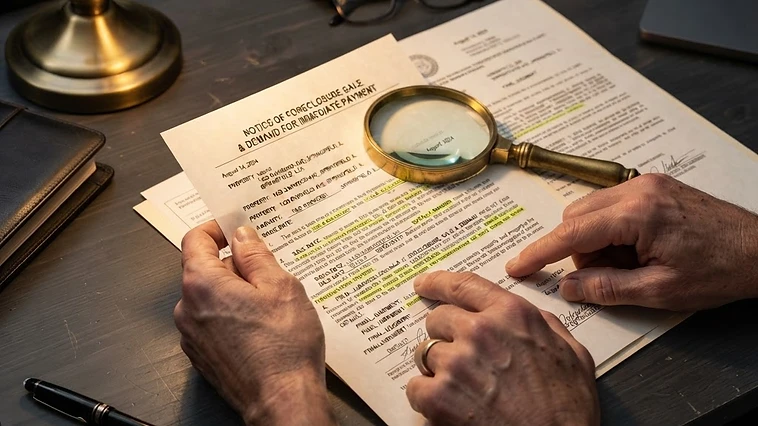 Close-up of a homeowner reviewing mortgage servicing documents with a magnifying glass on a dark desk.

This means that you do not necessarily have to submit a perfect, complete application on day one to trigger certain protections. Simply reaching out and asking for help initiates the review cycle, forcing the servicer to pause and evaluate your situation before rushing to sell your property at auction.
Foreclosure Procedural Safeguards and Dual Tracking
"Dual tracking" is a notorious practice where a mortgage servicer moves forward with foreclosure proceedings at the exact same time they are supposedly reviewing a homeowner for a loan modification. While previous rules attempted to curb this practice, loopholes remained, and many homeowners still found their homes sold out from under them while waiting for an answer from their bank.
The CFPB's newly proposed foreclosure procedural safeguards aim to put a hard stop to dual tracking. If finalized, the rules dictate that once the loss mitigation review cycle begins, the servicer cannot advance the foreclosure process. The review cycle only ends when the borrower becomes current on their payments or when all procedural safeguards and appeals have been fully exhausted.
For homeowners defending against foreclosure, this is a powerful tool. If a servicer attempts to file a foreclosure lawsuit, seek a default judgment, or schedule a sheriff's sale while you are in a loss mitigation review cycle, they may be in direct violation of federal regulations. Highlighting these violations in court can be a highly effective way to halt the foreclosure process and force the bank to negotiate fairly.
The Rise of Nonbank Mortgage Servicers and Systemic Risks
It is also important to understand who is actually servicing your loan. Today, it is highly likely that your mortgage is not serviced by a traditional bank, but rather by a Nonbank Mortgage Company (NMC). According to a 2024 report by the Financial Stability Oversight Council (FSOC), nonbank servicers now handle a massive share of the mortgage market.
While NMCs provide essential liquidity to the housing market, the FSOC report highlights that their vulnerabilities can amplify shocks to the financial system. Nonbank servicers often rely on complex funding structures and may lack the capital reserves of traditional banks. When economic stress hits, these servicers may cut corners on customer service, compliance, and loss mitigation staffing to save money.
As a homeowner, this means you must be hyper-vigilant. Nonbank servicers are under intense regulatory scrutiny, but they are also prone to operational errors. You cannot assume that your servicer is keeping accurate records of your payments, escrow accounts, or modification requests. You must become your own best advocate by keeping meticulous records of every interaction.
How to Document Servicing Errors and Build Your Defense
Knowing that the CFPB is targeting servicing abuses and that nonbank servicers are prone to errors, your best defense is a good offense. You must treat your mortgage file like a legal case from the moment you miss a payment.
First, keep a detailed communication log. Write down the date, time, phone number, and the name or ID number of every representative you speak with. Summarize what was discussed and what promises were made.
Second, send all important documents via certified mail with a return receipt requested. If the CFPB's new rules define a request for assistance as any written communication, you need absolute proof that your written communication was received by the servicer.
Third, review your monthly statements and escrow analyses with a fine-tooth comb. Look for unauthorized fee assessments, misapplied payments, or sudden spikes in escrow charges. If you spot an error, send a formal Notice of Error (NOE) or Request for Information (RFI) under RESPA. Servicers are legally required to respond to these written requests within specific timeframes. If they fail to do so, you have documented evidence of their non-compliance, which can be used as leverage in your foreclosure defense.
Why the Foreclosure Defense Survival Playbook Helps
Navigating the complex web of CFPB regulations, RESPA guidelines, and court procedures is overwhelming for anyone, especially when the roof over your head is on the line. The banks have teams of lawyers and automated systems designed to push foreclosures through as quickly as possible. To fight back, you need to understand their playbook—and you need one of your own.
This is exactly why the Foreclosure Defense Survival Playbook is an absolute must-have resource for any homeowner facing late payments or active foreclosure. This comprehensive, 530-page educational guide breaks down complex legal concepts into plain, actionable language. It teaches you how to dissect your mortgage documents, spot the exact servicing abuses the CFPB is cracking down on, and organize your evidence like a seasoned professional.
Whether you are trying to force your servicer to comply with the new loss mitigation review cycles, fighting back against illegal dual tracking, or preparing to represent yourself in court, the Playbook gives you the knowledge you need to stand your ground. Don't let a mortgage servicer's "ineffective" and "abusive" practices cost you your home. Equip yourself with the facts, learn how to hold the banks accountable, and take control of your financial future. Order your copy of the Foreclosure Defense Survival Playbook today and start building your defense.


Order The Playbook
Get the Foreclosure Defense Survival Playbook
530 pages of structured, educational guidance covering mortgage documents, foreclosure procedures, evidence organization, and legal research — the same foundation this article draws from.