Foreclosure Defense
CFPB Cracks Down on Mortgage Servicing Abuses: What Homeowners Need to Know
Recent enforcement actions by the CFPB highlight ongoing abuses by mortgage servicers, including improper foreclosure practices and dual tracking. Learn how to identify these errors and protect your home.
Disclaimer: This article is for educational purposes only and does not constitute legal advice. If you are facing foreclosure or struggling with late payments, please consult with a qualified attorney in your jurisdiction.
When you fall behind on your mortgage payments, the stress and confusion can be overwhelming. Homeowners often trust that their mortgage servicer—the company collecting their monthly payments—is acting in good faith and following the law. Unfortunately, recent enforcement actions and regulatory updates reveal that mortgage servicing abuses, improper foreclosure practices, and systemic errors remain a massive threat to homeowners across the United States.
Recent actions by the Consumer Financial Protection Bureau (CFPB) have highlighted a disturbing trend: ineffective loan servicing is not just a customer service issue; it is increasingly being classified as an abusive act or practice. For homeowners in default or facing active foreclosure, understanding these recent developments is critical to mounting a strong foreclosure defense.
The Rise of Improper Foreclosure Practices
In recent months, federal watchdogs have aggressively targeted mortgage servicers for violating homeowner rights. The CFPB recently entered into a consent order with a major mortgage servicer to resolve allegations of improper foreclosure practices. These enforcement actions underscore a reality that foreclosure defense advocates have known for years: banks and servicers frequently make catastrophic errors that can cost families their homes.
Improper foreclosure practices often stem from a breakdown in the servicer's internal systems. When a loan is transferred from one servicer to another, critical data regarding payment history, loan modifications, and escrow accounts is frequently lost or corrupted. Instead of pausing to verify the accuracy of their records, servicers often push forward with foreclosure proceedings, relying on flawed data and sometimes even resorting to robo-signed documents to expedite the process.
Common Mortgage Servicing Abuses to Watch For
If you are behind on payments, you must be vigilant in reviewing every document, statement, and notice you receive from your servicer. According to legal resources and recent regulatory findings, several common abuses frequently occur during the pre-foreclosure and foreclosure processes:
1. Dual Tracking
Dual tracking is one of the most dangerous and deceptive practices employed by mortgage servicers. This occurs when a servicer ostensibly works with a homeowner on a loss mitigation option—such as a loan modification, forbearance, or repayment plan—while simultaneously moving forward with foreclosure proceedings. Federal law, specifically under the Real Estate Settlement Procedures Act (RESPA), heavily restricts dual tracking. However, systemic errors and poor communication between a servicer's loss mitigation department and their foreclosure attorneys often result in homes being sold at auction while the homeowner is still negotiating a modification.
2. Misapplication of Payments and Prompt Crediting Failures
Under federal rules, a mortgage servicer must credit your payment on the day it receives the funds. Unfortunately, servicers frequently hold payments in "suspense accounts" or misapply them to inflated late fees and corporate advances rather than the principal and interest. This can artificially inflate the amount you owe and trigger a default even if you have been making payments.
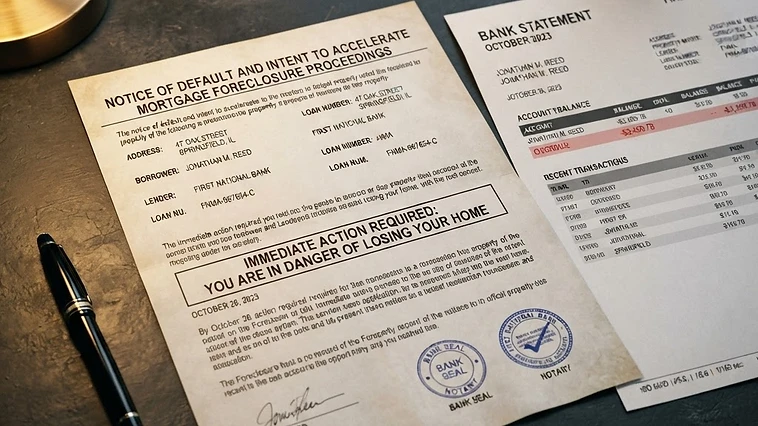 Close-up of mortgage documents and a foreclosure notice on a dark desk

3. Force-Placed Insurance Abuses
Your mortgage contract requires you to maintain hazard insurance on your property. If your policy lapses, the servicer has the right to purchase "force-placed" insurance and charge you for the premiums. However, servicers often impose force-placed coverage even when the homeowner has provided proof of active insurance. These force-placed policies are notoriously expensive and can double or triple a homeowner's monthly payment, quickly forcing them into default.
4. Escrow Account Errors
Servicers use escrow accounts to pay property taxes and insurance premiums on behalf of the homeowner. Even when a homeowner makes all required escrow payments, the servicer may fail to disburse the funds to the tax authority or insurance company. This can lead to tax liens, lapsed insurance, and massive escrow shortages that the servicer then demands the homeowner pay in a lump sum or through drastically increased monthly payments.
How "Ineffective Servicing" is Now an Abusive Act
The CFPB has recently signaled a major shift in how it views mortgage servicing failures. In a recent policy statement, the Bureau indicated that "ineffective loan servicing" can be classified as an abusive act or practice. This is a monumental development for homeowner rights.
Historically, servicers have tried to brush off lost paperwork, ignored correspondence, and endless phone transfers as mere administrative hiccups. By classifying these failures as abusive practices, regulators are acknowledging the severe financial and emotional harm inflicted on homeowners. When a servicer fails to provide accurate payoff quotes, ignores Qualified Written Requests (QWRs) or Notices of Error (NOEs), or provides contradictory information about loan modification requirements, they are actively preventing the homeowner from saving their property.
Defending Your Home: The Importance of Evidence and Discovery
When facing foreclosure, your greatest weapon is evidence. Because mortgage servicers are prone to errors and regulatory violations, homeowners must proactively audit their loan files. You cannot simply take the bank's word for what you owe.
Homeowners have powerful tools under RESPA to demand information from their servicers. By sending a formal Notice of Error (NOE) or Request for Information (RFI), you can legally compel the servicer to produce a complete payment history, copies of all assignments and endorsements, and a detailed breakdown of all fees assessed to your account. If the servicer fails to respond within the federally mandated timeframes, this failure can become a critical component of your foreclosure defense strategy.
Furthermore, organizing this evidence is essential for the discovery phase of foreclosure litigation. If the bank files a judicial foreclosure lawsuit against you, you have the right to demand proof that they actually own the loan, hold the original promissory note, and have strictly complied with all pre-foreclosure notice requirements (such as the breach letter required by paragraph 22 of most standard mortgages).
Why the Foreclosure Defense Survival Playbook Helps
Navigating the treacherous waters of mortgage servicing abuses, dual tracking, and foreclosure litigation is nearly impossible without the right knowledge. The banks have teams of lawyers and endless resources designed to intimidate you into walking away from your home. You need a comprehensive guide to level the playing field.
This is exactly why the Foreclosure Defense Survival Playbook is an absolute necessity for any homeowner facing default or foreclosure. This massive 530-page educational resource breaks down complex legal concepts into plain, easy-to-understand language. It teaches you how to:
- Decode Your Mortgage Documents: Understand the hidden clauses in your promissory note and deed of trust that the banks use against you.
- Spot Servicing Fraud: Identify misapplied payments, illegal fees, and force-placed insurance abuses hidden in your transaction history.
- Master Evidence Organization: Learn how to properly draft and send RESPA letters (NOEs and RFIs) to force the bank to hand over the evidence you need.
- Understand Court Procedure: Gain a clear understanding of the foreclosure timeline, the discovery process, and how to hold the bank accountable for robo-signing and fraudulent assignments.
Don't let a mortgage servicer's "ineffective servicing" cost you your family's home. Arm yourself with the knowledge to fight back, demand accountability, and protect your rights. Order the Foreclosure Defense Survival Playbook today and take the first step toward taking control of your foreclosure defense.


Order The Playbook
Get the Foreclosure Defense Survival Playbook
530 pages of structured, educational guidance covering mortgage documents, foreclosure procedures, evidence organization, and legal research — the same foundation this article draws from.