Mortgage Servicing
New CFPB Rules & Mortgage Servicing Abuses: What Homeowners Need to Know
Recent CFPB rules and state enforcement actions are cracking down on mortgage servicing abuses. Discover how these regulatory shifts impact your foreclosure defense.

The landscape of foreclosure defense and homeowner rights is rapidly shifting. In August 2026, federal and state regulators took massive steps to crack down on mortgage servicing abuses, fundamentally altering how lenders must handle loss mitigation and late payments. For homeowners currently behind on payments or facing the terrifying prospect of a foreclosure lawsuit, understanding these late-breaking changes is no longer optional—it is a critical part of saving your home.
When banks and mortgage servicers violate the law, they rely on the assumption that you won't know your rights. They count on the intimidation factor of the courtroom to push through foreclosures, even when their own files are riddled with errors, unverified affidavits, and regulatory violations. But the tide is turning. With the latest crackdowns on junk fees, dual tracking, and communication failures, homeowners are being handed a powerful new set of tools to fight back.
Disclaimer: This article is strictly for educational purposes and does not constitute legal advice. Please consult with a qualified attorney for legal guidance regarding your specific situation.
The CFPB's Sweeping Overhaul of Mortgage Servicing
In August 2026, the Consumer Financial Protection Bureau (CFPB) moved forward with its highly anticipated final rule, "Streamlining Mortgage Servicing for Borrowers Experiencing Payment Difficulties." This major regulatory shift amends Regulation X, a vital component of the Real Estate Settlement Procedures Act (RESPA) that dictates exactly how mortgage servicers must treat borrowers.
For years, homeowners trying to save their homes have been trapped in the "complete application" nightmare. Under previous rules, servicers would demand endless documents, claim that modification applications were "incomplete" because a single page was missing, and proceed with foreclosure while homeowners desperately faxed and uploaded the same paperwork over and over again. It was a calculated game of attrition designed to wear borrowers down.
The new August 2026 rules strike at the heart of this operational abuse. By streamlining the loss mitigation framework, the CFPB is placing a significantly heavier burden on the mortgage servicer to evaluate loss mitigation options before they are legally allowed to initiate foreclosure proceedings. The updated rules mandate clearer communication, faster review cycles, and stricter penalties for servicers who attempt to evade their responsibilities to struggling homeowners.
If you are currently trying to negotiate a loan modification, forbearance, or repayment plan, your servicer is now bound by a stricter set of federal guidelines. Documenting their failure to comply with these updated Regulation X requirements can form a devastatingly effective defense if they attempt to drag you into foreclosure court.
State Regulators Crack Down on Subprime Servicing Abuses
Federal rules are only part of the story. State attorneys general are also going on the offensive against predatory mortgage practices. In early August 2026, the California Attorney General secured a massive $4.6 million settlement with a major subprime mortgage servicer. The allegations against the company read like a textbook case of modern mortgage fraud and servicing abuse.
According to the enforcement action, the servicer systematically failed to provide struggling homeowners with crucial information about their forbearance and loss mitigation options. Worse, the company sent out monthly statements that incorrectly told borrowers they would incur late fees while in forbearance—a direct violation of both state and federal law. The servicer was also cited for completely ignoring the loss mitigation requirements laid out in the state's Homeowners Bill of Rights.
This multi-million dollar settlement is incredibly important for homeowners everywhere because it highlights a systemic reality: if a massive subprime servicer is engaging in these practices on a nationwide scale, there is a high probability that your own servicer is making the exact same "errors" in your file.
These aren't just innocent mistakes; they are highly profitable business practices. By illegally charging late fees, forcing unnecessary property inspection fees, and pushing borrowers into foreclosure rather than offering mandated loss mitigation, servicers pad their bottom lines at the expense of the American homeowner. Recognizing these abuses is the first step in building a rock-solid foreclosure defense.
How Servicing Errors and Abuse Can Stop a Foreclosure
When a bank, trust, or mortgage servicer files a foreclosure lawsuit (or initiates a non-judicial foreclosure sale), they must prove two things: that they have the legal standing to foreclose, and that they have complied with all applicable state and federal regulations before accelerating the loan.
 Close-up of hands reviewing mortgage servicing documents under a warm gold light

This is where the battle is won or lost. By weaponizing the recent regulatory changes and heavily auditing your mortgage documents, you can uncover the fatal flaws in the bank's case. Here are the most common servicing abuses you need to look out for right now:
Dual Tracking Dual tracking occurs when a mortgage servicer pretends to help you modify your loan while secretly moving forward with foreclosure proceedings in the background. This practice is strictly prohibited by Regulation X. If your servicer sets a foreclosure sale date while you are actively being reviewed for a streamlined loss mitigation option under the new August 2026 rules, they have broken the law.
Phantom Charges and Junk Fees Take a close look at your mortgage statements and payoff quotes. Are there unexplained "corporate advances," repetitive property inspection fees, or late charges assessed during periods when you were in an active forbearance? Regulators are aggressively penalizing servicers for these junk fees. In a foreclosure case, proving that the bank's mathematical baseline is fraudulent casts immediate doubt on their entire claim.
Robo-Signing and Fabricated Assignments While the infamous "robo-signing" scandal of 2010 might seem like ancient history, the underlying problem never truly went away. Today, it simply looks more sophisticated. Servicers routinely file unverified affidavits, backdated assignments of mortgage, and fraudulent allonges to prove they own the loan. They rely on automated systems to churn out thousands of legal documents without any human being actually verifying the accuracy of the underlying business records. Challenging the evidentiary foundation of these documents through discovery can stop a foreclosure in its tracks.
Navigating the Surge in Foreclosure "Rescue" Scams
As regulatory crackdowns increase, so do the threats from opportunistic criminals. In mid-2026, property data analysts reported a 21% jump in nationwide foreclosure filings compared to the previous year. Because foreclosure filings are a matter of public record, this surge has triggered an avalanche of predatory foreclosure "rescue" scams.
If you are behind on your payments, you have likely received dozens of letters, texts, and phone calls from self-proclaimed "home savers." They promise guaranteed loan modifications, claim they have a secret trick to reverse a foreclosure sale, or offer to buy your home and lease it back to you. The catch? They demand a massive upfront fee or ask you to sign a quitclaim deed transferring your property rights.
True foreclosure defense relies on hard evidence, a deep understanding of legal procedure, and holding the bank accountable in court. It does not involve paying thousands of dollars to an anonymous online entity promising a magic bullet. The most powerful weapon you have against both the bank and the scammers is your own education.
Organizing Your Evidence to Fight Back
To leverage the new CFPB rules and state precedents, a homeowner must be incredibly organized. You cannot simply walk into a courtroom and tell a judge that the bank is committing fraud; you have to prove it with an impeccable paper trail.
The foundation of this paper trail often starts with a Qualified Written Request (QWR) or a Notice of Error (NOE) under RESPA. In late August 2026, federal appellate courts reaffirmed the power of RESPA claims, ruling in favor of borrowers whose servicers failed to properly and timely respond to these written requests.
When you send a QWR or NOE, you are legally forcing the servicer to investigate your account, correct errors, and provide you with the identity of the true owner of your loan. If they fail to comply—which they often do—they open themselves up to counterclaims and statutory damages.
To prepare your defense, you must meticulously preserve:
- Every single piece of mail from your servicer, including the envelopes.
- Certified mail receipts showing when you sent your loss mitigation applications.
- A detailed, handwritten log of every phone call you have with the bank, noting the date, time, representative's name, and what was said.
- All notices of default, assignments, and court filings.
Why the Foreclosure Defense Survival Playbook Helps
Facing off against a multi-billion dollar financial institution can feel incredibly isolating. The banks have armies of lawyers, automated document factories, and a systemic bias that often favors the lender. But as the recent August 2026 regulatory crackdowns prove, these institutions are deeply flawed, routinely violate the law, and can be defeated when confronted with an educated homeowner.
This is exactly why the Foreclosure Defense Survival Playbook is an indispensable tool for anyone behind on their mortgage. This massive, 530-page educational resource is specifically engineered to bridge the knowledge gap between the banks and the borrower.
Whether you are representing yourself as a pro se litigant or working alongside an attorney, the Playbook teaches you how to read and audit your complex mortgage documents to spot the exact servicing abuses regulators are currently targeting. It breaks down the intricate mechanisms of Regulation X and RESPA into plain, actionable language, allowing you to draft powerful Notices of Error and demand accountability.
Beyond servicing regulations, the Playbook guides you through the labyrinth of court procedure, discovery, and evidence organization. It demystifies legal research, teaching you how to find relevant case law and challenge fraudulent affidavits and backdated assignments. You don't have to be a victim of a broken mortgage servicing system. Equip yourself with the knowledge to fight back, hold your servicer accountable, and protect your home. Order the Foreclosure Defense Survival Playbook today and take the first critical step toward reclaiming your power.

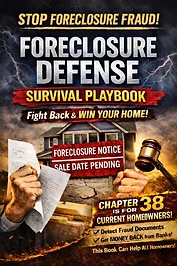
Order The Playbook
Get the Foreclosure Defense Survival Playbook
530 pages of structured, educational guidance covering mortgage documents, foreclosure procedures, evidence organization, and legal research — the same foundation this article draws from.