Mortgage Servicing
CFPB Rules Ineffective Mortgage Servicing is an Abusive Practice: What It Means for Your Foreclosure Defense
The CFPB recently declared ineffective mortgage servicing an abusive practice. Learn how to identify servicing errors and use them in your foreclosure defense.
Disclaimer: The following article is for educational purposes only and does not constitute legal advice. If you are facing foreclosure, you should consult with a qualified attorney in your jurisdiction to understand your specific legal rights and options.
When you are falling behind on your mortgage payments, the last thing you need is a mortgage servicer that ignores your letters, misapplies your payments, or fails to correct obvious accounting errors. For years, homeowners have complained that dealing with their mortgage servicer feels like shouting into a void. Documents are lost, phone calls are disconnected, and requests for help are met with automated, unhelpful responses.
Recently, the Consumer Financial Protection Bureau (CFPB) took a major step in holding these companies accountable. In a landmark enforcement action, the CFPB officially argued that failing to effectively service loans is not just bad customer service—it is an "abusive act or practice" under federal law.
For homeowners currently facing foreclosure or struggling with late payments, this development is critical. Understanding how the government defines servicing abuses can provide you with powerful leverage and potential defenses to save your home. In this article, we will explore the recent CFPB enforcement action, common mortgage servicing errors, how to use federal laws like RESPA to protect yourself, and how to build a strong foreclosure defense strategy.
The Recent CFPB Crackdown on Mortgage Servicers
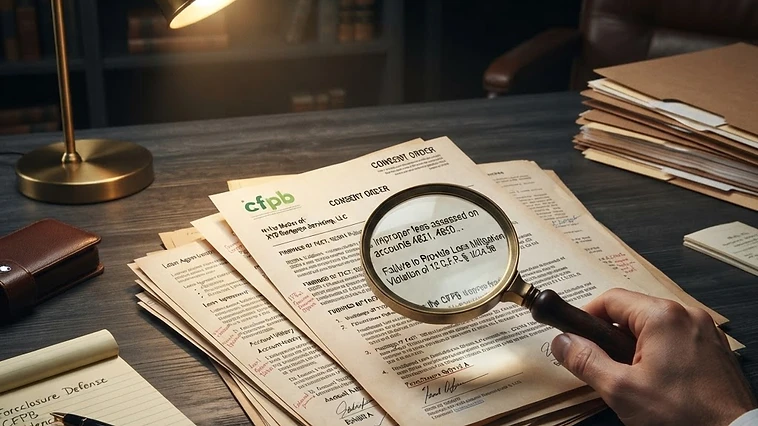
In a recent consent order, the Consumer Financial Protection Bureau (CFPB) put the mortgage industry on notice. The CFPB took action against a major mortgage servicer, arguing that the company's failure to effectively service loans constituted an abusive practice.
According to the CFPB's findings, the servicer "routinely failed to effectively service consumers' mortgages." But what does "ineffective servicing" actually mean in a legal context? The CFPB specifically highlighted several egregious behaviors:
- Failing to Respond to Time-Sensitive Requests: Homeowners who submitted requests for information or loss mitigation applications were ignored or faced unreasonable delays.
- Ignoring Error Notices: When homeowners pointed out mistakes in their accounts, the servicer failed to acknowledge, investigate, or correct these servicing errors.
- Lack of Two-Way Communication: The servicer failed to engage in meaningful, two-way communication with borrowers who were desperately trying to resolve their delinquencies.
By classifying these failures as "abusive acts or practices," the CFPB is signaling a shift in how federal regulators view the responsibilities of mortgage servicers. It is no longer acceptable for a bank or servicer to hide behind administrative incompetence. If a servicer's failure to communicate or correct errors harms the homeowner—especially if it pushes them closer to foreclosure—that servicer is violating federal consumer protection laws.
This ruling is a powerful tool for homeowners. If your servicer is ignoring your letters, failing to process your loan modification application, or refusing to correct a misapplied payment, they are not just being difficult; they may be engaging in illegal, abusive practices that can be challenged in court.
Common Mortgage Servicing Errors That Lead to Foreclosure
Mortgage servicers handle payment processing, escrow accounts, and loss mitigation for millions of loans. At that massive volume, errors happen constantly. Unfortunately, an uncorrected misapplied payment or an improper fee can quietly compound over time, damaging your credit and artificially inflating the amount you allegedly owe. In many cases, these errors directly contribute to a foreclosure action.
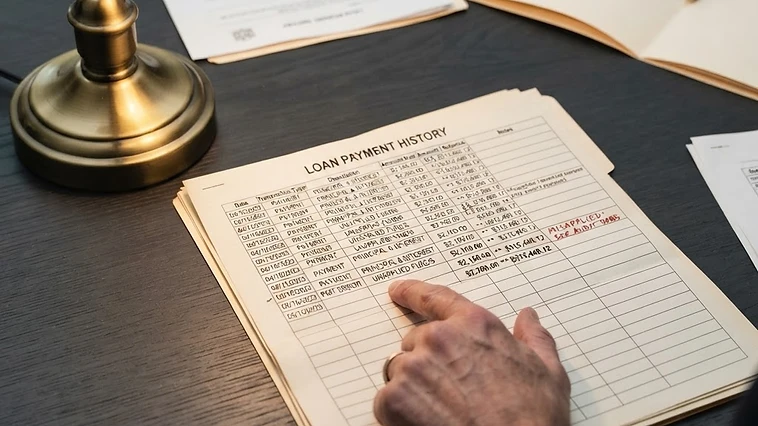 Close up of a mortgage loan history ledger showing a misapplied payment error.

If you are facing foreclosure, identifying whether a servicing error contributed to your default is a vital line of inquiry. Here are some of the most common mortgage servicing errors to look out for:
Misapplied Payments
A servicer may fail to credit your payment on the day it is received, apply it to the wrong account entirely, or hold your funds in a "suspense account" rather than applying them to your principal and interest. When funds sit in a suspense account, the servicer's computer system registers your monthly payment as "missed," triggering late fees and a false record of delinquency. Over several months, this can snowball into a default that was entirely manufactured by the servicer's accounting mistake.
Escrow Account Mismanagement
Servicers collect funds each month to cover your property taxes and homeowners insurance. When a servicer fails to actually disburse those payments to the tax authority or the insurance company, the results can be disastrous. You could face a tax lien on your property or a lapse in your insurance coverage.
Force-Placed Insurance Abuses
If your servicer believes your homeowners insurance has lapsed, they are allowed to purchase insurance on your behalf and charge you for it. This is known as "force-placed insurance," and it is notoriously expensive—often costing three to ten times more than a standard policy. Servicers frequently impose force-placed insurance even when the homeowner has active coverage, simply because the servicer lost the proof of insurance. The massive cost of this forced policy is added to your monthly payment, causing "payment shock" and pushing many homeowners into default.
Improper Fees and Corporate Advances
Servicers often pile up excessive fees that are not permitted under the terms of your original mortgage contract. These can include repeated property inspection fees, inflated late charges, and vague "corporate advances." If you do not audit your loan history, you may end up paying thousands of dollars in bogus fees, or worse, losing your home because you could not afford to pay them.
Using RESPA to Fight Back Against Servicer Mistakes
If you suspect your mortgage servicer is making errors, you do not have to sit back and take it. Federal law gives borrowers a concrete, powerful tool to challenge servicing conduct: The Real Estate Settlement Procedures Act (RESPA) and its implementing rule, Regulation X.
Under RESPA, you have the right to send your mortgage servicer a written "Notice of Error" (NOE) or a "Request for Information" (RFI) regarding your loan account. When submitted correctly, these documents trigger mandatory, strict deadlines that the servicer must meet under federal law.
When you send a proper Notice of Error, the servicer must generally acknowledge receipt of your letter within five business days. They then have approximately 30 days to conduct a reasonable investigation and either correct the error or provide a written explanation of why they believe the account is correct.
It is crucial to understand that you cannot simply write this letter on the back of your payment coupon or send it to the general payment address. To trigger your RESPA rights, the notice must be sent to the specific "exclusive address" the servicer has designated for qualified written requests and notices of error.
If a servicer fails to respond properly to your NOE or RFI, they are violating federal law. You may have grounds to pursue actual damages, statutory damages, and attorney's fees. More importantly for foreclosure defense, a documented record of the servicer ignoring your RESPA letters can serve as powerful evidence of their "abusive practices" and "unclean hands" if they attempt to foreclose on your home.
Procedural Defenses: Holding the Bank Accountable
When a bank or mortgage servicer files a foreclosure lawsuit against you, they are relying on the assumption that you will not fight back. Most foreclosures go uncontested, allowing the bank to easily obtain a default judgment. However, if you understand how to analyze your mortgage documents and the servicer's actions, you can raise powerful procedural and substantive defenses.
Challenging Standing
One of the most fundamental procedural defenses is challenging the foreclosing party's "standing" to sue. To win a foreclosure, the plaintiff must prove that they have the legal right to enforce the promissory note and the mortgage. Because mortgages are frequently bought, sold, and transferred between various trusts and financial institutions, the paperwork is often sloppy, incomplete, or missing entirely.
If the foreclosing party cannot produce the original promissory note with the proper endorsements, or if they cannot prove a valid chain of assignments for the mortgage, the court may dismiss the case. While the "produce the note" defense is harder to win today than it was during the 2008 financial crisis, banks still frequently make fatal errors in their chain of title.
Defending Based on Servicing Errors
As highlighted by the recent CFPB enforcement actions, servicing errors can form the basis of a strong foreclosure defense. If you can prove that you are not actually in default—or that the default was caused by the servicer's misapplication of payments, improper fees, or failure to process a loan modification—you can challenge the validity of the foreclosure.
For example, if you were approved for a trial loan modification and made all the required payments, but the servicer failed to adjust its records and proceeded with foreclosure anyway, this is a massive substantive error. By presenting your payment records and the servicer's correspondence to the court, you can demonstrate that the bank has no legal right to foreclose.
Failure to Meet Conditions Precedent
Before a bank can file a foreclosure lawsuit, they must strictly comply with the "conditions precedent" outlined in your mortgage contract and state law. This usually requires the bank to send you a specific "Notice of Default" or "Breach Letter" giving you 30 days to cure the default. If the bank fails to send this letter, sends it to the wrong address, or fails to include the specific language required by your mortgage contract, the foreclosure lawsuit is procedurally defective and can be challenged.
Why the Foreclosure Defense Survival Playbook Helps
Fighting a foreclosure can feel like an overwhelming, terrifying battle against a giant financial institution. When your mortgage servicer is engaging in the exact abusive practices the CFPB is cracking down on—ignoring your letters, misapplying your payments, and rushing you into foreclosure—you need a comprehensive strategy to fight back.
This is exactly why the Foreclosure Defense Survival Playbook is an essential resource for any homeowner facing mortgage distress. This massive, 530-page educational manual is designed to level the playing field. It breaks down complex legal concepts into plain, understandable language, empowering you to take control of your situation.
Inside the Playbook, you will learn how to:
- Audit Your Loan History: Discover the step-by-step process for reviewing your mortgage ledgers to spot the exact servicing errors, misapplied payments, and illegal fees that the CFPB considers abusive.
- Draft Powerful RESPA Letters: Get access to the knowledge you need to properly draft and send Notices of Error and Requests for Information that force your servicer to respond under federal law.
- Understand Court Procedure: Learn how the foreclosure process actually works, from the initial complaint to discovery, and how to organize your evidence to challenge the bank's standing and procedural failures.
- Organize Your Evidence: Discover forensic techniques for organizing your payment records, correspondence, and mortgage documents so you can clearly demonstrate the servicer's abuses.
You do not have to be a victim of ineffective, abusive mortgage servicing. By educating yourself on your rights and the rules the banks must follow, you can build a strong defense and fight to save your home. Order the Foreclosure Defense Survival Playbook today and gain the knowledge you need to survive the foreclosure process and hold your mortgage servicer accountable.


Order The Playbook
Get the Foreclosure Defense Survival Playbook
530 pages of structured, educational guidance covering mortgage documents, foreclosure procedures, evidence organization, and legal research — the same foundation this article draws from.