Foreclosure Defense
CFPB Targets Ineffective Loan Servicing as Foreclosures Rise: What Homeowners Need to Know
Recent regulatory actions by the CFPB have classified ineffective loan servicing as an abusive practice, giving homeowners new leverage as foreclosure rates normalize across the country.
Disclaimer: The information provided in this article is for educational purposes only and does not constitute legal advice. If you are facing foreclosure, you should consult with a qualified attorney in your jurisdiction.
As the economic landscape shifts, homeowners who have fallen behind on their mortgage payments are facing a rapidly changing environment. The pandemic-era protections, forbearance programs, and emergency moratoriums that kept many families in their homes have largely expired. In their place, the mortgage industry is experiencing what legal and financial experts are calling "foreclosure normalization." Foreclosure activity is rising steadily across the country, and mortgage servicers are ramping up their collection and litigation efforts.
However, this increase in foreclosure activity has also brought renewed scrutiny from federal regulators. Recent enforcement actions and regulatory updates from the Consumer Financial Protection Bureau (CFPB) have made it clear that the government is watching how mortgage servicers handle distressed borrowers. Specifically, the CFPB has taken the stance that ineffective loan servicing can constitute an "abusive act or practice." For homeowners facing the terrifying prospect of losing their homes, understanding these recent developments, recognizing servicing abuses, and knowing how to organize a defense is absolutely critical.
The Era of Foreclosure Normalization is Here
According to recent industry reports, including analysis from legal monitors tracking consumer financial services, the mortgage market is undergoing a meaningful correction. Foreclosure normalization means that banks and mortgage servicers are returning to their pre-pandemic timelines for filing notices of default, initiating judicial or non-judicial foreclosures, and moving to auction off properties.
For homeowners who are behind on payments, this normalization means that the window for negotiating a loan modification or repayment plan without the immediate threat of litigation is closing. Servicers are processing defaults faster, and in many cases, they are making critical errors in the rush to clear their backlogs. When foreclosure volumes rise, the quality of the servicing often drops. Documents are rushed, payments are misapplied, and loss mitigation applications are routinely mishandled.
This rush to foreclose creates significant compliance risks for the servicers, but it also creates immense stress for the homeowner. If you are in this situation, it is vital to understand that you have rights. The bank must follow strict federal and state laws before they can take your home. When they cut corners, they violate those laws, providing you with potential defenses to the foreclosure action.
CFPB Targets Ineffective Loan Servicing as an Abusive Practice
The most significant recent development for homeowners is the Consumer Financial Protection Bureau's aggressive stance on mortgage servicing errors. The CFPB has explicitly stated that ineffective loan servicing is not just a customer service issue—it can be classified as an "abusive act or practice" under federal law.
What does "ineffective loan servicing" look like in the real world? It happens when a servicer fails to properly process a homeowner's application for loss mitigation (such as a loan modification). It happens when a servicer applies a borrower's monthly payment to the wrong account, or applies it to junk fees instead of the principal and interest. It also happens when a servicer fails to provide accurate payoff balances, preventing a homeowner from refinancing or selling the property to avoid foreclosure.
By labeling these failures as abusive, the CFPB is signaling that servicers cannot hide behind the excuse of "clerical errors" or "system glitches." When a servicer's incompetence causes a homeowner to suffer financial harm or face an unwarranted foreclosure, that servicer is violating federal law. For homeowners defending against foreclosure, this regulatory stance provides a powerful framework for challenging the bank's actions. If you can prove that your servicer engaged in abusive practices by mishandling your account, you may be able to halt the foreclosure process or force the bank to the negotiating table.
Identifying Common Mortgage Servicing Abuses
To effectively defend your home, you must learn to spot the signs of mortgage servicing abuse. Many homeowners assume that the bank's accounting is always correct, but forensic audits of mortgage accounts frequently reveal massive discrepancies. Here are some of the most common abuses to watch for:
Dual Tracking: Under federal law, a mortgage servicer is generally prohibited from moving forward with a foreclosure sale while a complete loss mitigation application is pending. This illegal practice is known as "dual tracking." If you have submitted all the required documents for a loan modification, the servicer must pause the foreclosure process until they have evaluated your application and given you a decision. If they continue to file foreclosure documents or schedule an auction while your application is under review, they are violating the law.
Phantom Fees and Corporate Advances: Servicers often pad distressed accounts with unauthorized fees. These can include inflated property inspection fees, unreasonable attorney's fees, or "corporate advances" that are never fully explained. Over time, these fees can add thousands of dollars to your loan balance, making it impossible to catch up on your arrears.
Misapplied Payments: When you are behind on your mortgage, the servicer is supposed to apply any payments you make according to the terms of your promissory note and deed of trust (usually to interest first, then principal, then escrow). However, servicers frequently hold payments in "suspense accounts" or apply them to late fees first, which keeps your account in default and generates even more fees.
The Persistent Threat of Robo-Signing and Faulty Assignments
While the infamous "robo-signing" scandals of the 2008 financial crisis may seem like ancient history, the underlying issues with mortgage assignments and document fabrication persist today. When a mortgage is sold from one bank to another, or transferred into a Wall Street securitized trust, the legal right to enforce the loan must be properly documented through an "Assignment of Mortgage" or "Assignment of Deed of Trust."
In the rush of foreclosure normalization, servicers are once again relying on questionable documents to prove they have the legal standing to foreclose. Homeowners must carefully scrutinize the chain of title. Does the entity suing you actually own your loan? Was the assignment signed by a known robo-signer? Was the assignment executed years after the trust that supposedly owns your loan was closed to new assets?
If the bank cannot prove an unbroken chain of title, or if the documents they submit to the court are fraudulent or improperly executed, they may lack the legal standing to foreclose. Challenging standing is one of the most fundamental aspects of foreclosure defense, as it forces the bank to prove they actually have the right to take your property.
How to Organize Your Evidence and Demand Answers
Fighting foreclosure requires meticulous organization and a proactive approach to gathering evidence. You cannot simply walk into court and tell the judge that the bank made a mistake; you must prove it with a documented paper trail.
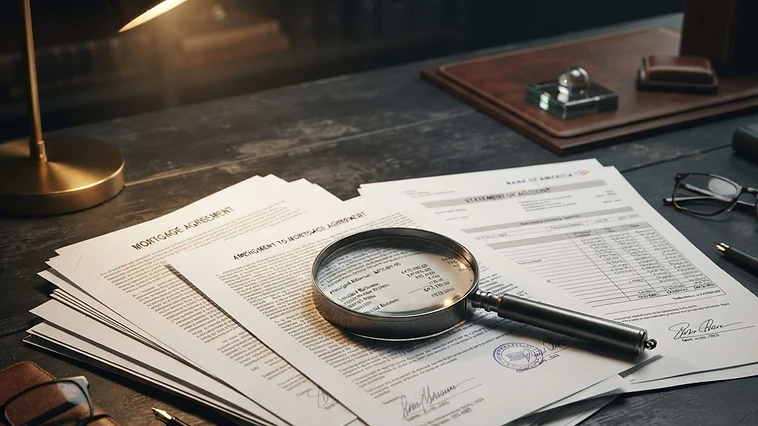
 Hands organizing mortgage servicing evidence and foreclosure defense documents on a dark desk.
The first step in building your defense is to request your complete loan file from the servicer. Under the Real Estate Settlement Procedures Act (RESPA), you have the right to send a Qualified Written Request (QWR) or a Notice of Error (NOE) to your servicer. These formal legal letters require the servicer to investigate your account, correct any errors, and provide you with specific documents, such as a complete payment history, copies of all assignments, and the identity of the actual owner of your loan.
When you send a QWR or NOE, you must send it to the specific address designated by the servicer for such requests, and you must send it via certified mail with a return receipt. This creates a legally binding paper trail. If the servicer fails to respond within the federally mandated timeframes (usually 30 days), they have committed a RESPA violation, which can be used as leverage in your foreclosure defense.
Once you receive the documents, you must organize them chronologically and compare the bank's payment history against your own bank statements and canceled checks. Look for missing payments, unexplained fees, and sudden jumps in your escrow balance. This forensic evidence is the foundation of your defense.
Why the Foreclosure Defense Survival Playbook Helps
Navigating the complexities of mortgage servicing abuses, RESPA violations, and court procedures can feel overwhelming, especially when you are already dealing with the stress of potential homelessness. The banks have teams of high-priced lawyers whose only job is to push your foreclosure through the system as quickly as possible. To fight back, you need to level the playing field. You need to understand the rules of the game.
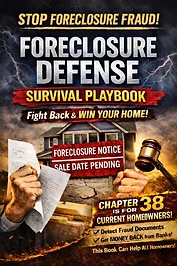
This is exactly why the Foreclosure Defense Survival Playbook is an indispensable resource for any homeowner facing default or foreclosure. This comprehensive, 530-page educational manual is designed specifically for homeowners who need to understand the inner workings of mortgage documents, foreclosure procedures, and legal research.
The Playbook breaks down complex legal concepts into plain, actionable language. It teaches you how to read and analyze your promissory note, deed of trust, and assignments to spot the fatal flaws that banks try to hide. It provides detailed, step-by-step guidance on how to draft effective Qualified Written Requests and Notices of Error to force the servicer to hand over the evidence you need.
Furthermore, the Playbook educates you on the rules of evidence and discovery, showing you how to organize your documents like a forensic auditor so that you can clearly present your case. Whether you are working with an attorney and want to be an informed, active participant in your defense, or you are forced to navigate the system on your own, the Foreclosure Defense Survival Playbook gives you the knowledge you need to hold the banks accountable.
Don't let the bank steal your home through ineffective servicing, phantom fees, or fraudulent documents. Educate yourself, organize your evidence, and learn how to fight back. Order the Foreclosure Defense Survival Playbook today and take the first step toward saving your home.

Order The Playbook
Get the Foreclosure Defense Survival Playbook
530 pages of structured, educational guidance covering mortgage documents, foreclosure procedures, evidence organization, and legal research — the same foundation this article draws from.