Foreclosure Defense
Recent CFPB Crackdowns on Mortgage Servicers: How to Fight Illegal Foreclosure Practices
Recent federal enforcement actions have exposed widespread illegal foreclosure practices by mortgage servicers. Learn how to identify servicing errors, assert your federal rights, and build a strong defense to save your home.
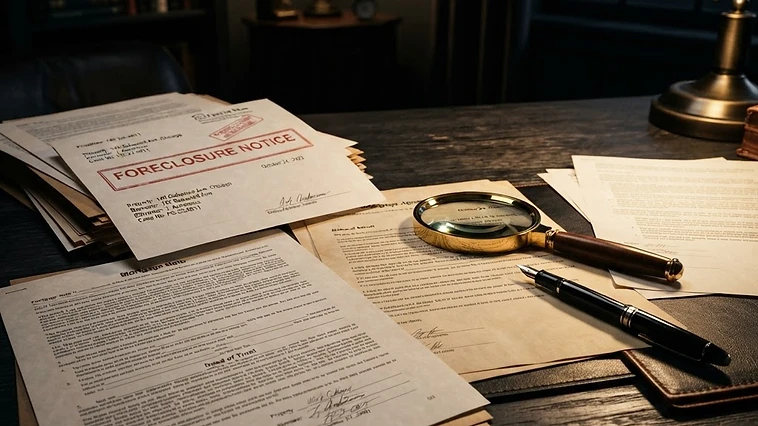
Disclaimer: The following article is for educational and informational purposes only. It does not constitute legal advice, nor does it establish an attorney-client relationship. If you are facing foreclosure, you should consult with a qualified attorney in your jurisdiction to discuss your specific legal options.
For homeowners struggling to keep up with their monthly mortgage payments, the threat of foreclosure is a terrifying reality. But what happens when the very institution tasked with managing your loan breaks the law to take your home? Recent enforcement actions by federal watchdogs have exposed a disturbing trend: mortgage servicers are still engaging in illegal foreclosure practices, violating law enforcement orders, and stripping homeowners of their rights.
In recent days, the Consumer Financial Protection Bureau (CFPB) has continued its aggressive crackdown on mortgage servicing abuses, taking decisive action against companies like Fay Servicing for illegal foreclosure actions and violating previous law enforcement orders. These federal interventions highlight a systemic problem in the mortgage industry. Servicers are frequently misapplying payments, ignoring loan modification agreements, and illegally pushing families out of their homes.
If you are behind on your mortgage or already facing a foreclosure lawsuit, understanding these recent developments is critical. The errors and abuses committed by your mortgage servicer could be the key to defending your home. This article will break down the most common mortgage servicing abuses, explain your rights under federal law, and provide actionable steps to help you build a robust foreclosure defense.
The Rise of Mortgage Servicing Abuses and Illegal Foreclosures
Mortgage servicers are the companies that collect your monthly payments, manage your escrow account, and handle loss mitigation requests (like loan modifications). They are often not the actual owners of your loan; they are simply third-party debt collectors hired by the bank or the trust that holds your mortgage. Because they do not own the loan, their profit model is largely driven by the fees they can assess against your account.
Recent federal enforcement actions have revealed that many servicers are prioritizing their own profits over compliance with the law. The CFPB has repeatedly penalized servicers for a practice known as "dual tracking." Dual tracking occurs when a mortgage servicer moves forward with foreclosure proceedings while simultaneously processing a homeowner's application for a loan modification or other loss mitigation option. This practice is strictly prohibited under federal law, yet it remains one of the most common violations cited in recent enforcement actions.
Furthermore, federal regulators have uncovered instances where servicers completely ignored existing loan modification agreements, especially after a loan was transferred from one servicer to another. Homeowners who successfully negotiated a lower payment with their previous servicer suddenly find themselves facing demands for inflated, inaccurate amounts from a new servicer. When the homeowner cannot pay the fabricated balance, the servicer illegally initiates foreclosure.
These enforcement actions prove that you cannot blindly trust the numbers on your mortgage statement. The burden often falls on the homeowner to audit their own account, identify the servicer's errors, and force the company to comply with the law.
Common Servicing Errors That Lead to Wrongful Foreclosure
To effectively defend against a foreclosure, you must know what to look for. Mortgage servicing fraud rarely looks like a blatant theft; instead, it hides in the complex accounting of your payment history. Here are the most common servicing errors that can lead to a wrongful foreclosure:
1. Misapplied Payments and Suspense Account Abuse
When you send a payment that is even slightly less than the full amount due, or if you are currently in a trial modification plan, servicers often place your money into a "suspense account." A suspense account is a holding account. The servicer will hold your funds there until enough money accumulates to make a full regular payment. However, servicers frequently fail to credit these funds properly, leaving thousands of dollars in suspense while simultaneously declaring your loan in default and charging you late fees.
2. Phantom Fees and Unnecessary Property Inspections
Once you fall behind on your payments, the servicer will begin assessing default-related fees. While some fees are permitted by your mortgage contract, servicers often abuse this right. They may charge you for unnecessary, repetitive "property inspections" (sometimes driving by your house multiple times a month and billing you for each trip). They may also assess illegal late fees, corporate advance fees, and inflated attorney costs. These phantom fees are added to your principal balance, making it mathematically impossible for you to catch up.
3. Force-Placed Insurance Manipulation
If your homeowner's insurance lapses, your mortgage contract allows the servicer to purchase insurance on your behalf to protect the property. This is known as "force-placed insurance." However, servicers often purchase policies that are vastly more expensive than standard market rates, sometimes receiving kickbacks or commissions from the insurance providers. Even worse, servicers have been caught force-placing insurance on properties that already had active, valid coverage, driving the homeowner's monthly escrow payment through the roof and triggering a default.
4. Broken Chains of Title and Fraudulent Assignments
During the 2008 financial crisis, the term "robo-signing" became infamous. It referred to bank employees signing thousands of foreclosure documents without verifying their accuracy. While the industry claims to have cleaned up its act, recent court filings and enforcement actions show that fraudulent assignments and broken chains of title are still prevalent. If your loan was sold multiple times, the current servicer may not actually have the legal standing to foreclose. They may rely on fabricated or backdated assignments to push the foreclosure through the courts.
Your Legal Rights Under Federal Law
Homeowners are not defenseless against these abuses. Federal law provides powerful tools to hold mortgage servicers accountable. The most important of these laws is the Real Estate Settlement Procedures Act (RESPA), specifically implemented through Regulation X.
Under RESPA and Regulation X, mortgage servicers must adhere to strict timelines and procedures when dealing with homeowners who are behind on payments.
First, there is the 120-Day Rule. A mortgage servicer cannot officially make the first notice or filing required by state law to begin the foreclosure process until your mortgage loan obligation is more than 120 days delinquent. This critical window is designed to give you time to submit a complete loss mitigation application. If a servicer files for foreclosure on day 90, they have violated federal law, and this violation can be used as a powerful defense in court.
Second, servicers have strict communication requirements. If you miss a payment, the servicer must attempt to establish live contact with you by the 36th day of your delinquency to discuss loss mitigation options. By the 45th day, they must provide you with a written notice detailing your options to avoid foreclosure. Failure to provide these notices can severely undermine the servicer's legal right to foreclose.
Finally, RESPA provides you with the right to demand answers and corrections from your servicer through a formal written process. This is where you can take the offensive and begin building your defense.
How to Spot Fraud and Build Your Defense
If you suspect your mortgage servicer has made errors, charged illegal fees, or violated federal law, you must take immediate action to document the abuse. The most effective way to do this is by sending a Notice of Error (NOE) and a Request for Information (RFI) under RESPA.
 Close-up of a homeowner auditing a mortgage payment history ledger for servicing errors and illegal fees.
A Notice of Error is a formal letter sent to your servicer's designated address (which is usually different from the payment address) detailing the specific mistakes you believe they have made. This could include misapplied payments, improper fees, or dual tracking violations. Once the servicer receives a valid NOE, federal law requires them to acknowledge receipt within five days and conduct a reasonable investigation to correct the error within 30 days.
A Request for Information allows you to demand specific documents related to your loan. You should always request a complete, life-of-loan payment history. This document is the holy grail of foreclosure defense. It is a line-by-line accounting of every penny you have paid, every fee the servicer has charged, and every time your money was diverted into a suspense account.
When you receive the payment history, you must audit it meticulously. Look for unexplained corporate advances, repetitive property inspection fees, and months where your payment was received but not applied to the principal and interest. If the servicer fails to respond to your NOE or RFI, or if they provide an inadequate response, they can be held liable for damages under federal law. In many foreclosure cases, proving that the servicer violated RESPA can force them to the negotiating table, resulting in a favorable loan modification or even the dismissal of the foreclosure lawsuit.
Furthermore, you must demand to see the original promissory note and the chain of assignments. Do not take the servicer's word that they have the right to foreclose. Force them to prove it. If the endorsements on the note do not match the assignments recorded in the county records, you may have a strong standing defense.
Why the Foreclosure Defense Survival Playbook Helps
Fighting a multi-billion dollar bank or mortgage servicer can feel like an impossible task, especially when you are already dealing with the financial and emotional stress of a potential foreclosure. The legal system is complex, and the rules of evidence and civil procedure are unforgiving to those who do not understand them. That is exactly why the Foreclosure Defense Survival Playbook was created.
This 530-page educational manual is designed specifically for homeowners who need to understand the intricate details of mortgage documents, foreclosure procedures, and legal research. The Playbook breaks down complex federal laws like RESPA and Regulation X into plain, actionable language. It teaches you how to properly draft and send a Notice of Error, how to audit a complex life-of-loan payment history to uncover hidden servicing fraud, and how to organize your evidence to build a compelling narrative.
Whether you are trying to negotiate a loan modification, fighting a wrongful foreclosure pro se, or simply want to be an educated partner to your retained attorney, the Playbook provides the templates, strategies, and knowledge you need to level the playing field. Don't let a mortgage servicer illegally take your home through fabricated fees and robo-signed documents. Equip yourself with the knowledge to fight back. Order the Foreclosure Defense Survival Playbook today and take the first step toward saving your home.

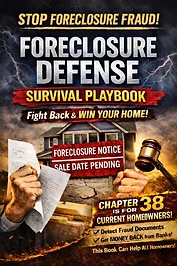
Order The Playbook
Get the Foreclosure Defense Survival Playbook
530 pages of structured, educational guidance covering mortgage documents, foreclosure procedures, evidence organization, and legal research — the same foundation this article draws from.