Mortgage Servicing
CFPB Cracks Down on Mortgage Servicing Abuses and Junk Fees: A Guide for Homeowners
Recent regulatory actions by the CFPB have exposed widespread mortgage servicing abuses, including illegal junk fees and deceptive loss mitigation practices. Learn how these violations impact homeowners facing foreclosure.

Disclaimer: The following article is for educational purposes only and does not constitute legal advice. If you are facing foreclosure, please consult with a qualified attorney in your jurisdiction.
For homeowners struggling to keep up with monthly payments, the threat of foreclosure is a terrifying reality. But what happens when the very institutions tasked with managing your loan are actively making it harder for you to save your home? Recent enforcement actions and reports from the Consumer Financial Protection Bureau (CFPB) have shed light on a disturbing trend in the financial sector: widespread mortgage servicing abuses, illegal "junk fees," and deceptive practices that push vulnerable homeowners closer to the brink of losing their properties.
In this comprehensive guide, we will explore the latest regulatory crackdowns on mortgage servicers, how these abuses manifest in your monthly statements, and what these developments mean for your homeowner rights and foreclosure defense strategy.
The Rise of Mortgage Servicing Abuses and "Junk Fees"
Mortgage servicers are the companies that collect your monthly payments, manage your escrow accounts, and handle loss mitigation requests if you fall behind. Unfortunately, recent investigations by the CFPB have revealed that some servicers are padding their profits by charging homeowners illegal and unnecessary fees.
According to a special edition of the CFPB's Supervisory Highlights focusing on the residential mortgage servicing market, examiners found numerous instances of servicers assessing what the Bureau refers to as "junk fees." These include prohibited property inspection fees that violate investor guidelines, and late fees that exceed the maximum amounts allowed by the original mortgage agreements.
When a homeowner is already behind on payments, every dollar counts. The addition of illegal property inspection fees or inflated late charges can artificially inflate the default amount, making it exponentially more difficult for the borrower to reinstate the loan. In some cases, examiners found that servicers failed to waive existing fees even after a homeowner had successfully completed a loan modification, directly violating the terms of the agreement.
Deceptive Loss Mitigation and Delinquency Notices
Perhaps even more alarming than the financial drain of junk fees is the psychological and legal toll of deceptive communication. The CFPB's recent report highlighted severe violations regarding loss mitigation—the process by which homeowners apply for loan modifications, forbearances, or repayment plans to avoid foreclosure.
Examiners discovered that some mortgage servicers were sending deceptive eligibility notices to homeowners in default. In some heartbreaking instances, borrowers received official notices stating they had been approved for a repayment option, only to find out later that no final decision had been made—and they were ultimately rejected.
 Stack of mortgage servicing documents and foreclosure notices on a dark desk

This type of deceptive practice is not just a customer service failure; it is a potential violation of the Real Estate Settlement Procedures Act (RESPA) and Regulation X. When a servicer improperly denies a request for assistance or fails to evaluate a struggling borrower for repayment options as required by law, it strips the homeowner of their legal right to avoid foreclosure. Furthermore, these actions can form the basis of a substantive defense in a foreclosure lawsuit, as the servicer's failure to follow federal loss mitigation procedures can sometimes halt the foreclosure process.
Illegal Convenience Fees and the FDCPA
The CFPB and the Federal Trade Commission (FTC) have also been actively fighting against unlawful "convenience fees" charged by mortgage servicers. In a recent high-profile case involving Ocwen Loan Servicing, borrowers were charged fees ranging from $7.50 to $12 simply for making their mortgage payments online or over the phone.
When borrowers sued Ocwen, arguing that these fees violated the Fair Debt Collection Practices Act (FDCPA), the servicer attempted to argue that the FDCPA did not apply to these types of fees. However, the CFPB and FTC filed an amicus brief in the U.S. Court of Appeals for the Eleventh Circuit, firmly stating that the FDCPA applies to all fees related to the collection of a debt.
For homeowners in foreclosure, this is a critical development. If your mortgage servicer is acting as a debt collector and charging you unauthorized fees to process your payments, they may be violating federal law. Identifying and challenging these unlawful fees is a vital component of auditing your loan history and building a robust foreclosure defense.
Procedural and Substantive Defenses Against Foreclosure
Understanding these recent regulatory actions is essential because they directly tie into the defenses available to homeowners facing foreclosure. Foreclosure defense generally falls into two categories: procedural defenses and substantive defenses.
Procedural defenses focus on the rules and regulations the foreclosing party must follow. For example, under the Truth in Lending Act (TILA) and RESPA, borrowers must receive specific notices when their loan is transferred to a new owner or when the servicing rights change hands. If a servicer fails to provide these notices, or if they fail to follow the strict loss mitigation timelines outlined in Regulation X, a homeowner can raise these procedural violations in court. While this may not permanently erase the debt, it can force the servicer to restart the process, buying the homeowner valuable time to negotiate a resolution.
Substantive defenses, on the other hand, focus on the facts of the case and the actual accounting of the loan. As the CFPB's findings demonstrate, mortgage servicers frequently make mistakes. They may fail to promptly credit payments, apply payments to the wrong account, or pile on excessive, illegal junk fees. If a servicer initiates a foreclosure based on an inflated or inaccurate default amount caused by their own accounting errors or illegal fees, the homeowner has a strong substantive defense. By demanding a full accounting of the loan and challenging every unauthorized charge, homeowners can sometimes prove that the servicer lacks the legal grounds to foreclose.
New Proposed Rules to Protect Homeowners
In response to these widespread issues, regulatory bodies are attempting to tighten the rules governing mortgage servicers. On July 10, 2024, the CFPB issued a proposed rule aimed at streamlining mortgage servicing for borrowers experiencing payment difficulties.
The goal of these proposed amendments to Regulation X is to promote greater agility among mortgage servicers in responding to economic shocks while ensuring they meet their strict obligations to assist borrowers. By simplifying the loss mitigation process, the CFPB hopes to reduce the instances of dual tracking—an illegal practice where a servicer proceeds with foreclosure while simultaneously negotiating a loan modification with the borrower.
For homeowners, staying informed about these changing rules is crucial. The landscape of mortgage servicing regulations is constantly evolving, and knowing your rights under the latest CFPB guidelines can be the difference between losing your home and successfully negotiating a loan modification.
Why the Foreclosure Defense Survival Playbook Helps
Navigating the complex world of mortgage servicing abuses, junk fees, and federal regulations is an overwhelming task for anyone, especially when you are under the immense stress of a looming foreclosure. The legal jargon, the confusing mortgage statements, and the deceptive tactics used by servicers are designed to make you feel powerless. But you do not have to fight this battle blind.
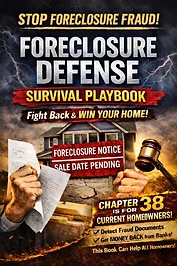
This is exactly why the Foreclosure Defense Survival Playbook is an indispensable resource for homeowners. This comprehensive, 530-page educational guide breaks down the exact strategies you need to understand your mortgage documents, audit your loan history for illegal junk fees, and organize your evidence to expose servicer abuses. It translates complex federal laws like RESPA, TILA, and the FDCPA into plain, actionable language, empowering you to spot the exact violations the CFPB is currently cracking down on.
Whether you are trying to force your servicer to offer a fair loan modification or preparing to challenge their accounting in court, the Playbook provides the foundational knowledge you need to level the playing field. Don't let mortgage fraud and servicing abuses cost you your home. Order the Foreclosure Defense Survival Playbook today and take the first step toward taking back control of your financial future.

Order The Playbook
Get the Foreclosure Defense Survival Playbook
530 pages of structured, educational guidance covering mortgage documents, foreclosure procedures, evidence organization, and legal research — the same foundation this article draws from.