Mortgage Servicing
Recent CFPB Crackdowns and Court Rulings Expose Widespread Mortgage Servicing Abuses
Recent federal enforcement actions and court rulings have exposed widespread mortgage servicing abuses, including illegal junk fees and deceptive loss mitigation practices.

Disclaimer: The following article is for educational purposes only and does not constitute legal advice. If you are facing foreclosure, consult with a qualified attorney in your jurisdiction.
If you are a homeowner who has fallen behind on mortgage payments or is currently facing foreclosure, you likely already know how frustrating it is to deal with your mortgage servicer. Statements are confusing, loss mitigation applications seem to disappear into a black hole, and unexplained fees magically appear on your account balance.
Recently, federal regulators and appellate courts have been shining a bright light on these exact issues. Over the past several months, the Consumer Financial Protection Bureau (CFPB) and various federal courts have issued reports, proposed new rules, and handed down rulings that expose widespread abuses in the mortgage servicing industry. From illegal "junk fees" to deceptive loss mitigation practices and blatant violations of the Real Estate Settlement Procedures Act (RESPA), the evidence is clear: mortgage servicers are still making critical errors that push vulnerable homeowners closer to the brink of losing their homes.
Understanding these recent developments is crucial for any homeowner mounting a foreclosure defense. By knowing what regulators are finding and how courts are ruling, you can better scrutinize your own mortgage documents, spot servicing errors, and hold your bank accountable.
The Latest CFPB Crackdown on Mortgage Servicing Abuses
The Consumer Financial Protection Bureau (CFPB) is the federal agency tasked with enforcing consumer financial laws, including those that govern how mortgage servicers handle your loan. In their recent Supervisory Highlights, the CFPB revealed alarming findings regarding how servicers are treating homeowners, particularly those at risk of foreclosure.
According to the CFPB's examinations, examiners continue to find supervised mortgage servicers assessing illegal "junk fees." These include unnecessary property inspection fees and improper late fees that exceed the amounts allowed by the original loan agreements. In some cases, servicers charged homeowners for property inspections following a delinquency on Fannie Mae loans, even when such inspections were explicitly prohibited by Fannie Mae's own guidelines.
But the abuses do not stop at junk fees. The CFPB also found that mortgage servicers engaged in unfair, deceptive, and abusive acts or practices (UDAAP) by sending deceptive loss mitigation eligibility notices to consumers. Loss mitigation is the process where a servicer evaluates a struggling homeowner for alternatives to foreclosure, such as a loan modification, payment deferral, or forbearance. When servicers send deceptive notices, homeowners are often discouraged from submitting complete applications or taking the necessary steps to cure their delinquencies.
Furthermore, the CFPB noted that some servicers failed to follow investor guidelines when evaluating these applications. Instead of submitting the homeowner's application to the investor for review, the servicers automatically denied certain consumers a payment deferral option. This kind of automated, rubber-stamp denial strips homeowners of their right to a fair review and accelerates the foreclosure process unjustly.
How Servicers Are Violating RESPA and Loss Mitigation Rules
The Real Estate Settlement Procedures Act (RESPA) and its implementing regulation, Regulation X, provide strict rules that mortgage servicers must follow when dealing with homeowners. These rules dictate how servicers must respond to homeowner inquiries, how they must handle escrow accounts, and the exact procedures they must follow during the loss mitigation process.
Recent enforcement actions highlight just how frequently servicers violate these federal protections. For example, the CFPB recently entered into consent orders with several loan servicing companies for systematically failing to respond to thousands of homeowner requests. These requests included pleas for loan payoff statements, short sales, deeds-in-lieu of foreclosure, and general information.
Under RESPA, homeowners have the right to send a Qualified Written Request (QWR) or a Notice of Error (NOE) to their servicer to dispute charges or request information. The servicer is legally required to acknowledge and respond to these requests within specific timeframes. When servicers ignore these requests, they not only violate federal law but also intentionally keep homeowners in the dark about the true status of their loans.
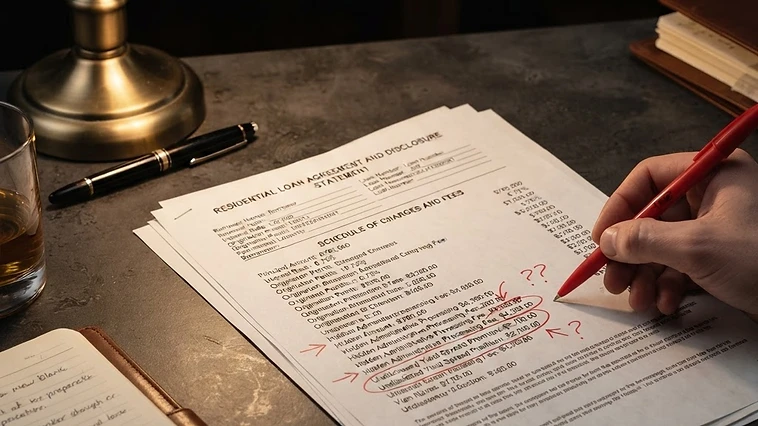 Close-up of a mortgage statement on a dark desk with hidden fees circled in red pen.

Additionally, the CFPB found that servicers violated Regulation X by failing to provide deadlines for accepting or rejecting loss mitigation offers in their written notices. They also failed to document critical actions in their servicing systems, such as establishing live contact with borrowers who had fallen behind on payments. For a homeowner trying to save their home, a servicer's failure to communicate clearly and document interactions can mean the difference between a successful loan modification and a devastating foreclosure sale.
Recent Court Rulings: Homeowners Fighting Back
While federal regulators are cracking down on systemic abuses, individual homeowners are also taking their fights to federal court—and exposing questionable practices along the way. Recent appellate court decisions highlight the ongoing battles over debt collection practices, improper assignments, and the securitization of mortgage loans.
In the Fourth Circuit Court of Appeals, a recent case (Palazzo v. Bayview Loan Servicing) dealt with the intersection of mortgage servicing and the Fair Debt Collection Practices Act (FDCPA). The homeowner, who was in Chapter 13 bankruptcy proceedings, alleged that the mortgage servicer sent written communications that were illegal attempts to collect a discharged debt. While the court ultimately ruled on the specific disclaimers used in the letters, the case underscores a vital point for homeowners: mortgage statements, payoff quotes, and default notices sent by servicers acting as debt collectors must comply with strict federal laws. If a servicer uses abusive, deceptive, or unfair practices in these communications, they may be liable under the FDCPA.
In another recent case out of the Second Circuit (Dernier v. U.S. Bank), pro se homeowners fought a grueling battle against a mortgage-backed trust, alleging that the assignment of their mortgage was invalid and that signatures had been forged. While the appellate court affirmed the lower court's ruling based on the specific procedural history of the case, the litigation itself highlights the murky, often chaotic world of mortgage assignments and securitization.
During the housing crash, the phenomenon of "robo-signing"—where bank employees forged signatures on thousands of foreclosure documents without reviewing them—became a national scandal. While banks claim to have cleaned up their act, homeowners in foreclosure today are still uncovering questionable assignments, missing endorsements on promissory notes, and broken chains of title. When a trust claims the right to foreclose, they must prove they legally hold the note and mortgage. Homeowners who understand how to demand this proof through the discovery process can often expose fatal flaws in the bank's legal standing to foreclose.
The Danger of "Junk Fees" and Phantom Default Notices
One of the most insidious tactics exposed by recent regulatory actions is the assessment of phantom fees and the issuance of inaccurate default notices. When you are behind on your mortgage, every dollar counts. If a servicer is illegally padding your account balance with unauthorized property inspection fees, inflated corporate advance fees, or improper late charges, it becomes exponentially harder to reinstate your loan or qualify for a modification.
These "junk fees" are often buried deep within the transaction history of a mortgage statement. They are disguised under vague codes or lumped together in categories like "other fees." Because most homeowners do not know how to audit their own mortgage transaction histories, these fees go unchallenged. The servicer then uses this artificially inflated balance as the basis for their foreclosure complaint.
Similarly, the CFPB has accused servicers of falsely telling homeowners they were in default and ignoring the homeowners' attempts to contest the information. Imagine receiving a notice that you are thousands of dollars in default, knowing that you made your payments, but having your servicer completely ignore your proof of payment. This is not just a clerical error; it is a violation of your rights under the Consumer Financial Protection Act (CFPA) and RESPA.
To combat this, homeowners must become forensic auditors of their own mortgage accounts. You must learn how to request a complete loan transaction history, how to cross-reference that history with your original promissory note and mortgage contract, and how to identify fees that violate investor guidelines (such as those set by Fannie Mae, Freddie Mac, or the FHA).
The Future of Loss Mitigation: Proposed CFPB Rules
In response to these ongoing abuses, the CFPB recently proposed new rules designed to make it easier for homeowners to get help when they are struggling to pay their mortgage. If finalized, these rules would require mortgage servicers to focus on helping borrowers rather than rushing to foreclose.
The proposed changes aim to streamline the loss mitigation process by reducing the rigid paperwork requirements that currently trap many homeowners in a never-ending cycle of document requests. Under the current system, servicers often refuse to evaluate a homeowner for assistance until every single document in a massive application packet is deemed "complete." If one signature is missing or a pay stub is deemed too old, the servicer rejects the entire packet and moves forward with foreclosure.
The new framework would introduce "foreclosure procedural safeguards." If a borrower requests loss mitigation assistance, the servicer would be forced into a review cycle that pauses the foreclosure process until the servicer has genuinely explored all options to bring the loan current. While these rules are still in the proposal stage, they signal a clear recognition by federal regulators that the current mortgage servicing system is fundamentally broken and heavily skewed against the homeowner.
Why the Foreclosure Defense Survival Playbook Helps
Reading about CFPB crackdowns and federal court rulings can be validating, but it doesn't stop the foreclosure clock ticking on your own home. To fight back against deceptive servicers, illegal junk fees, and improper assignments, you need more than just news—you need a comprehensive strategy. You need to know exactly how to demand your loan documents, how to audit your transaction history for illegal fees, and how to force the bank to prove their standing in court.
This is exactly why the Foreclosure Defense Survival Playbook is an absolute must-have resource for any homeowner facing late payments or active foreclosure.
At 530 pages, this deeply educational manual breaks down the complex world of mortgage documents, foreclosure procedures, evidence organization, and legal research into plain, understandable language. It teaches you how to:
- Draft and Send Qualified Written Requests (QWRs): Learn how to legally force your servicer to provide your complete loan history and answer your questions under RESPA.
- Spot Illegal Junk Fees: Understand how to read confusing mortgage statements and identify the unauthorized property inspection fees and late charges that the CFPB is currently cracking down on.
- Analyze the Chain of Title: Discover how to research your county land records to spot forged assignments, robo-signing, and broken chains of title that could destroy the bank's legal standing to foreclose.
- Navigate the Court System: Gain the educational foundation you need to understand court procedures, discovery, and how to organize your evidence like a pro.
The banks have teams of lawyers and automated systems designed to push you out of your home as quickly as possible. You cannot rely on them to play fair, and as recent federal crackdowns prove, they frequently break the law. You must take control of your own defense.
Equip yourself with the knowledge to hold your servicer accountable. Order the Foreclosure Defense Survival Playbook today and take the first step toward leveling the playing field and fighting for your home.


Order The Playbook
Get the Foreclosure Defense Survival Playbook
530 pages of structured, educational guidance covering mortgage documents, foreclosure procedures, evidence organization, and legal research — the same foundation this article draws from.