Mortgage Documents
The Hidden Dangers in Your Mortgage Documents: Why Current Homeowners Must Audit Their Refinance Paperwork
Recent data shows a massive spike in refinance fraud and loan document errors. Learn why even homeowners who are current on their payments need to audit their mortgage paperwork.

Disclaimer: The following article is for educational purposes only and does not constitute legal advice. If you have specific questions about your mortgage documents or suspect fraud, please consult with a qualified attorney in your jurisdiction.
When you pay your mortgage on time every month, it is easy to assume that your lender, your servicer, and the county recorder's office have handled your paperwork flawlessly. You receive your monthly statement, you make your payment, and your balance slowly decreases. For the vast majority of homeowners, this creates a false sense of security. The reality of the modern real estate and banking industry is far more complex, and recent data reveals a disturbing trend: loan document errors, title defects, and outright mortgage fraud are skyrocketing, particularly in the realm of refinancing.
Whether you are preparing to refinance to secure a better rate, pulling cash out for home improvements, or simply organizing your financial estate, conducting a thorough mortgage document review is no longer optional. It is a vital step in protecting your most valuable asset. In this comprehensive guide, we will explore the recent surge in refinance fraud, the hidden loan document errors that could jeopardize your property rights, and why every homeowner—even those perfectly current on their payments—needs to perform a meticulous mortgage audit.
The Alarming Rise in Refinance Fraud and Forgery
Many homeowners believe that fraud only happens during the initial purchase of a home or when a borrower is in default. However, recent industry reports paint a very different picture. According to a recent Milliman Inc. study commissioned by the American Land Title Association (ALTA), fraud and forgery claims tied specifically to mortgage refinances have surged dramatically. These claims now represent over 40% of all title insurer losses and expenses.
The financial impact of these hidden defects is staggering. The average cost of fraud and forgery claims on refinances has climbed to $207,000—nearly seven times higher than other types of claims. What makes this trend so dangerous for the average homeowner is that these issues often cannot be detected through a standard public records search. Fraudsters are increasingly targeting the equity in homes through sophisticated schemes that involve forged deeds, fraudulent loan originations, and identity theft.
When you sit down to sign your refinance paperwork, you are entering into a complex web of legal obligations. If the underlying title to your home has been compromised by a forged document in the chain of title, or if a bad actor has manipulated the recording system, your new refinance could be built on a foundation of sand. This is why a proactive mortgage document review is essential. You must verify that the chain of title is clear and that no unauthorized liens or fraudulent conveyances have been recorded against your property without your knowledge.
How Artificial Intelligence is Fueling Mortgage Fraud
The landscape of mortgage fraud is evolving rapidly, driven in large part by advancements in technology. Financial risk experts, including those at FTI Consulting, have recently highlighted the emerging risks associated with Generative AI (GenAI) in the mortgage sector. Bad actors are now utilizing advanced AI bots to create highly effective synthetic identities at scale.
This technological leap has supercharged document fabrication fraud. It is now easier than ever for fraudsters to generate falsified income statements, asset documents, and even fake notary stamps. While you may know that your own identity is secure, the danger lies in how these fabricated documents can be used to cloud your title or manipulate the servicing of your loan. For example, a fraudster could use a synthetic identity to record a fraudulent release of a mortgage, or conversely, to record a fake lien against your property.
When these fabricated documents enter the county land records, they create incurable title defects that break the chain of title. If you attempt to refinance your home while one of these defects exists, the transaction will likely be halted, or worse, you could find yourself entangled in a costly legal battle to clear your name and your property rights. Conducting a personal mortgage audit allows you to spot these anomalies before they derail your financial plans.
Common Loan Document Errors and Servicing Mistakes
Even if we set aside the malicious acts of fraudsters, the sheer volume of paperwork processed by mortgage lenders and servicers guarantees that innocent—yet highly destructive—errors will occur. The Consumer Financial Protection Bureau (CFPB) has recently directed its examiners to heavily scrutinize mortgage servicers for Unfair, Deceptive, or Abusive Acts or Practices (UDAAP).
One of the most common loan document errors involves the mishandling of escrow accounts and hazard insurance. According to recent compliance reviews by financial advisory firms like Anders CPA, servicers frequently make the mistake of force-placing hazard insurance on a property even when the borrower has an active policy and an existing escrow account. Force-placed insurance is notoriously expensive and provides less coverage than a standard homeowner's policy. If your servicer makes this error, it can artificially inflate your monthly payment and drain your escrow account, leading to an unjustified escrow shortage.
Another frequent issue involves the improper closure of escrow accounts. Federal regulations require strict timelines and notices when an escrow account is closed, yet servicers routinely fail to provide the required three-day or thirty-day notices.
Beyond escrow issues, homeowners must be vigilant about the actual promissory note and deed of trust (or mortgage). When loans are sold and securitized on the secondary market, the physical and electronic transfer of these documents is often botched. Endorsements on the note may be missing, undated, or signed by individuals who lacked the legal authority to do so (a practice famously known as "robo-signing"). Assignments of the mortgage are frequently recorded years after the actual transfer of the loan, or they are recorded by entities like the Mortgage Electronic Registration Systems (MERS) without proper documentation of the underlying debt transfer.
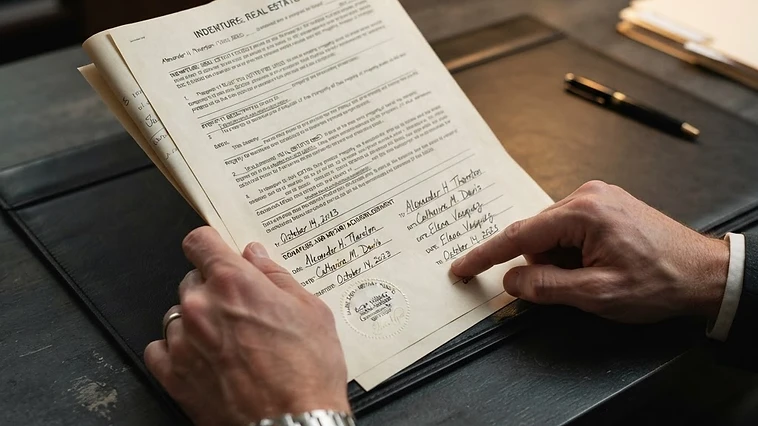 Close-up of hands conducting a mortgage document review on a dark desk under warm lighting.

If you are refinancing, your new lender will require a clear payoff of the old loan. If the current servicer cannot legally prove they have the right to accept that payoff due to a broken chain of assignments or a missing promissory note, your refinance could be severely delayed.
The Mechanics of a Personal Mortgage Document Review
So, how does a current, on-time homeowner actually audit their mortgage paperwork? A comprehensive mortgage document review involves gathering every piece of paper related to your loan and cross-referencing it with the public record.
First, you must obtain your complete origination file. This includes your original loan application, the Closing Disclosure (or HUD-1 Settlement Statement for older loans), the Promissory Note, and the Mortgage or Deed of Trust. You should review the Note for any endorsements or allonges (attachments). Are they stamped in blank? Are they endorsed to a specific trust?
Next, you need to pull the complete property profile and chain of title from your county recorder's office. You are looking for every Assignment of Mortgage recorded since you bought the house. Does the timeline of the assignments match the notices of servicing transfers you received in the mail? If your loan was sold to a securitized trust, was the assignment recorded before the trust's closing date (the REMIC cut-off date)?
You must also scrutinize the signatures and notary stamps on these recorded documents. In many cases of loan document errors, the person signing as a "Vice President" of a major bank is actually a low-level employee of a third-party document processing company. While this alone may not invalidate your mortgage, it is a massive red flag that the integrity of your loan file has been compromised.
Finally, review your payment history and escrow statements. Request a complete transaction history from your current servicer. Calculate the application of your principal and interest payments to ensure they align with your amortization schedule. Look for unexplained fee assessments, unauthorized property inspection fees, or improper late charges that may have been quietly added to your principal balance.
Why Auditing Your Mortgage Paperwork Matters
You might be thinking, "I pay my mortgage on time, and I have a good relationship with my bank. Why should I go through the trouble of a mortgage audit?"
The answer is simple: the banking industry does not operate on relationships; it operates on documents. If your documents are flawed, your property rights are at risk. The recent surge in refinance fraud, the advent of AI-driven document fabrication, and the persistent incompetence of mortgage servicers mean that you cannot afford to be complacent.
Even if you never miss a payment, you will eventually want to sell your home, pass it on to your heirs, or refinance your paperwork to pull out equity. If there is a hidden title defect, a fraudulent lien, or a missing assignment in your file, you will be the one left paying the legal fees to clean up the bank's mess. By conducting a mortgage document review now, while you are in a position of strength, you can force the servicer to correct these loan document errors before they become a crisis.
This is exactly why the Foreclosure Defense Survival Playbook is an indispensable resource for every homeowner, not just those facing default. This massive, 530-page educational manual pulls back the curtain on the mortgage industry. It teaches you step-by-step how to read your loan documents, how to spot the telltale signs of mortgage fraud and robo-signing, and how to organize your evidence like a seasoned auditor.
The Playbook empowers you to understand the complex rules of securitization, the role of MERS, and the strict servicing disclosures required by federal law. Whether you are preparing for a routine refinance or simply want the peace of mind that your home is truly yours, the Foreclosure Defense Survival Playbook gives you the knowledge you need to hold your lender accountable. Don't wait for a title nightmare to strike—take control of your mortgage paperwork today.


Order The Playbook
Get the Foreclosure Defense Survival Playbook
530 pages of structured, educational guidance covering mortgage documents, foreclosure procedures, evidence organization, and legal research — the same foundation this article draws from.