Mortgage Documents
Is Your Mortgage Paperwork Actually Accurate? Why Current Homeowners Must Audit Their Documents
Recent data reveals a startling rise in mortgage document defects. Even if you pay on time, auditing your paperwork is essential to protect your home and avoid hidden fraud.

Disclaimer: The following article is for educational purposes only and does not constitute legal advice. Always consult a qualified attorney regarding your specific legal situation.
Most homeowners operate under a simple assumption: if you pay your mortgage on time every month, your loan documents must be legally sound. You receive your monthly statement, you send in your payment, and your loan balance slowly decreases. For the vast majority of current, on-time borrowers, the idea that their mortgage file might be riddled with fatal legal flaws, compliance violations, or hidden fraud seems highly unlikely.
But the mortgage industry is not a machine of perfection; it is a high-volume assembly line prone to staggering rates of human and systemic error. If you are considering a refinance, a home equity loan, or simply want to ensure your property rights are secure, you cannot afford to take your lender's paperwork at face value. A proactive mortgage audit is not just for homeowners facing default—it is a critical protective measure for every property owner.
The Surge in Loan Document Errors: What the Latest 2026 Data Reveals
You might believe that the days of sloppy underwriting and missing paperwork ended over a decade ago. However, the most recent data from August 2026 paints a very different picture.
According to the August 2026 Mortgage QC Industry Trends Report by ACES Quality Management, the mortgage industry’s critical defect rate has surged to 1.71%. More alarmingly, legal, regulatory, and compliance defects now make up over 26% of these findings. This means that more than a quarter of the most severe errors found in recent mortgage files represent direct violations of federal lending laws or fundamental legal requirements.
Furthermore, FundingShield’s Q2 2026 fraud analytics report revealed that approximately 45% of monitored mortgage transactions were flagged for wire, title, and closing documentation risks. The issues are moving beyond simple clerical typos into closing protection letter (CPL) discrepancies, deepfake seller impersonations, and systemic title defects.
What does this mean for you? It means there is a statistically significant chance that the paperwork sitting in your filing cabinet—or recorded at your county clerk's office—contains loan document errors. These errors can range from miscalculated Annual Percentage Rates (APRs) and Truth in Lending Act (TILA) violations to missing signatures and improper notary stamps.
Anatomy of a Mortgage Document Review
For a current homeowner, conducting a mortgage document review involves meticulously comparing the documents you were handed at the closing table against what was actually recorded in the public land records.
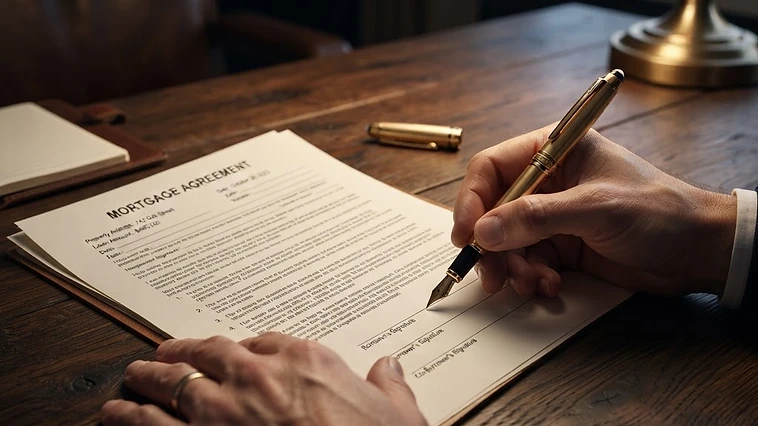 A homeowner carefully conducting a mortgage document review to check for loan document errors and compliance issues.

When you initiate a mortgage audit, you are primarily looking at three vital components of your loan file:
- The Promissory Note: This is the actual I.O.U. You need to know who currently holds the original Note. Was it endorsed properly when your loan was sold from one bank to another? A break in the chain of endorsements can severely complicate a lender's legal standing.
- The Security Instrument (Mortgage or Deed of Trust): This document gives the lender the right to take the property if you fail to pay. Are the legal descriptions of your property completely accurate? Are all riders and addendums attached and signed?
- The Closing Disclosures (TILA/RESPA): Did the lender accurately disclose your finance charges, total interest percentage, and origination fees? Even minor mathematical miscalculations in these compliance documents can render a lender legally liable for regulatory violations.
Conducting this review before you apply for a new loan ensures that you know exactly what legal standing your current servicer holds.
Missing Assignments, MERS, and Chain of Title Defects
One of the most complex areas of your mortgage paperwork is the chain of title. Over the life of a typical 30-year mortgage, the loan might be sold, securitized into a Wall Street trust, and transferred between half a dozen different mortgage servicers.
To bypass the costly process of recording every single transfer at the county courthouse, the banking industry created MERS (Mortgage Electronic Registration Systems). MERS acts as a digital tracking system and is often listed on your Deed of Trust as the "nominee" for the lender. However, MERS has been the subject of continuous legal scrutiny regarding its authority to assign mortgages and initiate foreclosures.
Even in 2026, lawsuits continue to emerge challenging improper assignments and servicing violations linked to MERS and major lenders. If your loan was transferred multiple times, there is a high probability of missing or fabricated mortgage assignments in your chain of title.
Title defects are becoming so pervasive that in mid-2026, the American Land Title Association (ALTA) introduced new post-policy endorsements to protect against a rising tide of forged deeds and seller impersonation fraud. If you are reviewing your refinance paperwork, you must pull a fresh copy of your property's title history from the county recorder. You cannot assume that the chain of title is clean simply because you have never missed a payment.
Predatory Refinance Traps and Hidden Mortgage Fraud
When homeowners possess substantial equity and a pristine payment history, they become prime targets for aggressive refinance marketing. While refinancing to a lower rate or tapping into equity can be a smart financial move, it can also be a trap that benefits the lender more than the borrower.
According to the National Mortgage Application Fraud Risk Index released by Cotality in August 2026, mortgage fraud risk remains highly elevated, driven largely by undisclosed real estate debt and "fraud for profit" schemes involving industry insiders. Over 80% of mortgage fraud losses involve collusion by real estate professionals, appraisers, or loan officers.
Why does this matter if you are just refinancing your own home? Because refinancing acts as a legal reset button.
If your original loan contains massive compliance violations, inflated appraisal fraud, or predatory terms, your current lender knows that they have legal exposure. If you ever discovered these loan document errors, you could potentially sue for damages or use them as extreme leverage. However, if the lender can convince you to refinance that loan, the new mortgage completely pays off and extinguishes the old, flawed mortgage.
By signing the new refinance paperwork, you inadvertently wipe the slate clean for the lender, effectively waiving your right to challenge the original fraudulent documents. This is why a proactive mortgage audit of your current documents is mandatory before you ever agree to sign a new set of loan documents.
Servicing Disclosures and Escrow Irregularities
Even if your origination documents are pristine, your mortgage servicer can introduce critical errors into your file months or years after closing. The Consumer Financial Protection Bureau (CFPB) has heavily focused its 2026 regulatory agenda on overhauling and streamlining mortgage servicing, largely due to the rampant abuse and errors found in the sector.
Homeowners who are perfectly current on their payments often fall victim to servicing errors such as:
- Escrow Miscalculations: The servicer fails to properly account for property tax or insurance increases, leading to sudden, unexplained spikes in the monthly payment.
- Force-Placed Insurance: The servicer falsely claims the homeowner let their hazard insurance lapse and illegally purchases an exorbitant, predatory insurance policy on the borrower's behalf, charging it directly to the loan balance.
- Phantom Fees: Unexplained "corporate advances," property inspection fees, or legal fees slowly draining the borrower's equity without proper disclosure.
If you do not know how to read a detailed payment history ledger or audit your annual escrow disclosure statements, you could be paying thousands of dollars in illegal fees without ever realizing it.
Why Auditing Your Mortgage Paperwork Matters
Waiting until you are facing financial hardship or a rejected loan application is the worst possible time to discover that your mortgage file is legally defective. By then, you are acting out of desperation and operating on a strict, high-stress timeline.
Current homeowners who are comfortably making their payments have the ultimate luxury: time. You have the time to request your complete collateral file, analyze your closing disclosures, investigate your chain of title, and ensure that the institution collecting your money actually has the legal right to do so.
This is exactly why the Foreclosure Defense Survival Playbook is an indispensable resource, even if you are nowhere near a default. This comprehensive, 530-page educational manual strips away the legal jargon and teaches you exactly how the banking industry operates behind closed doors.
The Playbook guides you step-by-step through the process of a thorough mortgage document review. You will learn how to dissect your Promissory Note, identify predatory lending violations, decode complex servicing ledgers, and spot the hidden mortgage fraud that industry insiders hope you never find. By learning how to organize your evidence and conduct foundational legal research, you empower yourself to protect your greatest financial asset.
Do not wait for a crisis to understand the contracts that govern your home. Audit your paperwork today, uncover the hidden errors in your file, and order the Foreclosure Defense Survival Playbook to take absolute control of your property rights.

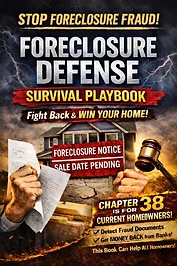
Order The Playbook
Get the Foreclosure Defense Survival Playbook
530 pages of structured, educational guidance covering mortgage documents, foreclosure procedures, evidence organization, and legal research — the same foundation this article draws from.