Mortgage Documents
The Hidden Risks in Your Mortgage: Why Current Homeowners Must Audit Their Documents
Even if you are current on your mortgage payments, hidden loan document errors and refinance fraud could jeopardize your homeownership. Learn why auditing your paperwork is essential.
Disclaimer: The following article is for educational purposes only and does not constitute legal advice. If you have specific questions about your mortgage or suspect fraud, please consult with a qualified attorney.
When most people think about mortgage problems, they picture missed payments, default notices, and the looming threat of foreclosure. But what if you have never missed a payment? What if you are a responsible homeowner simply looking to refinance your home or review your financial portfolio? The unsettling truth is that your mortgage paperwork might still be riddled with critical errors, missing assignments, or even elements of fraud.
Recent industry reports and enforcement actions reveal a disturbing trend: mortgage document errors and refinance fraud are on the rise, affecting everyday homeowners who are completely current on their loans. Before you sign a new stack of refinance paperwork, it is absolutely vital to conduct a thorough mortgage document review. Understanding what is actually in your loan file can protect you from catastrophic title defects, predatory lending practices, and hidden liabilities.
The Rising Threat of Refinance Fraud and Forgery
It is a common misconception that refinancing a mortgage is a risk-free administrative process. However, recent data indicates that the exact opposite is becoming true. According to a recent report by the American Land Title Association (ALTA) and Milliman, refinance fraud and forgery claims have soared, driving up title insurance losses significantly.
Industry experts note that fraud and forgery—which often cannot be detected through a simple public records search—are actually more common and more costly in refinance transactions compared to standard purchase transactions. In fact, the share of losses attributed to refinances has doubled in recent years. This growing vulnerability is largely due to the expansion of digital closing processes and the increasing sophistication of fraud schemes.
For the average homeowner, this means that the refinance paperwork you are asked to sign, or the documents recorded against your property by previous lenders, might contain forged signatures, unauthorized deed transfers, or fraudulent notary stamps. If a bad actor has manipulated your property records, you might not discover the issue until you attempt to sell or refinance your home. By then, the cost to defend your title can be astronomical. The ALTA report highlighted that defending a fraud or forgery claim in a refinance transaction now averages nearly $70,000. Conducting a proactive mortgage audit is your first line of defense against these hidden threats.
Common Loan Document Errors Hiding in Plain Sight
Even if outright fraud is not present in your file, loan document errors are alarmingly common. A recent report by ACES Quality Management revealed that the defect rate for mortgages grew significantly across all loan types, reaching 1.81% of all loans reviewed. While this percentage might sound small, it represents hundreds of thousands of mortgages containing critical defects.
These defects often involve income and employment data, but they also extend to legal, regulatory, and compliance issues within the loan documentation itself. When a lender originates a mortgage, the paperwork is often rushed through a massive assembly line. Signatures are missed, dates are incorrect, and vital disclosures required by the Truth in Lending Act (TILA) or the Real Estate Settlement Procedures Act (RESPA) are either omitted or miscalculated.
For a homeowner who is current on their payments, these loan document errors might seem harmless. However, if your mortgage is sold to a new servicer or bundled into a mortgage-backed security, these errors travel with the loan. If you ever need to request a loan modification, dispute a servicing error, or refinance, these foundational mistakes can cause massive delays or result in wrongful fees being added to your account. A meticulous mortgage document review allows you to identify these discrepancies while you are in a position of strength, rather than waiting until a crisis forces your hand.
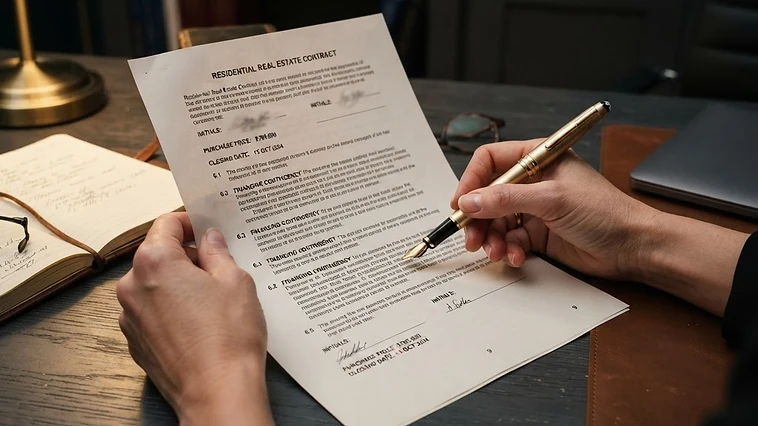 Homeowner conducting a mortgage document review on a dark desk with warm lighting

How Artificial Intelligence is Fueling Mortgage Fraud
As technology advances, so do the tools available to fraudsters. Recent reporting from National Mortgage News highlights a growing concern in the industry: the use of artificial intelligence to create fake documents. AI has made it incredibly easy to generate forged bank statements, fake employment verifications, and even counterfeit legal documents that look virtually indistinguishable from the real thing.
While much of this technology is used by bad actors to secure loans fraudulently, it also poses a risk to existing homeowners. Fraudsters can use AI-generated documents to file false liens against your property or execute unauthorized deed transfers. This type of mortgage fraud is particularly insidious because it happens entirely behind the scenes. You continue making your monthly payments to your servicer, completely unaware that the legal title to your home has been clouded by a fabricated document recorded in the county clerk's office.
This is why relying solely on your monthly mortgage statement is not enough. Homeowners must periodically pull their complete property records and request their full loan file from their servicer to ensure that every document attached to their home is legitimate and accurate.
The Danger of "Phantom" Errors in Your Refinance Paperwork
When you decide to refinance, your new lender will require a clear title and a precise accounting of your current debt. This is where "phantom" errors in your original mortgage paperwork often come back to haunt you.
One of the most common issues involves the Mortgage Electronic Registration Systems (MERS) and the chain of assignments. During the life of a typical mortgage, the loan may be sold or transferred multiple times. Each transfer should be accompanied by a legally binding assignment of the mortgage or deed of trust. However, during the housing boom and subsequent crashes, these assignments were frequently lost, fabricated (robo-signed), or never recorded at all.
If you are refinancing and your original lender failed to properly record an assignment, your new lender may struggle to verify who actually holds the legal right to your loan. This can stall your refinance paperwork indefinitely. Furthermore, if your current servicer has been charging you for unauthorized fees, forced-placed insurance, or misapplying your escrow payments, rolling that inflated balance into a new refinance loan means you will be paying interest on fraudulent charges for the next 30 years.
Performing a mortgage audit before you refinance ensures that the payoff amount is accurate and that the chain of title is clear. It empowers you to demand corrections from your servicer before you sign a new contract that legally binds you to their accounting errors.
Why Auditing Your Mortgage Paperwork Matters
It is easy to assume that if you pay your mortgage on time every month, your lender is keeping accurate records and your home is safe. Unfortunately, the recent surge in refinance fraud, AI-generated document forgery, and systemic loan document errors proves that this assumption is dangerous. Every homeowner—especially those who are current on their payments and considering a refinance—must take a proactive approach to their financial security.
Auditing your mortgage paperwork matters because it is the only way to verify that the contract you are bound to is legally sound, accurate, and free of predatory defects. It protects your equity from being drained by hidden servicing errors and shields your title from fraudulent claims.
If you are ready to take control of your homeownership and ensure your documents are bulletproof, the "Foreclosure Defense Survival Playbook" is your ultimate guide. While designed to help those facing distress, this comprehensive 530-page educational resource is equally vital for current homeowners. The Playbook teaches you exactly how to read your mortgage documents, how to spot the hidden errors and fraud that lenders hope you overlook, and how to organize your evidence like a pro. Don't wait for a refinance delay or a servicing nightmare to discover the flaws in your loan file. Order the Foreclosure Defense Survival Playbook today and learn how to audit your mortgage paperwork with confidence.


Order The Playbook
Get the Foreclosure Defense Survival Playbook
530 pages of structured, educational guidance covering mortgage documents, foreclosure procedures, evidence organization, and legal research — the same foundation this article draws from.